Francesco Arena | Nout Bodyn | Willem Boel | Maxime Brigou | Thibault Carlier | Nelleke Cloosterman | Sid Dankers | Thomas Decuypere | Adelheid De Witte | Charlie De Voet | Eva Dixon | Carole Ebtinger | Clem Edwards | Zoro Feigl | Flexboj & LA | Katrien Hoffman | Gideon Kiefer | Jens Kothe | Nokukhanya Langa | Kris Martin | Hilde Overbergh | Joost Pauwaert | Thomas Renwart | Bruno Roels | Lukas Städler | Hammzat Tahabsim | Alice Vanderschoot | Marlon Wobst
10 October - 15 November 2026 | Penitentenstraat 29 & Baudelostraat 23, 9000 Gent
Friends With Benefits begins with a simple invitation. Each artist represented by BARBÉ was asked to invite one artist from outside the gallery to take part in a group exhibition. Rather than building the exhibition around a predetermined theme, Friends With Benefits takes the relationships between artists as its starting point. Each invitation reflects a personal affinity: an admiration for another practice, an ongoing dialogue, a friendship, or simply a curiosity about what might happen when two bodies of work are brought together. The exhibition temporarily opens up the gallery’s programme through the eyes of the artists who are already part of it. In doing so, the usual role of the gallery shifts. The represented artists become, in a way, curators themselves, introducing practices they believe deserve a place alongside their own.
Bringing together recent graduates, emerging, mid-career and established artists, Friends With Benefits does not attempt to define a generation or propose a single shared position. Instead, the exhibition presents a network of individual connections. Some are immediately visible in the works, others less so. What connects them is the gesture of invitation itself. One artist making space for another.
Across BARBÉ’s two locations, these encounters form a temporary constellation of practices, relationships and affinities, extending the gallery beyond its existing programme and allowing new conversations to emerge.
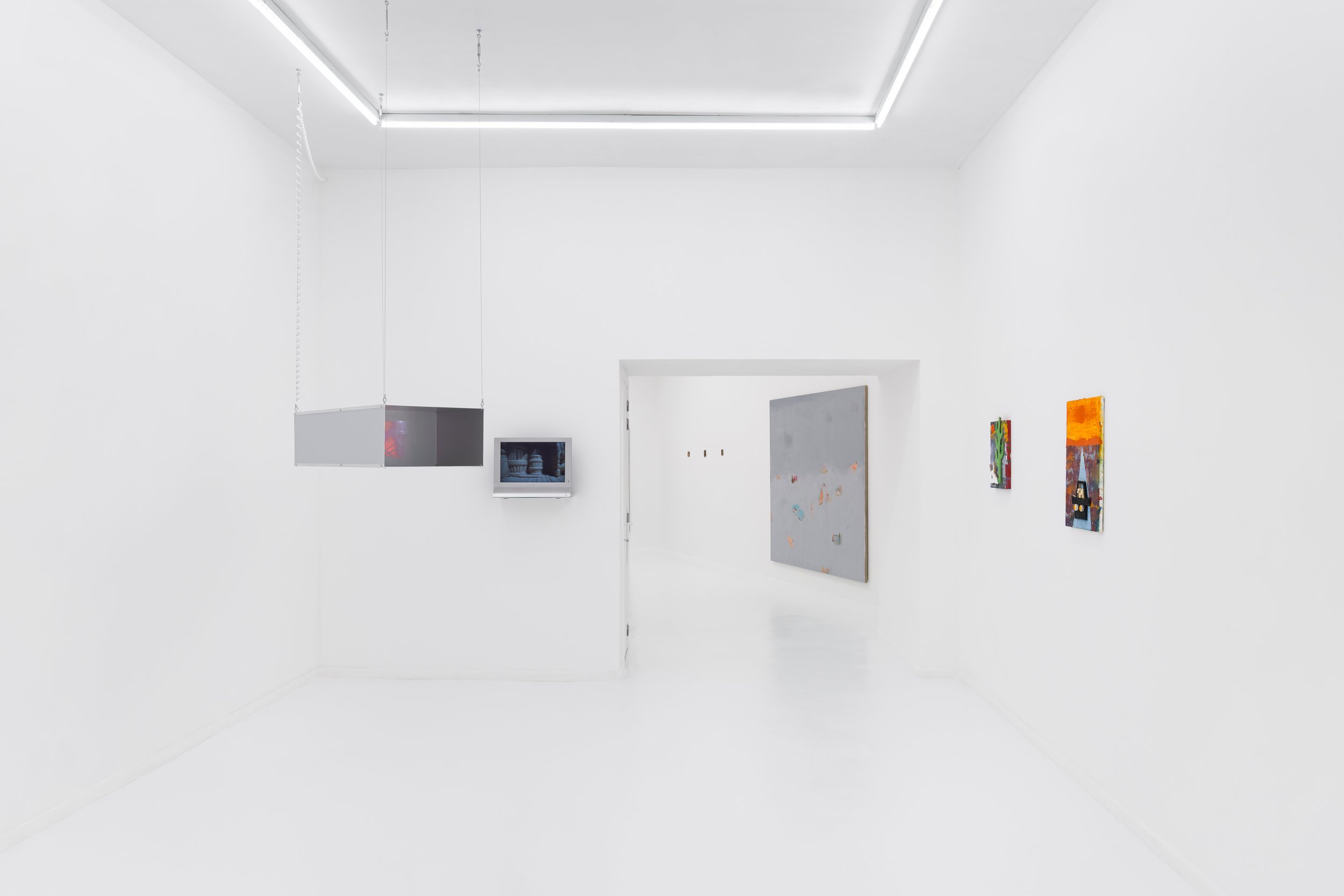
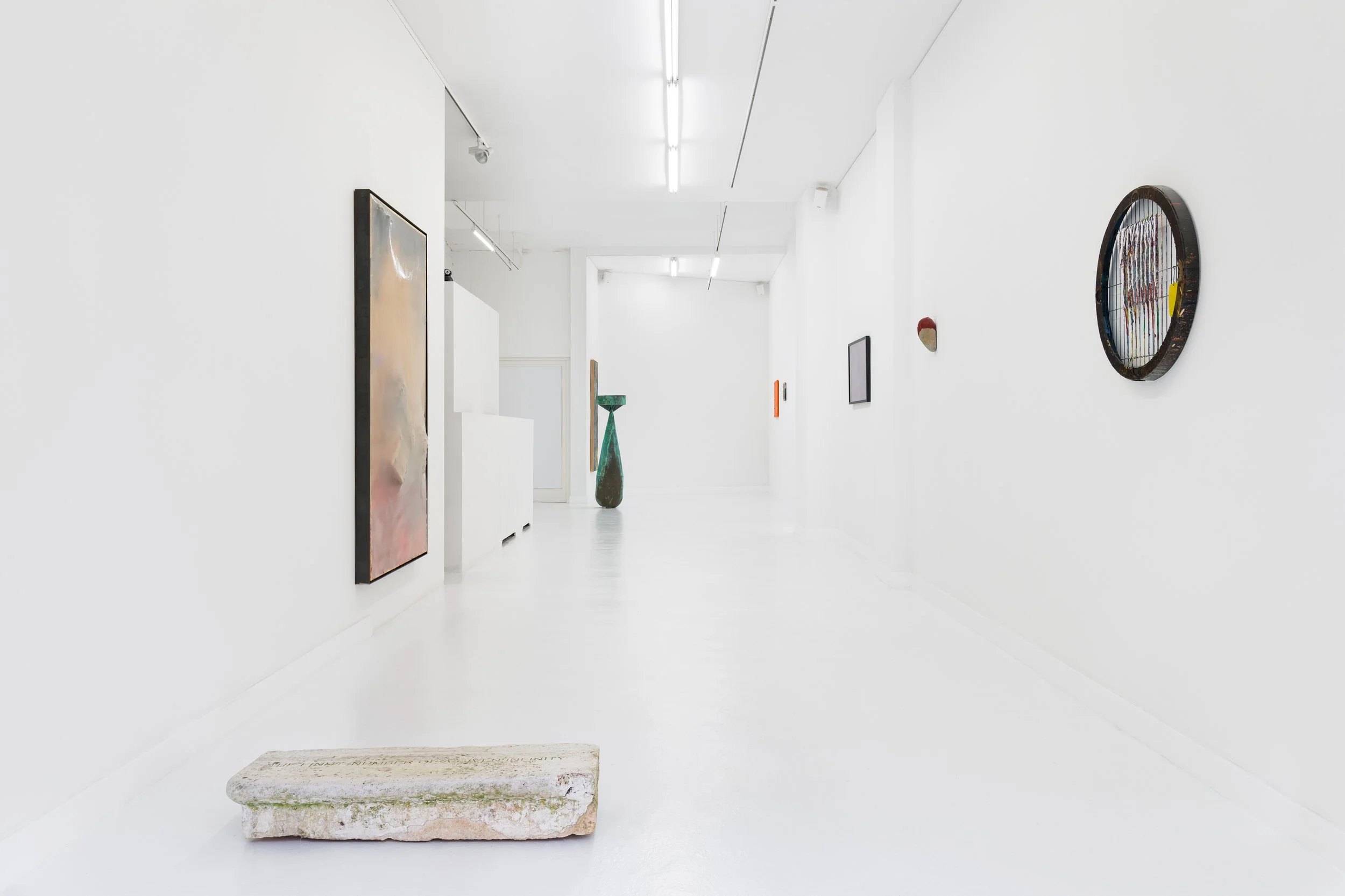
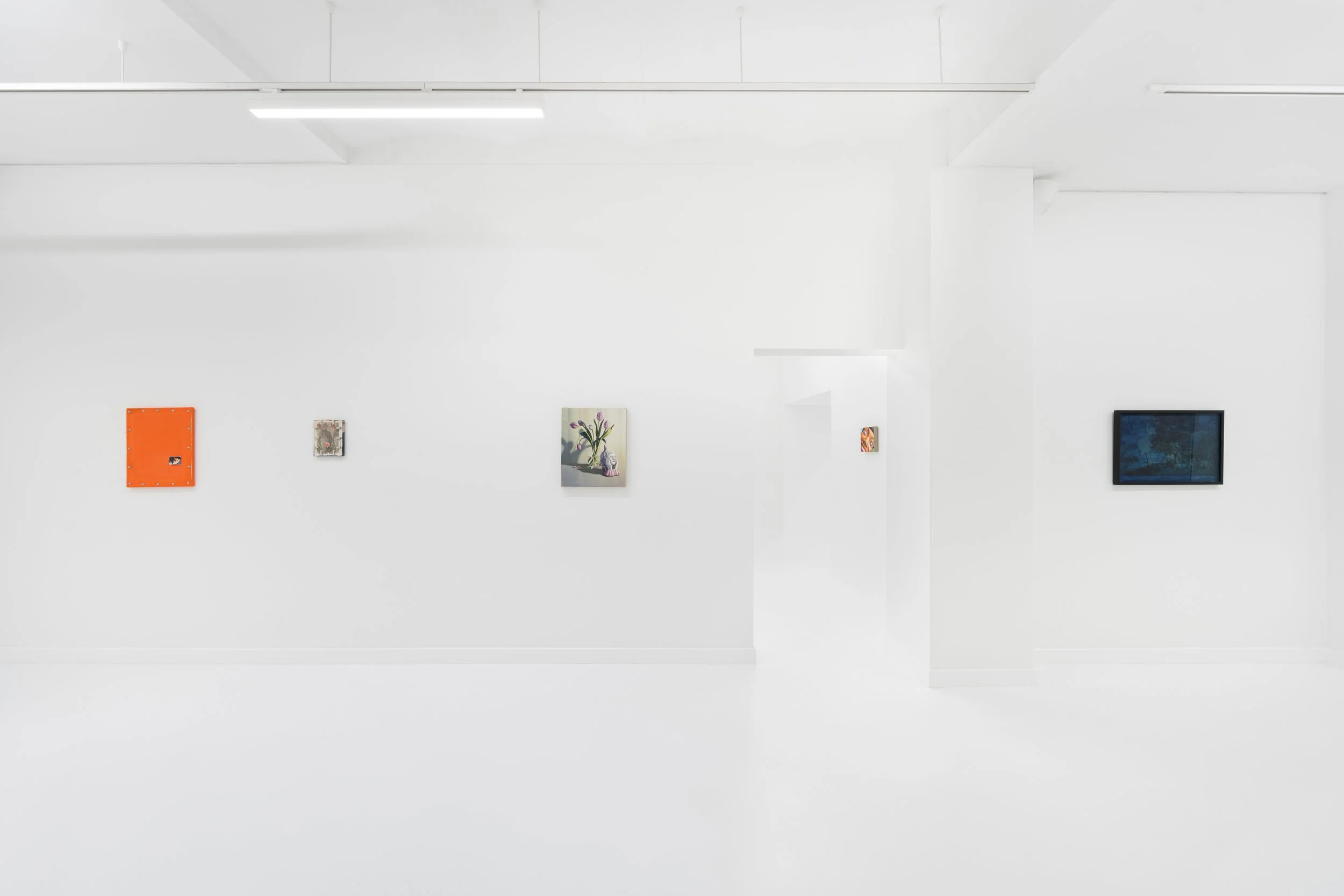
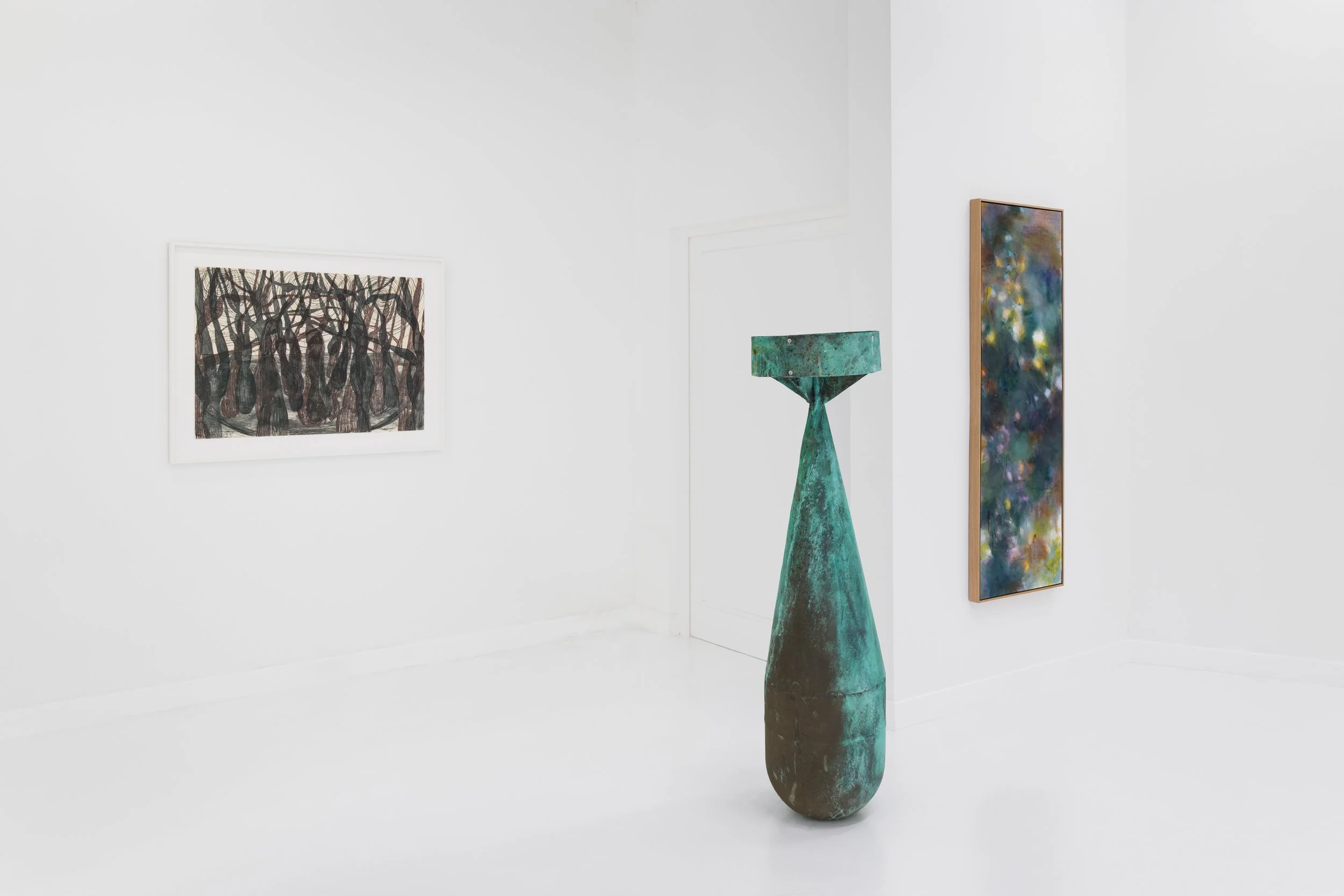
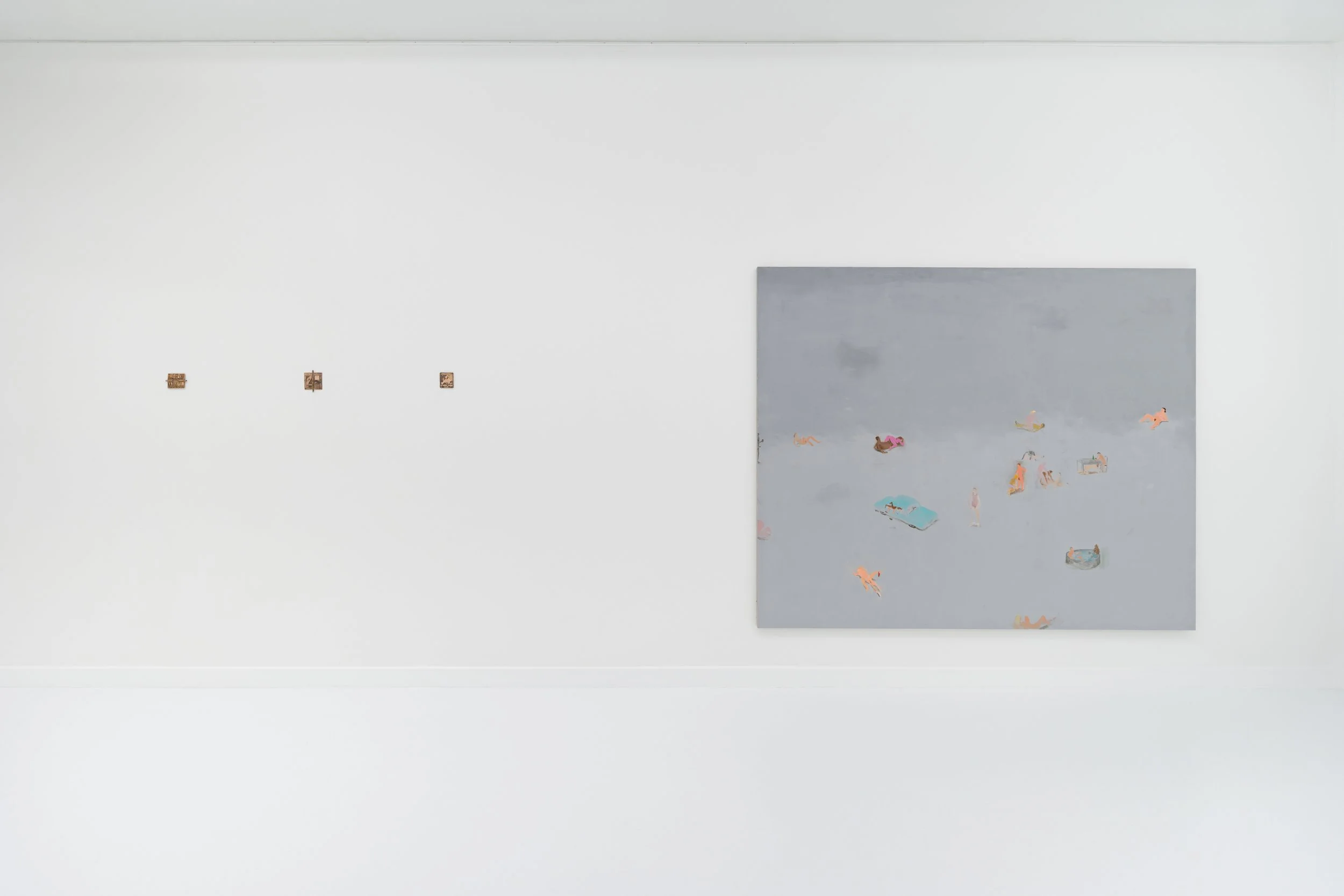
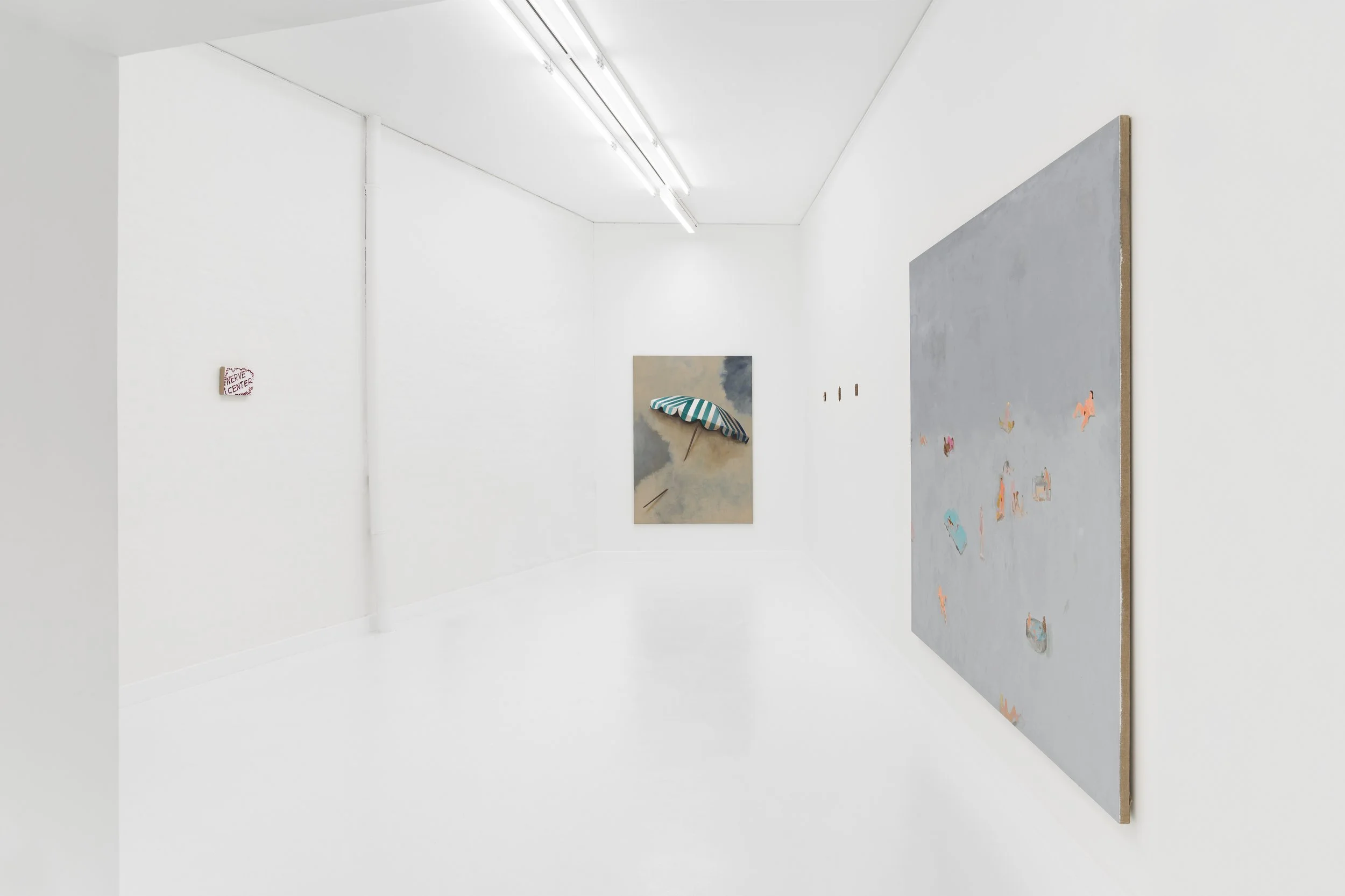
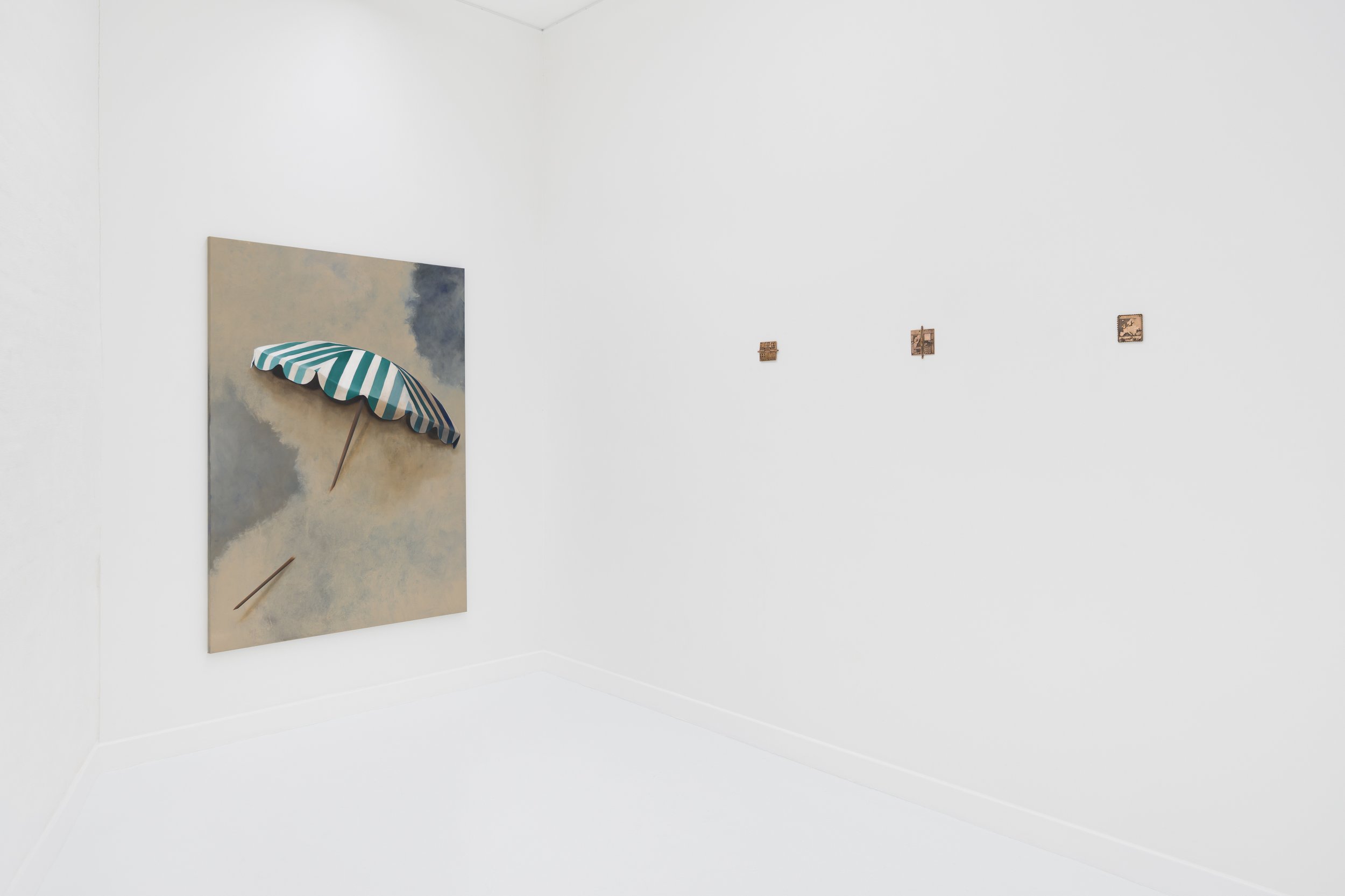
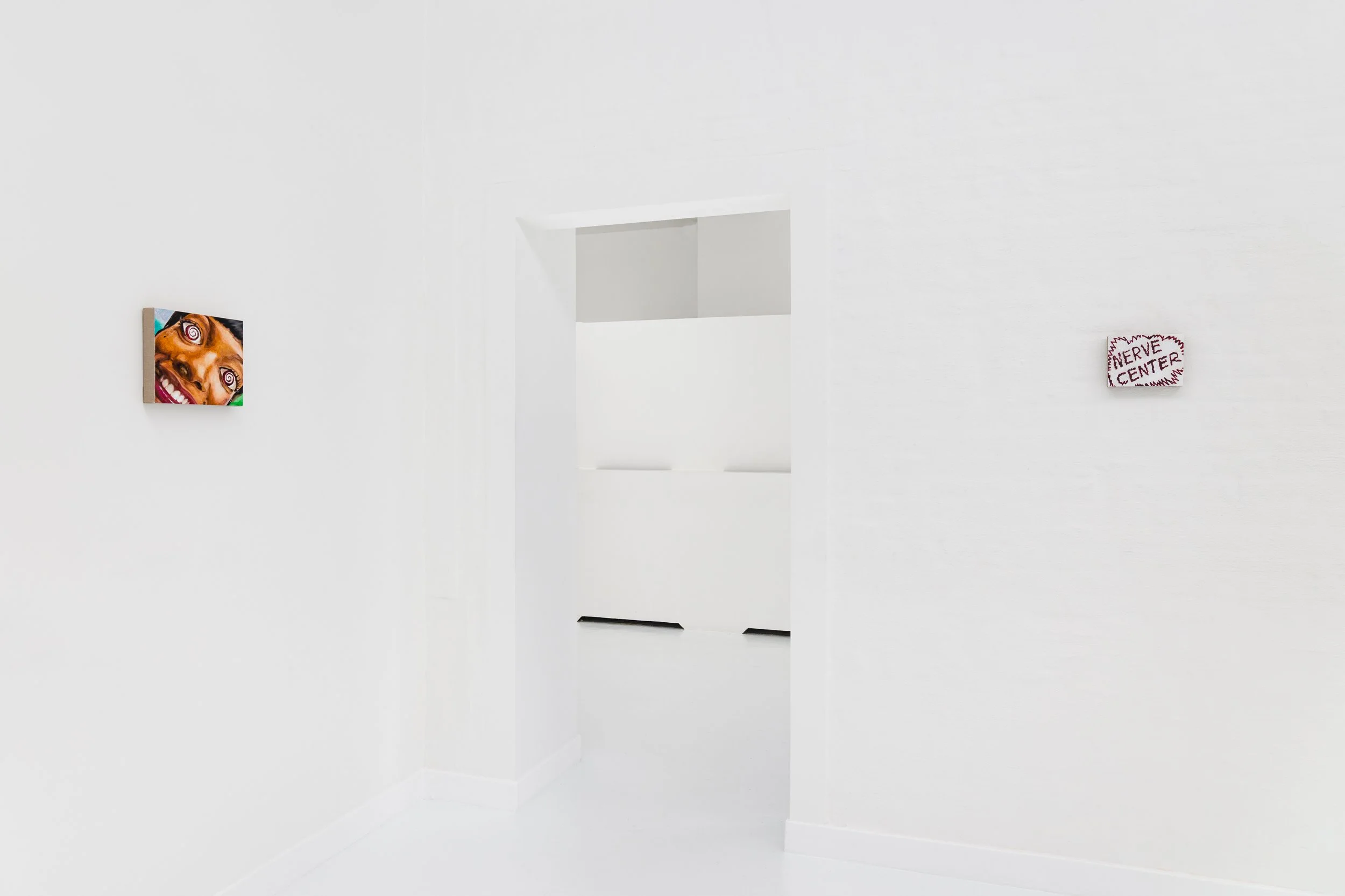
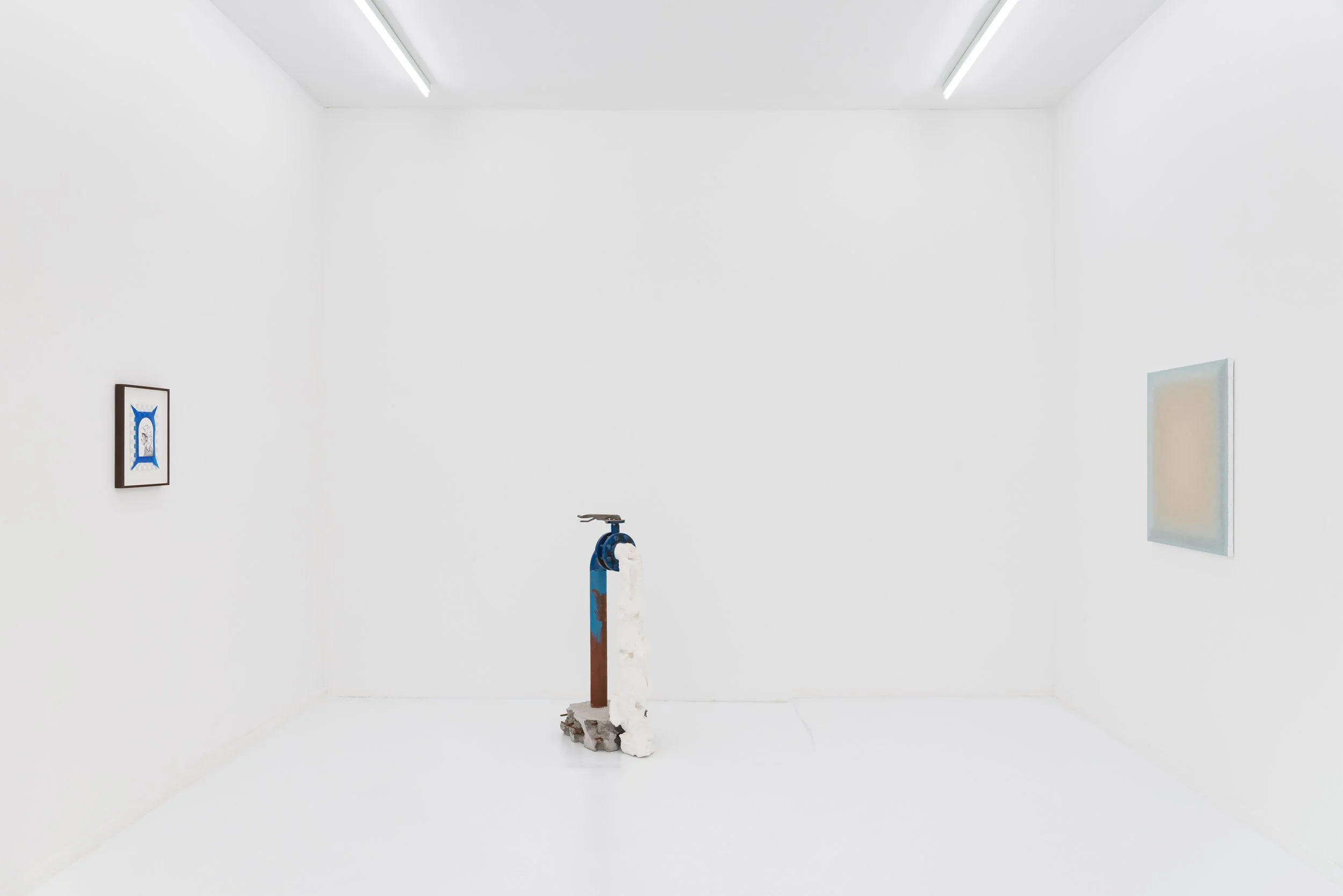
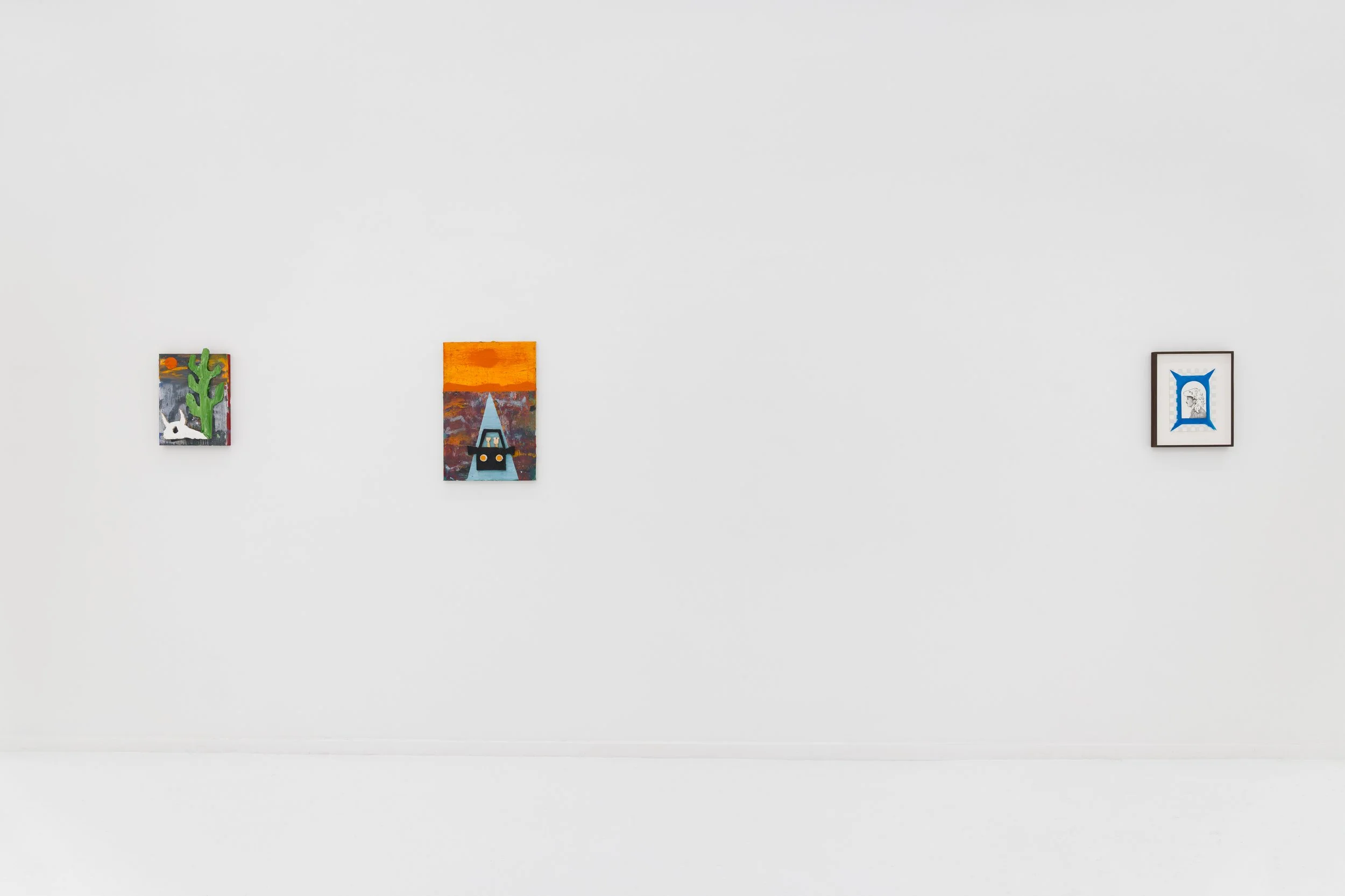
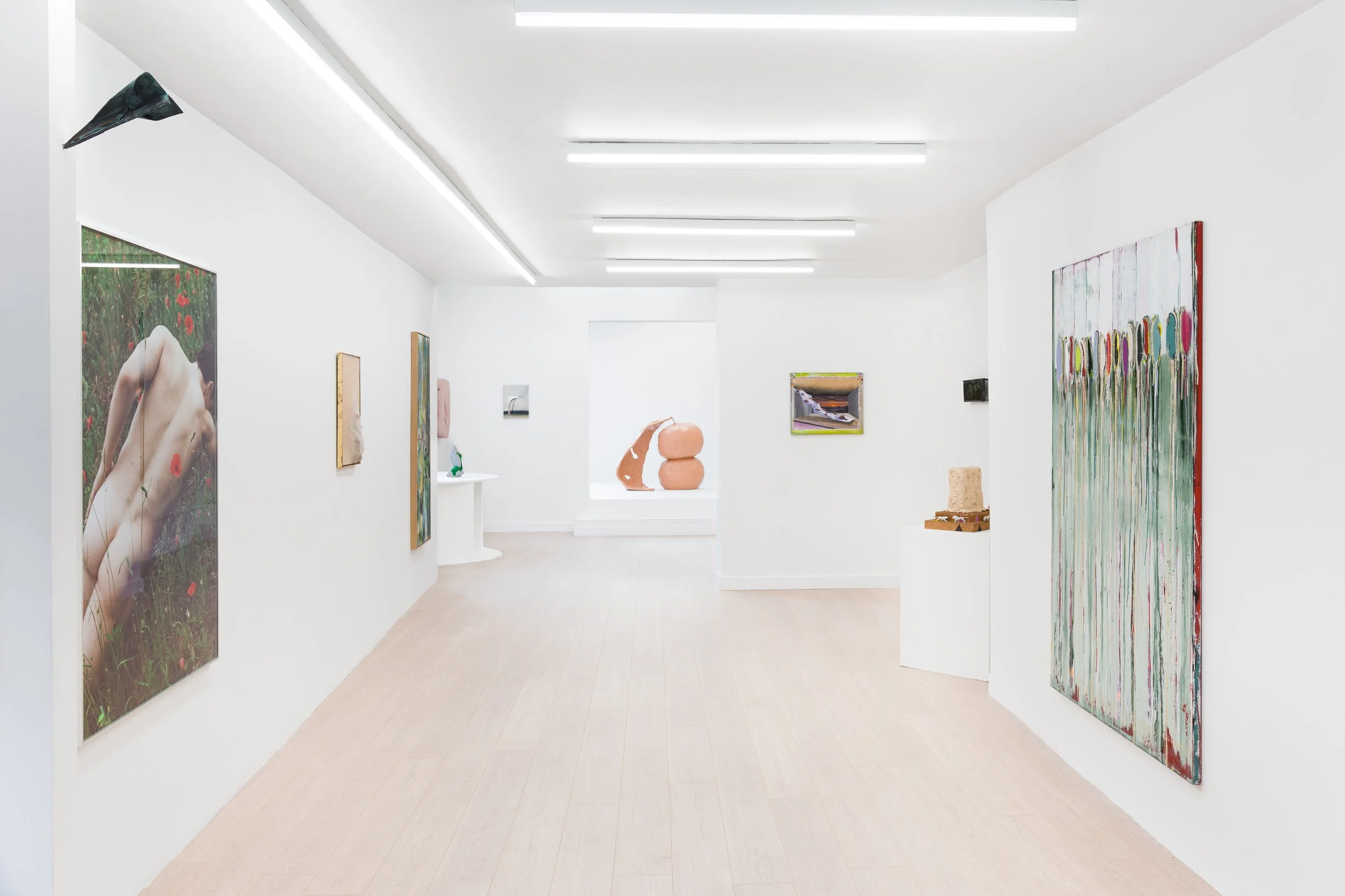
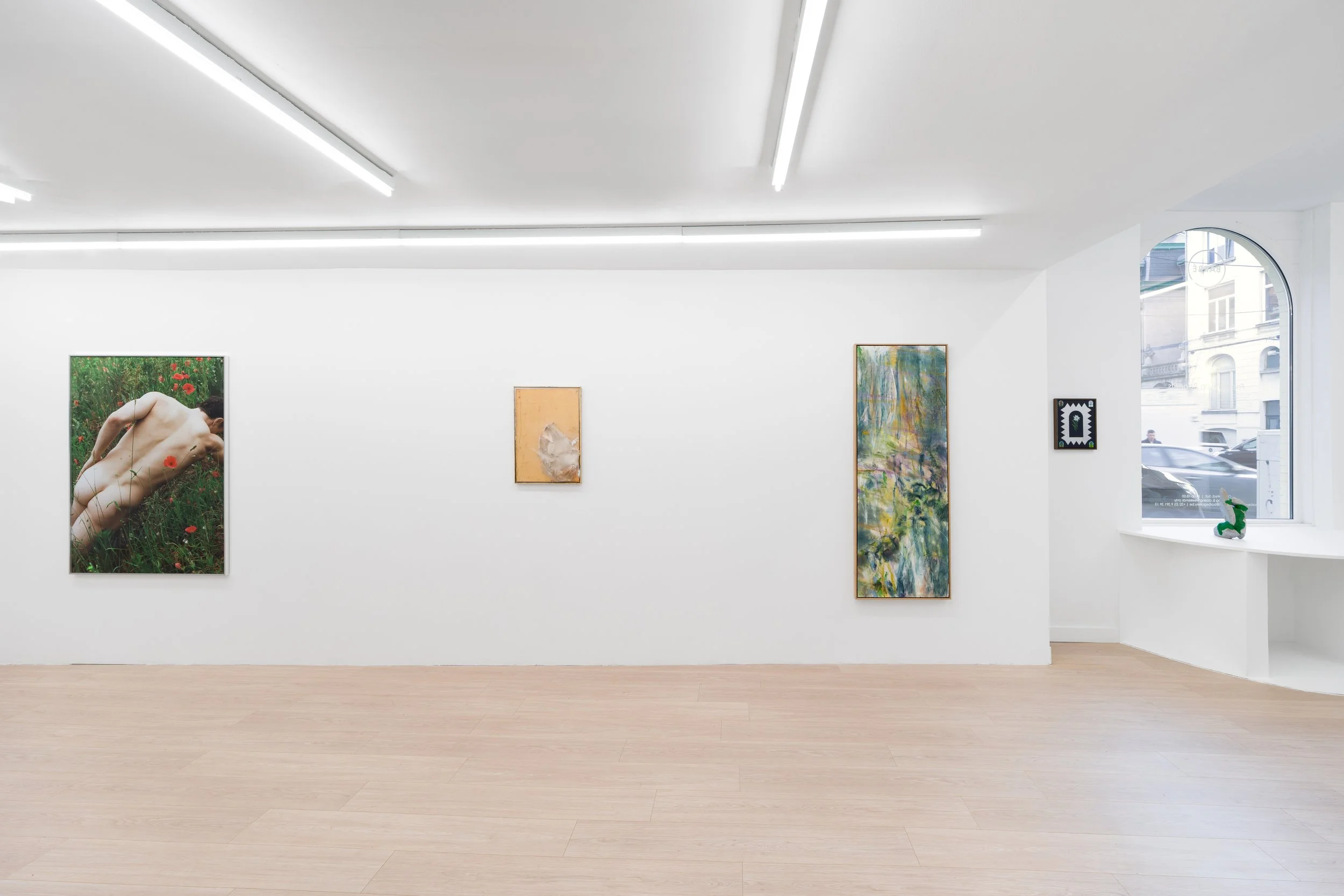
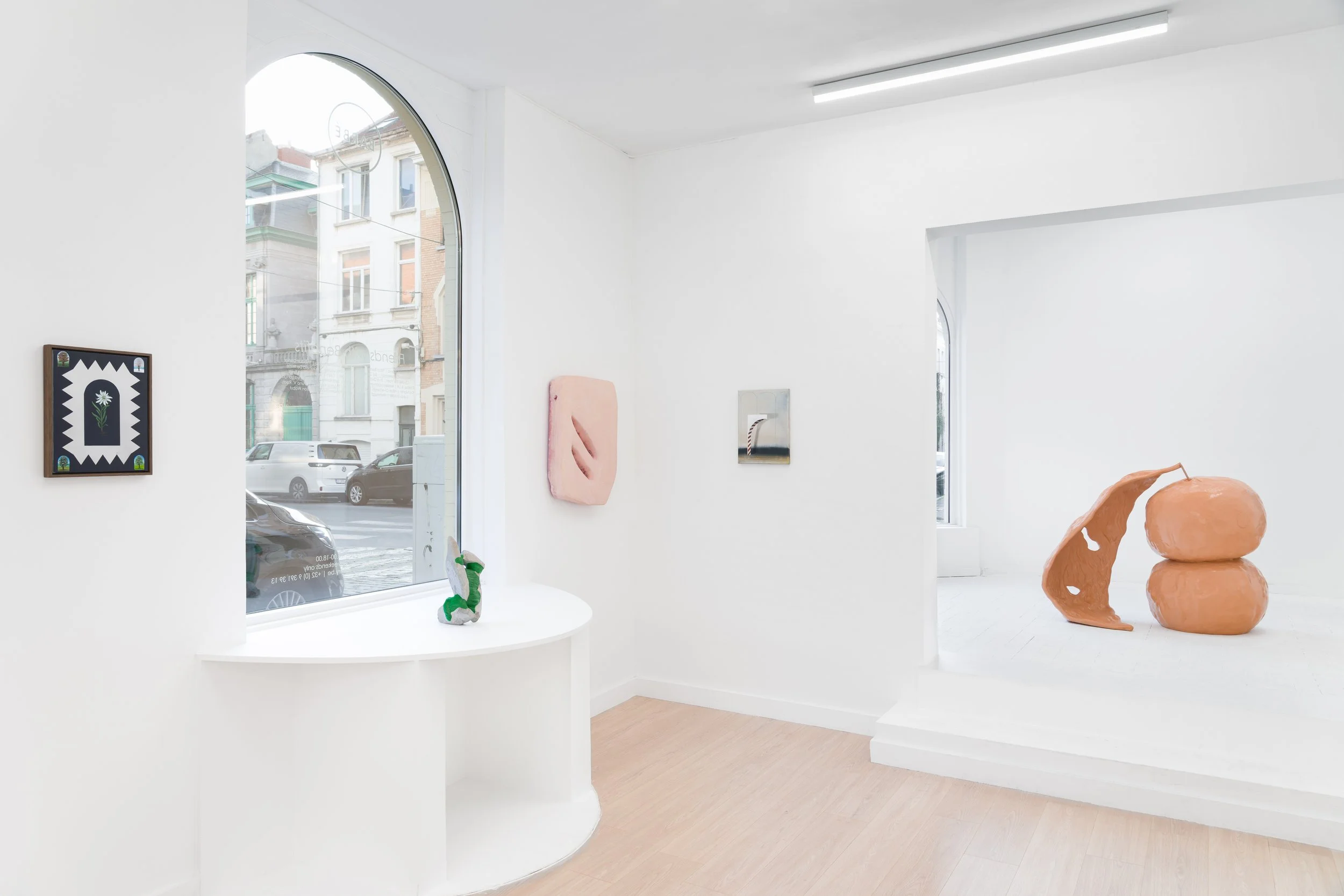
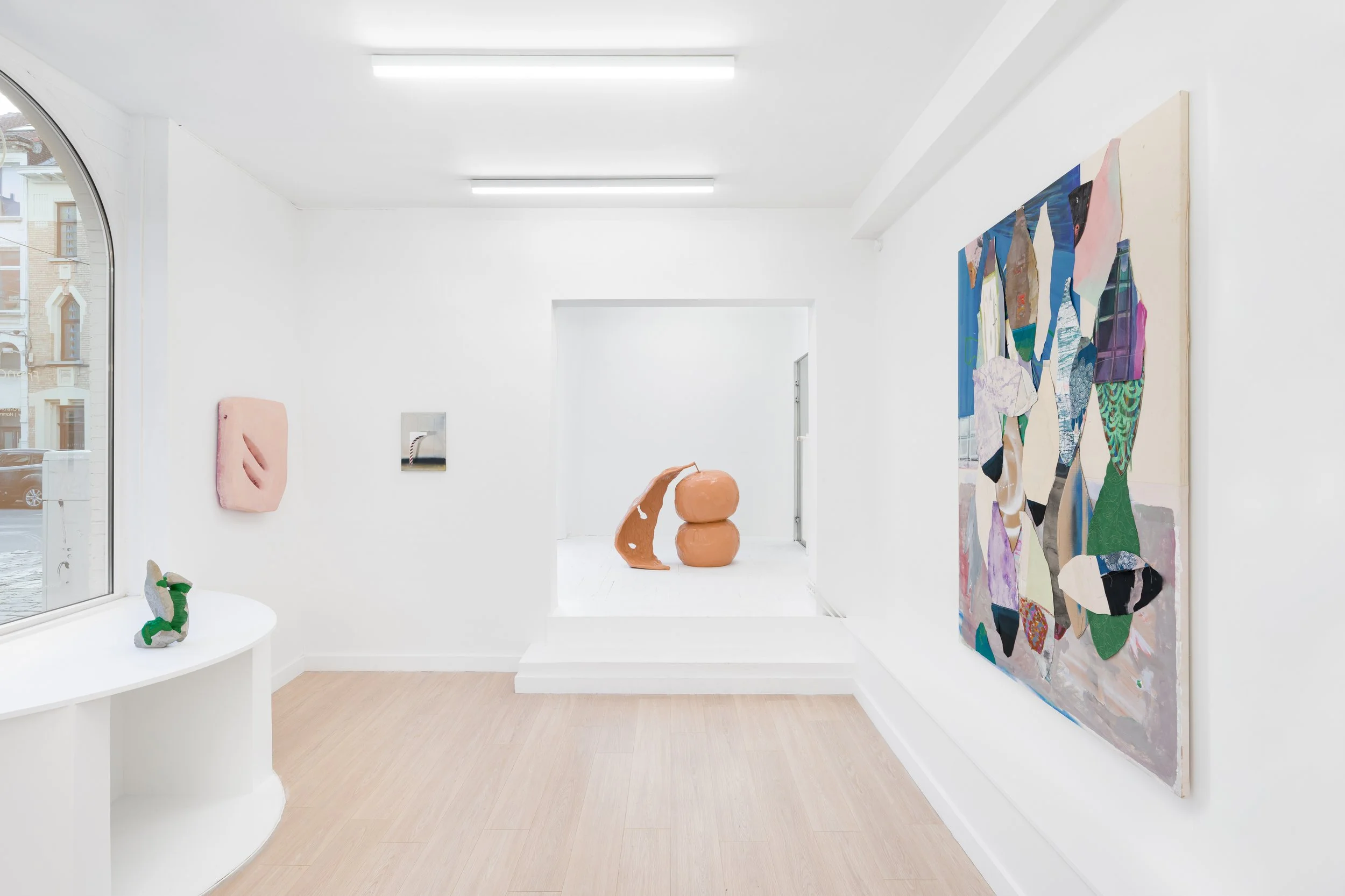
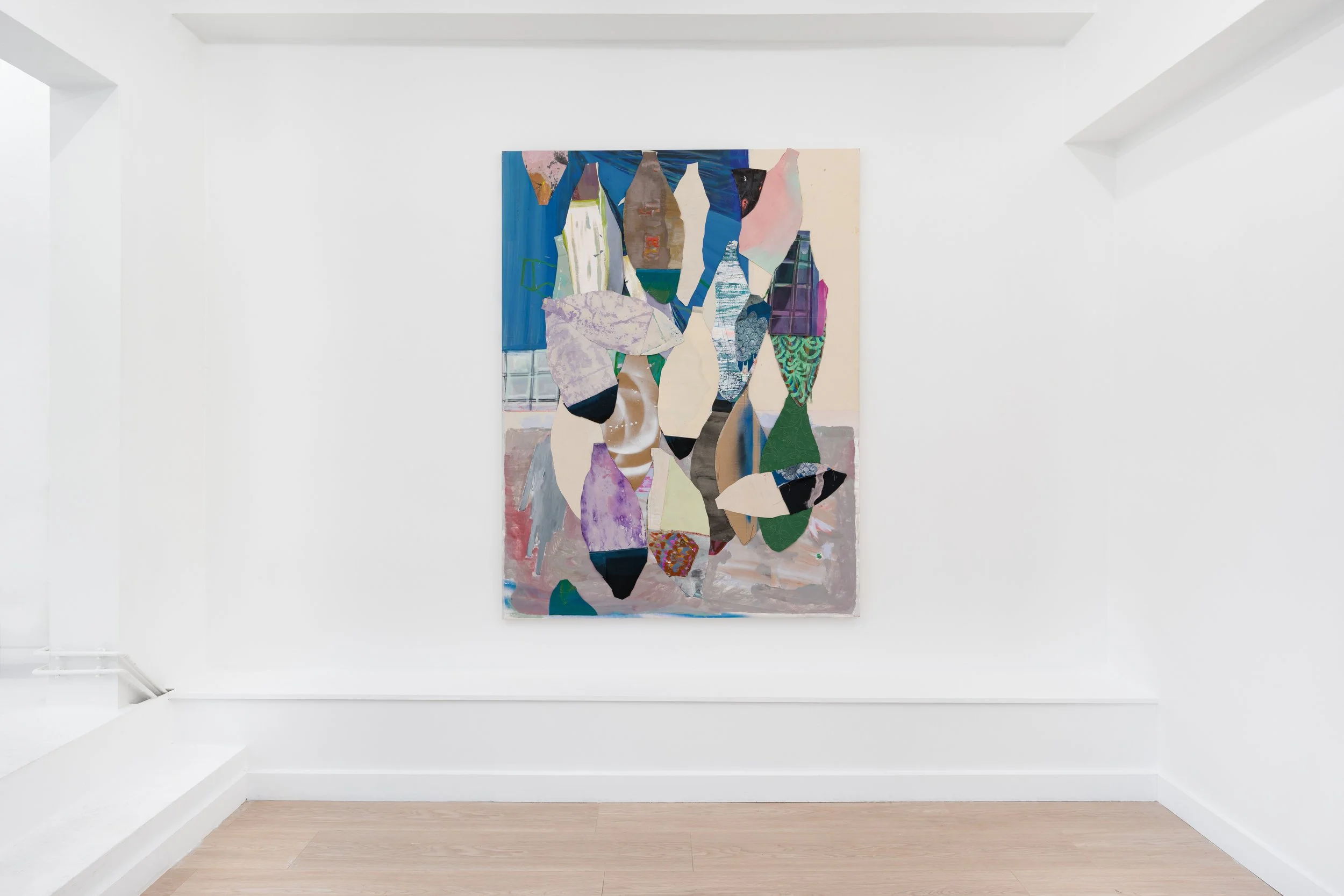
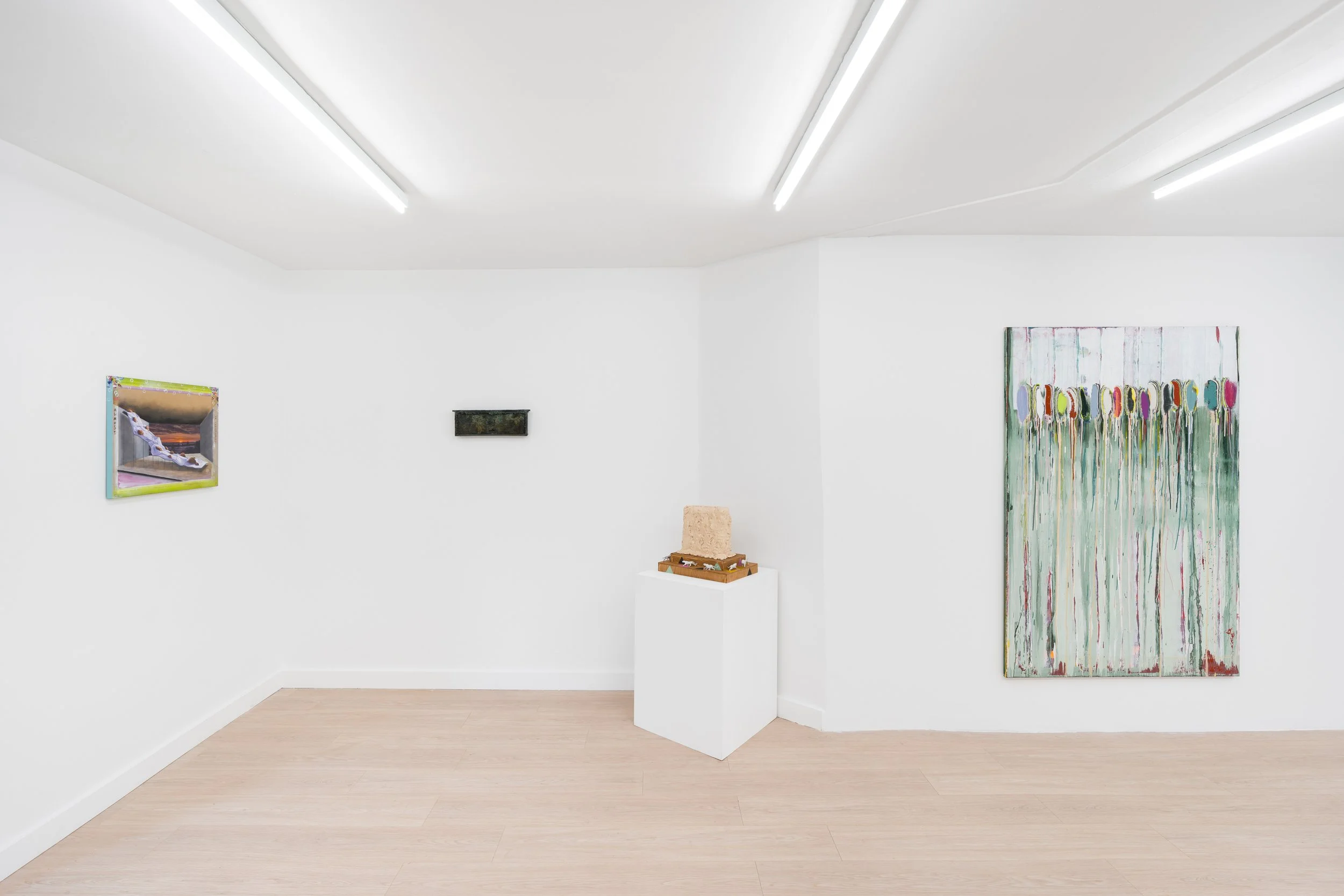
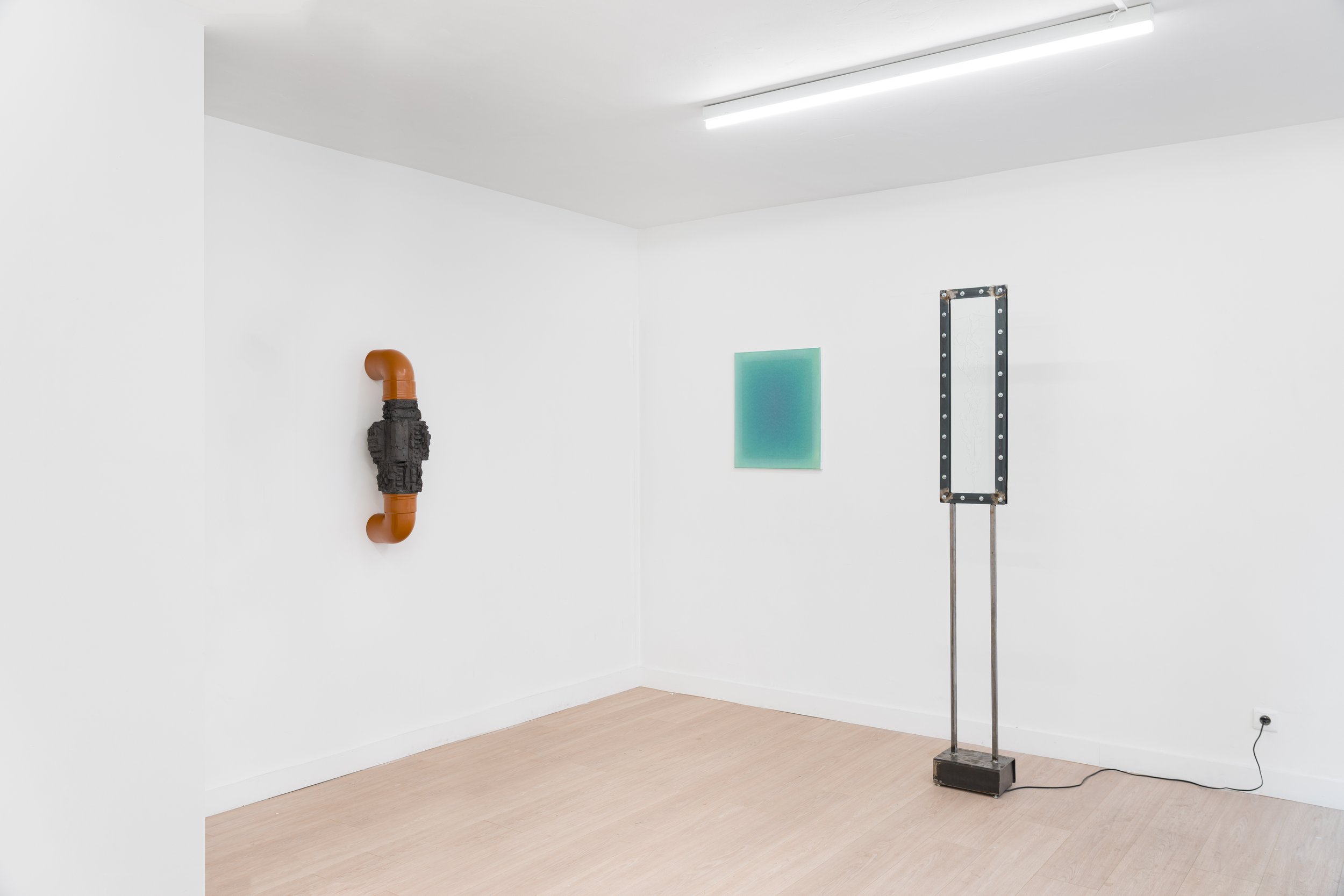
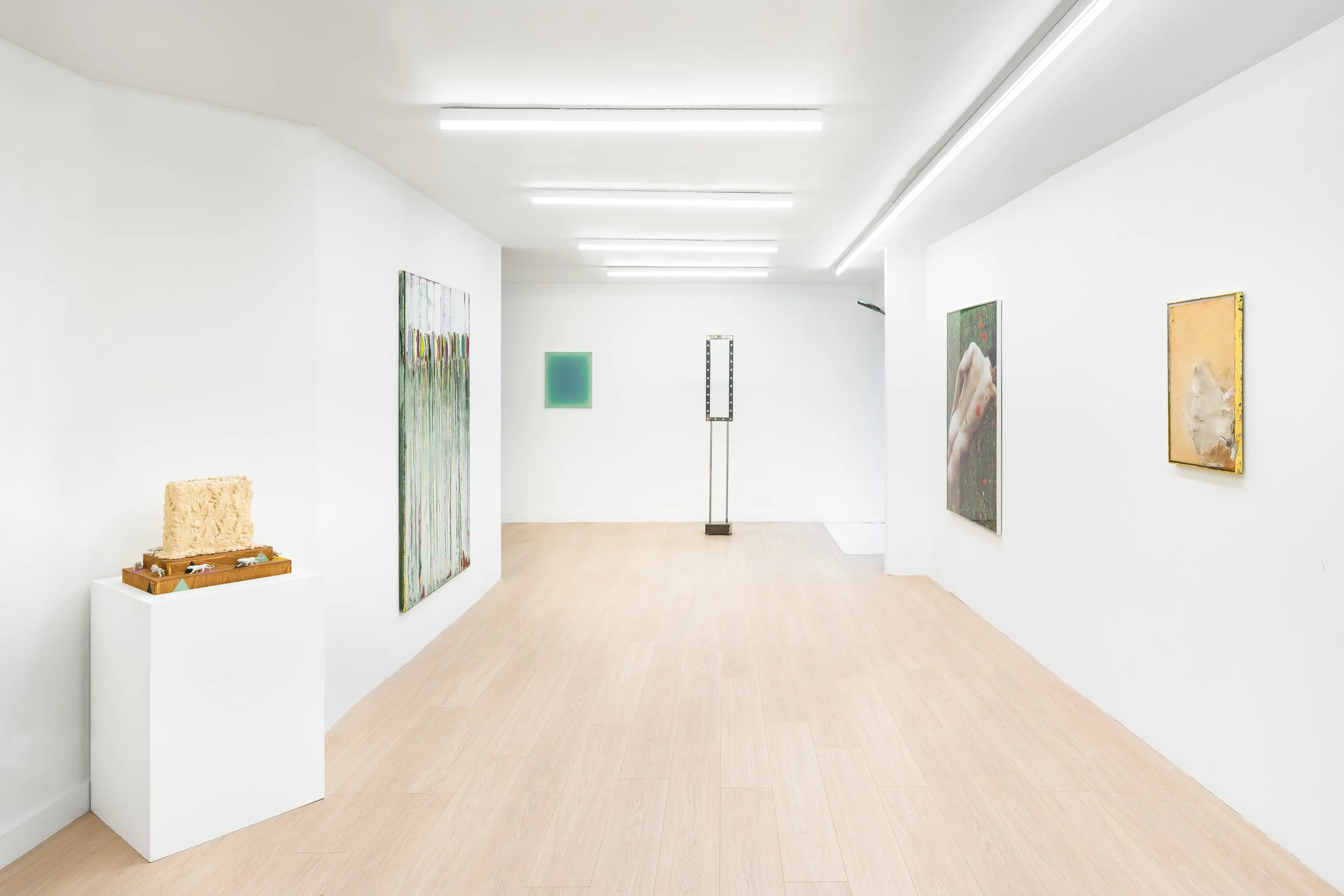
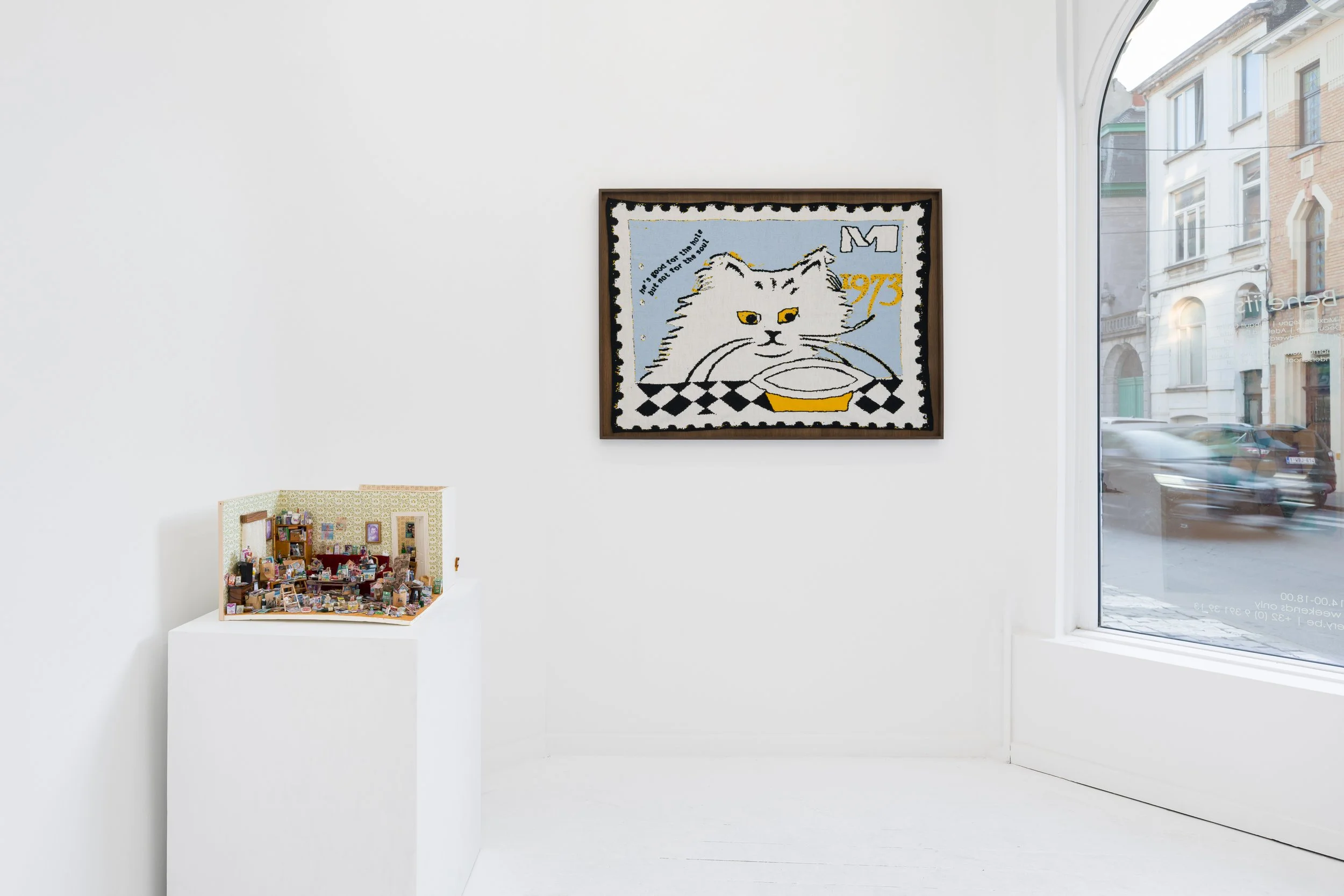
Exhibition view’Friends with Benefits’ Penitentenstraat 29, 9000 Gent, BE
The Artists
Represented | Invited
Willem Boel | Maxime Brigou
Nelleke Cloosterman | Eva Dixon
Thomas Decuypere | Nout Bodyn
Charlie De Voet | Thibault Carlier
Adelheid De Witte | Marlon Wobst
Carole Ebtinger | Hammzat Tahabsim
Flexboj & L.A. | Sid Dankers
Gideon Kiefer | Bruno Roels
Jens Kothe | Lukas Städler
Nokukhanya Langa | Clem Edwards
Kris Martin | Francesco Arena
Joost Pauwaert | Zoro Feigl
Thomas Renwart | Katrien Hofman
Alice Vanderschoot | Hilde Overbergh
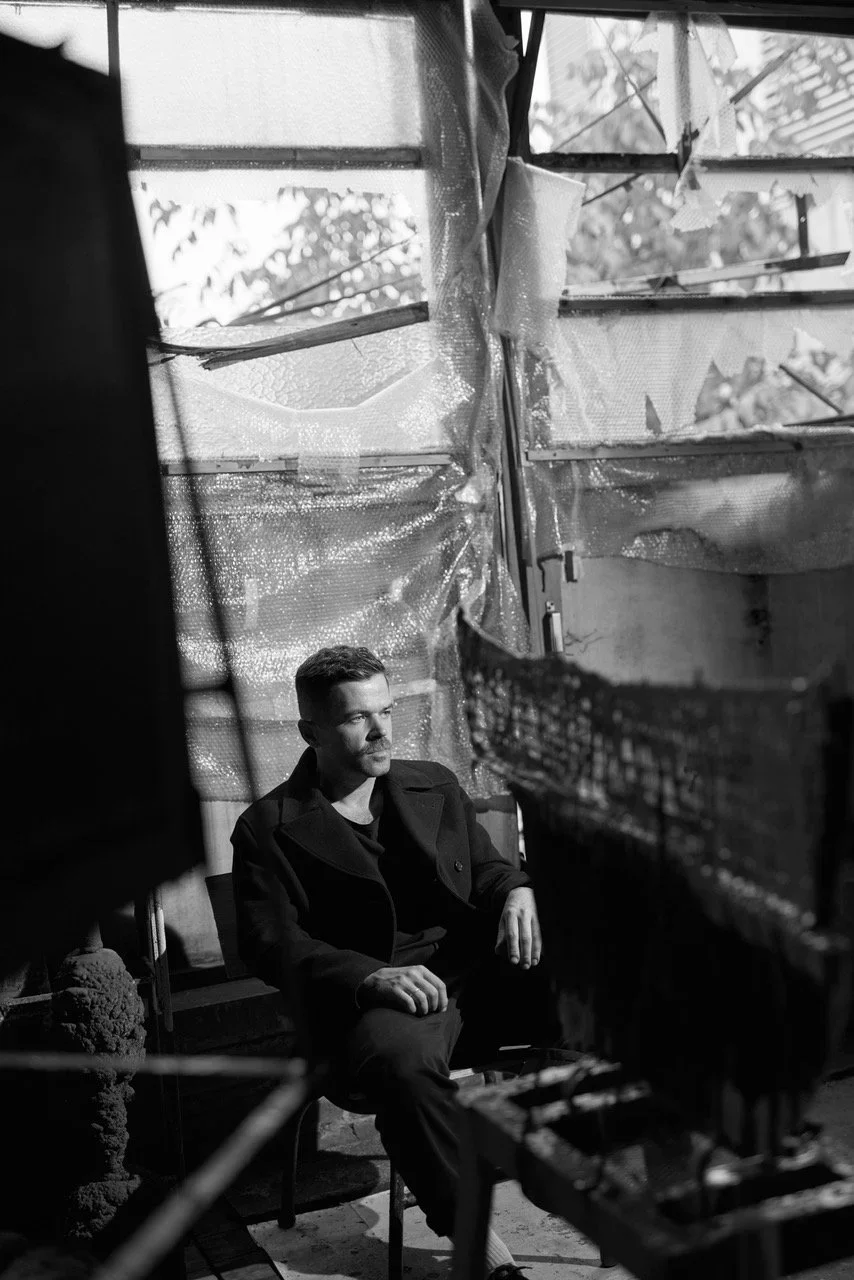
Willem Boel (b. 1983, Sint-Niklaas, Belgium) bases his practice on the use of industrial structures and objects, stripped of their original function and reconstructed with artistic intent and a rigorous sense of composition. The historical and conceptual weight of these elements, serving as both support and artwork, along with the frequent buildup of paint, creates a density of information and materiality that contrasts in balance with the empty spaces and visual lightness of his pieces. These elements raise questions around disciplinary boundaries and traditional formats. The importance of process as a key component of his work lends significant value to time and duration.
Willem Boel works mainly in series, with notable bodies of work including Le chef d’oeuvre inconnu, De Nieuwe Molens, Pare Feu and Sancho Don’t Care. In 2015, he was awarded the prestigious Grand Prize at the Salon de Montrouge.
Boel had his first solo exhibition, Soon You'll Be Eaten, at BARBÉ in 2023 and in 2025 the gallery showed his monumental sculpture Sancho Don't Care #05 at the Brussels Expo site during Art Brussels. He has exhibited at institutions such as Palais de Tokyo, Paris; Museum M in Leuven, Belgium; and Loods 12 in Wetteren, Belgium. His monumental installation Sancho Don’t Care #05 - an 11-meter-high sculpture is currently touring across Europe, having been shown in Latvia, Denmark, France, and Belgium. In 2021, Boel participated in the Bruges Triennial (Belgium); Artissima (Turin, Italy); Art Rotterdam (Netherlands); Art Brussels (Belgium) and Kunstverein, Peschkenhaus Moers (Germany). His work is collected by the National Bank of Belgium and Museum M (Leuven, Belgium). In September 2025 he had a solo exhibition Memo at Hilario Galguera Gallery in Mexico City (MX). In 2026 he will install a permanent work in public space, commissioned by the Community of Brussels (BE) and participated in the Triennial of the 3HKP Sculpture Park as part of the Krohne Art Kollektion in Landkreis Vulkaneifel, Rheinland-Pfalz, (Germany).
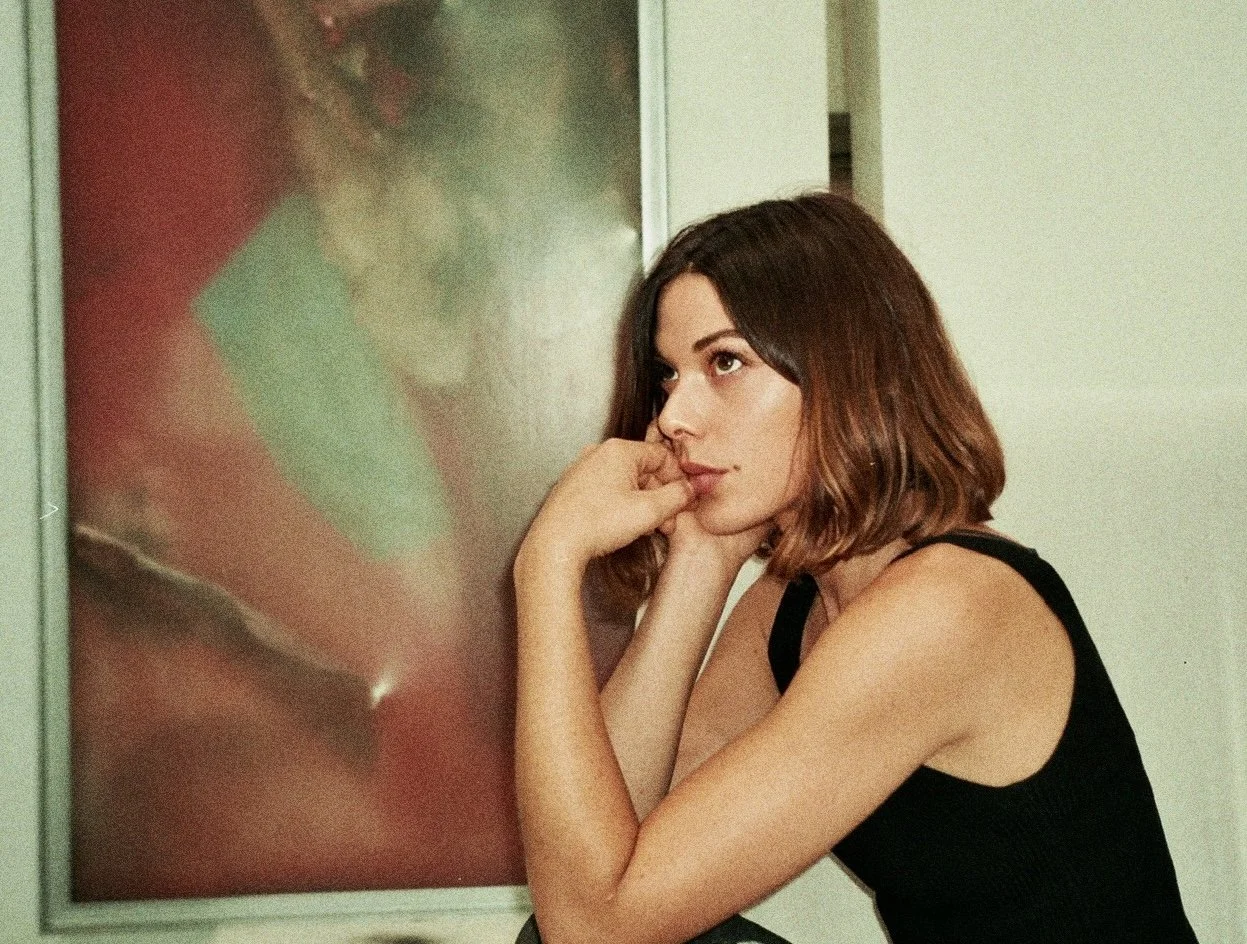
Maxime Brigou (b. 1992, Roeselare, Belgium) lives and works in Ghent. She holds a Master’s degree in Visual Arts from the Royal Academy of Fine Arts Ghent. She is co-founder of the artist collective NADAR and runs the artist-run space Ontsteking. Although Brigou has increasingly focused on sculpture and installation in recent years, her background in painting remains central to her practice. Rather than focusing on the sculpture as an isolated object, she is interested in the image it creates: l’image, a glimpse of what could be, or what one wishes it to be. Her works are evocative and suggestive, drawing attention to what might otherwise remain unseen. Time and space are at the heart of this investigation. Since 2020, Brigou has developed her series COUP D’OEIL, exploring time as change, memory, expectation, repetition, light and darkness. The works have no fixed or permanent manifestation; their appearance shifts according to the movement of natural light. Translucent canvas stretched behind the glass simultaneously obstructs and enables the viewer’s perception. Shapes and colours emerge and disappear depending on where and when the work is encountered. The longer one remains with it, the more of its manifestations become visible, yet the complete image can never be fully possessed.
In recent years, her work has been presented in numerous solo and group exhibitions, as well as international art fairs, including W/ILDW/ND, Rommelaere Site, Ghent, BE, Swanensang, Fred&Ferry Gallery, Antwerp, BE, Art Brussels, Galería Hilario Galguera, Brussels, BE, ARENA, Kortrijk Art Weekend, Broeltorens, Kortrijk, BE, Kunstenbiënnale Prinsenhof, Ghent, BE, WITBOEK, Fred&Ferry Gallery, Antwerp, BE, The Earth of This World Is Slippery (duo), Ter Posterie, Roeselare, BE, Embrace The Change, Hilde Vandaele Gallery, Kortrijk, BE, Art Antwerp (solo presentation), Antwerp, BE, GIST, Zenne Valley, BE, Lo Hecho, Hecho Está (solo), Galería Hilario Galguera, Madrid, ES, B-Sides and Rarities, Fred&Ferry Gallery, Antwerp, BE, Stories Unfold, Rubenskasteel, Antwerp, BE, La Primavera, Otegem, BE, El Cuarto Flamenco: Avalancha, Galería Hilario Galguera, Madrid, ES, Aleph (solo), Fred&Ferry Gallery, Antwerp, BE, Brussels Art Fair, Brussels, BE, Human for Scale (solo), Bruthaus Gallery, Waregem, BE, Après Nous, Ghent, BE, Ik Alleen, Heb Meer Herinneringen (solo), De Brakke Grond, Amsterdam, NL, Concomitante (duo), Ontsteking, Ghent, BE, Biënnale van België, Floraliënhallen, Ghent, BE, Tumult in Gent (solo presentation), De Krook, Ghent, BE, Sorry, Not Sorry, Ghent, BE, The Course of Things Interrupted, Croxhapox, Ghent, BE, and NADAR, Ghent, BE.
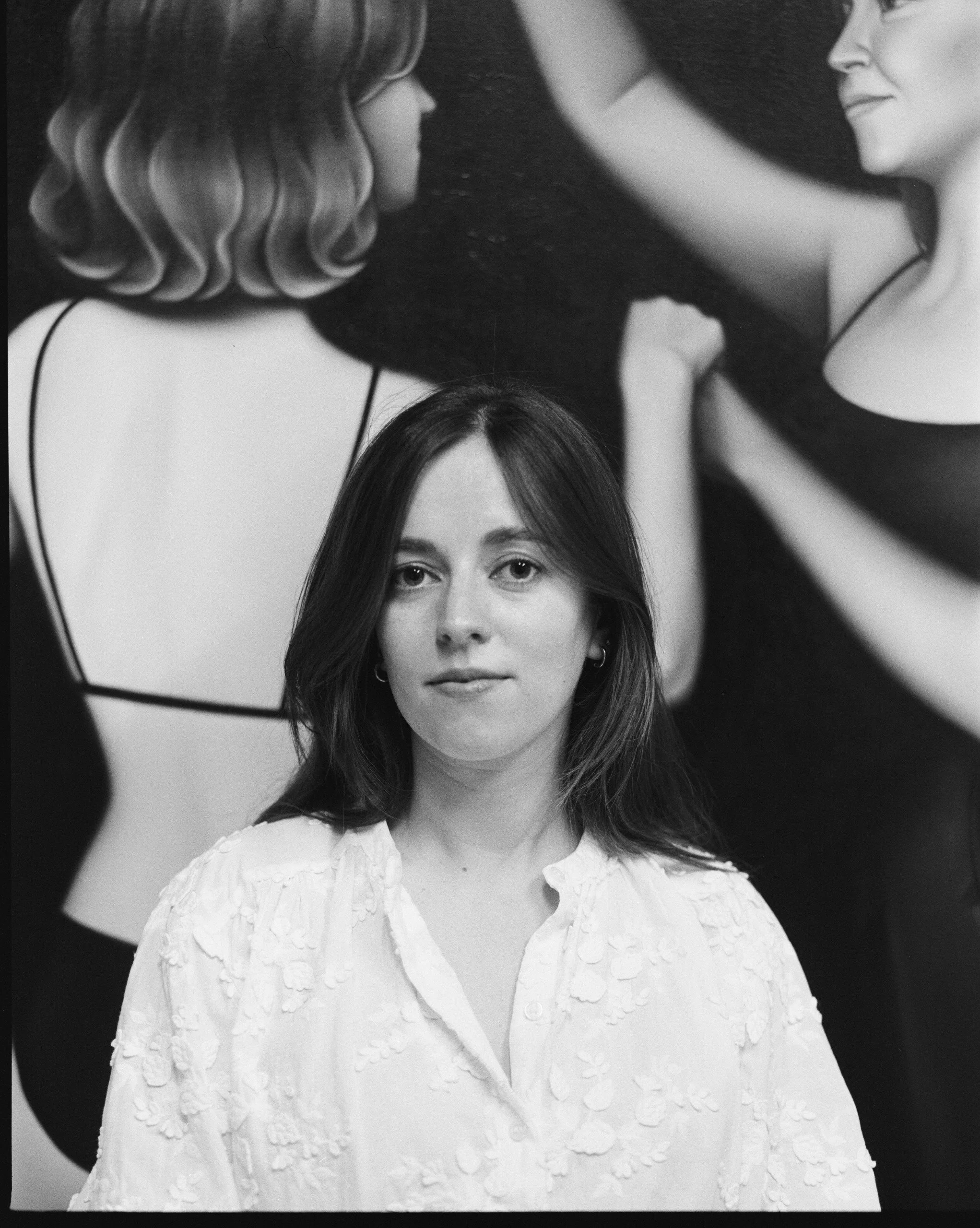
Nelleke Cloosterman (b. 1996, Wuustwezel, Belgium) lives and works in London (UK). Having completed a bachelor’s degree in visual arts and a Master’s degree in Fine Arts from KASK (Ghent, Belgium), Cloosterman completed a postgraduate in Fine Arts at HISK (Ghent, Belgium). Cloosterman explores identity, female representation, and the coexistence of different belief systems, woven together through the lens of symbolism and personal history. Nelleke Cloosterman's paintings appear at first glance in the Vanitas fashion, still lifes of flowers, birds, fruit and candles, 17th-century imagery of expensive worldly possessions. But across the works are a series of small rebellions that manipulate the model of the Vanitas. Void-like settings, usually a non-descript room with the suggestion of a boundary, a wall, a curtain, an end, are opened up by Cloosterman. Walls become endless skies and dense forests, expanding the scope of the paintings across worlds. Here, multiple realities seem to exist, exchanged in thin layers of oil paint. This activates the objects in the paintings; birds are uncaged, flying wingless against an expanse of blue.
Solo Exhibitions include Salon, Kristin Hjellegjerde Gallery, West Palm Beach, Florida, USA (2026); Between What Is Ours, PLUS-ONE Projects, Antwerp, Belgium (2025); Song of Invisible Boundaries, Indigo+Madder, London, UK (2024); Dawn Goes Down To Day, PLUS-ONE Gallery, Antwerp, Belgium (2023); Cardshark, CENTRALE for Contemporary Art, Brussels, Belgium (2022). Group Exhibitions include Growth of the Soil, Kristin Hjellegjerde Gallery, London, UK; Painting After Painting, S.M.A.K. Museum of Contemporary Art, Ghent, Belgium (2025); Art Antwerp, PLUS-ONE Gallery, Antwerp, Belgium; Reflections, EU Council Buildings, Brussels, Belgium (2024); Face Time, PLUS-ONE Gallery, Antwerp, Belgium; Summer Show, BARBÉ Gallery, Knokke, Belgium; Beyond Borders, Verduyn Gallery, Moregem, Belgium (2023); Everybody Has A Plan Until, BARBÉ, Ghent, Belgium; Infinite Flowers, PLUS-ONE Gallery, Antwerp, Belgium; Kunsterfestival, Aardenburg, Netherlands; Neon Memories, BARBÉ, Ghent, Belgium; Altered States, PLUS-ONE Gallery, Antwerp, Belgium; I Know Why the Caged Bird Sings, WARP, Sint-Niklaas, Belgium (2022); Various Positions, HISK, Brussels, Belgium; Belgium Art & Design Fair, Ghent, Belgium; The HISK Affair, Brussels, Belgium; Sonsbeek 20-24 Conjunctions, Arnhem, Netherlands (2021); Inside-Out, Royal Museum of Fine Arts, Brussels, Belgium; Zomersalon 2020, Kunsthal Gent, Ghent, Belgium; Salon des Artistes, Ronse, Belgium; Artivirals, Maaltebrugge Castle, Ghent, Belgium (2020); Graduation 19, KASK, Ghent, Belgium (2019); Het Doel Heiligt de Middelen, Croxhapox, Ghent, Belgium (2018).
Nelleke Cloosterman’s public collections include The Belgian Ministry of Foreign Affairs, Painting, Home-Making, BE; MHKA, HISK Silkscreen: Sonsbeek, BE; Mu.ZEE, HISK Silkscreen: Sonsbeek, BE; IKOB, SISK Silkscreen: Sonsbeek, BE; Vrienden v/h SMAK, HISK Silkscreen: Sonsbeek, BE. Additionally, she completed the residency The Fores Project, London, UK (2025).
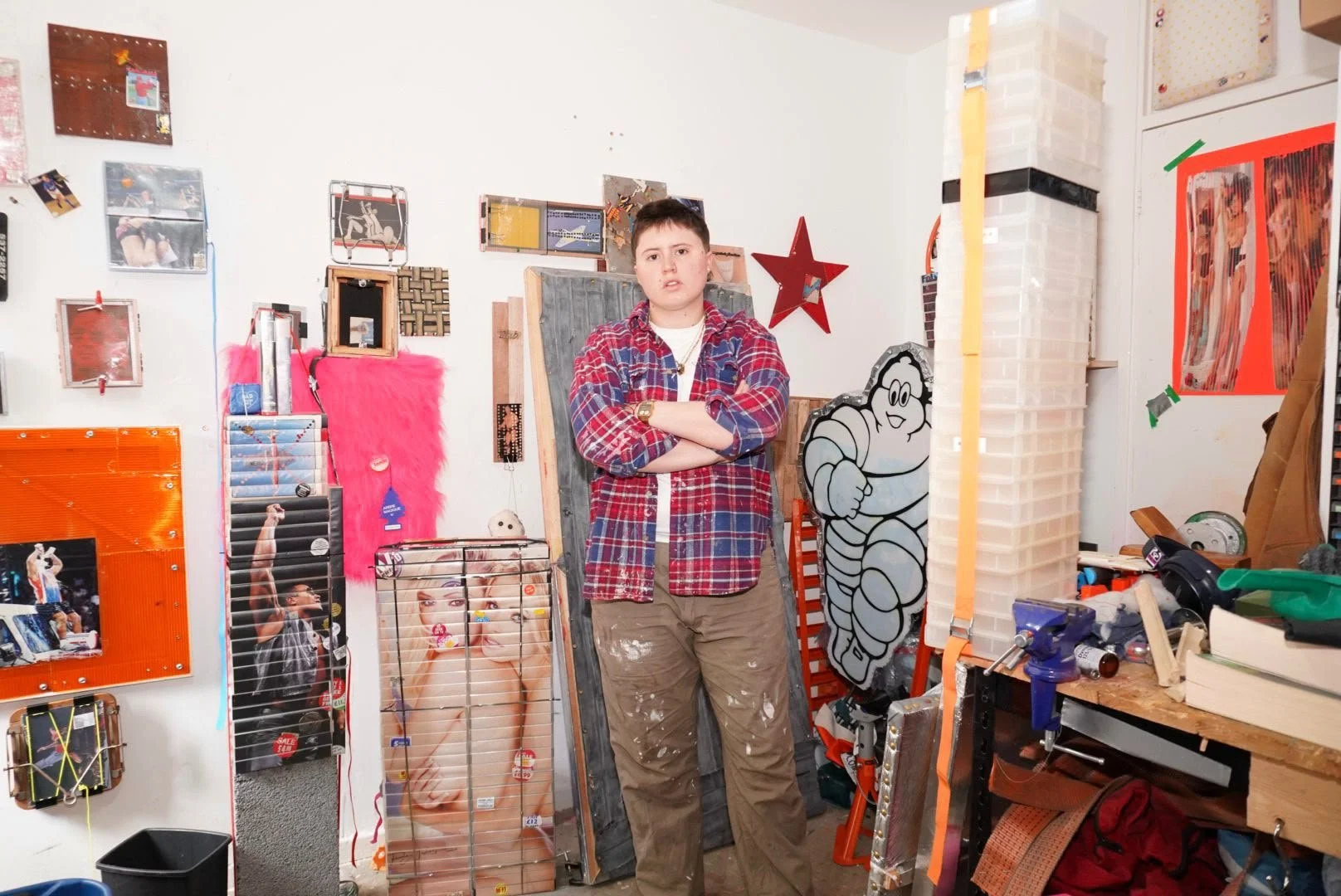
Photo by the artist.
Eva Dixon (b. 2000, Waratah, Australia) is an Australian artist based in London. Working across assemblage, sculpture and painting, their practice examines homo-eroticism in sport and pornography, lesbianism, the space race and industrial culture. Dixon brings together provocative reinterpretations of sporting moments, such as goal celebrations and tackles, with materials that suggest seduction, fetishism and desire. Aluminium sheets, walnut frames, darkroom filters, buckles, clips and leather straps become part of their visual language, alongside rockets constructed from stolen street signs and gifted electrical spools.
An avid collector of discarded industrial objects, vintage football and boys’ magazines, pins and playing cards, Dixon treats materials as a central element of their research. By reworking and combining these objects, they construct imaginative, often sexually charged narratives. Personal advertisements seeking discreet or highly specific sexual encounters also inform their practice. These references address the disappearance of historical artefacts within the wider LGBTQ+ community and the importance of fiction-making as a means of preserving and transmitting experiences across generations. (Text by Olivia Rumsey)
Eva Dixon graduated with a BA (Hons) in Fine Art from Central Saint Martins, London, UK, and is currently enrolled at the Royal Academy in London, UK. Their exhibition history includes Crash (solo), Incubator, London, UK, Mercury 13 (solo), WIP Space, London, UK, SCORE!, Split Rivera, London, UK, Top Dog, Parlour Gallery, London, UK, What Holds Things Together, CC Jasper, New York, US, POST//FUTURE, Saatchi Gallery x Delphian, London, UK, The Way of All Flesh, Saatchi Gallery x Delphian, London, UK, Abigail’s Party, Rose Easton, London, UK, Take Me to the Threshold, Flexitron, London, UK, Smoking Gun, Shipton x Cap Gun, New York, US, Lesbian Trucker Paintings (solo presentation), The Fores Project, London, UK, Next, Christie’s x Good Eye Projects, London, UK, VOL. 1, La Sira, Paris, FR, and The Portrait Show, Through The Lens, Johannesburg, ZA.
Among their distinctions are the UK Best Solo Presentation Award at Minor Attractions, London, UK, and the This Earth Award by Maison 0 / LVMH, of which they were a recipient. They were also shortlisted for the Barry Martin Painting Prize. Dixon has undertaken artist residencies at WIP Space Studios, London, UK, Soho Revue, London, UK, and La Sira, Paris, FR. Their international art fair presentations include Art Collaboration Kyoto, Kyoto, JP, Art Cologne Palma, Mallorca, ES, and Preview Art Fair, Seoul, KR.
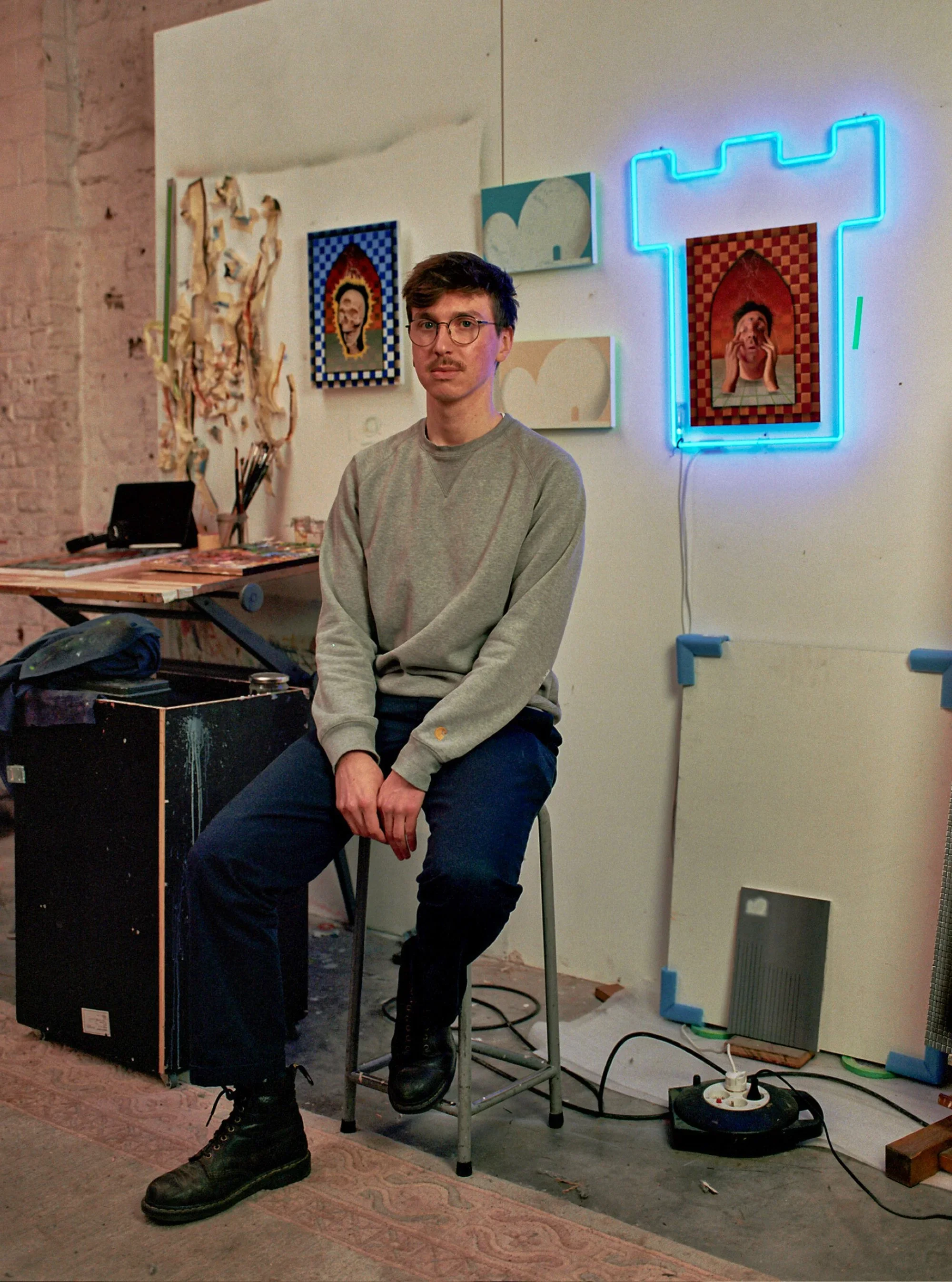
Portrait by the artist.
Thomas Decuypere (b. 2000, Kortrijk, Belgium) explores the intersection of mythology, gaming culture and painting. His meticulously rendered scenes bring together ancient myths and contemporary visual languages, creating imagined worlds in which the artist himself often appears as both protagonist and observer.
Drawing from Greek mythology, Christian iconography and the visual vocabulary of video games, Decuypere reinterprets familiar stories through a distinctly contemporary lens. Landscapes become hybrid spaces where mythological figures, digital imagery, architectural elements and gaming references coexist. His paintings balance meticulous realism with absurd and humorous interventions, allowing serious themes such as desire, jealousy, revenge, vanity and human vulnerability to emerge with a sense of self-mockery and playfulness. For Decuypere, mythology and games share a fundamental quality: both construct worlds governed by their own rules, populated by characters driven by human impulses. By placing himself within these worlds, he turns the painted image into a stage on which ancient narratives and contemporary experiences can collide. His work reflects on how stories, images and archetypes continue to shape the way we understand ourselves, while questioning where the boundaries between high and popular culture, reality and fiction, and the sacred and the absurd lie.
In 2024, he obtained his MFA in Painting from LUCA School of Arts. He has already exhibited in numerous venues, including the Roger Raveel Museum, WARP, Broeihaard, De Gaverprijs, University of England Graduates (UK), 30 Under 30 at Kunstenhuis Harelbeke, History of the Future in Damme, and Diskus in Aalst. In 2024, he had his first solo gallery show at BARBÉ, titled Can’t Stop the Gods from Engineering, followed by his participation in the 2024 Biennale of Painting at the Museum van Deinze en de Leiestreek (BE). In the past two years BARBÉ presented works in several group exhibitions and art fairs such as Art Rotterdam (NL) and Art Antwerp (BE).
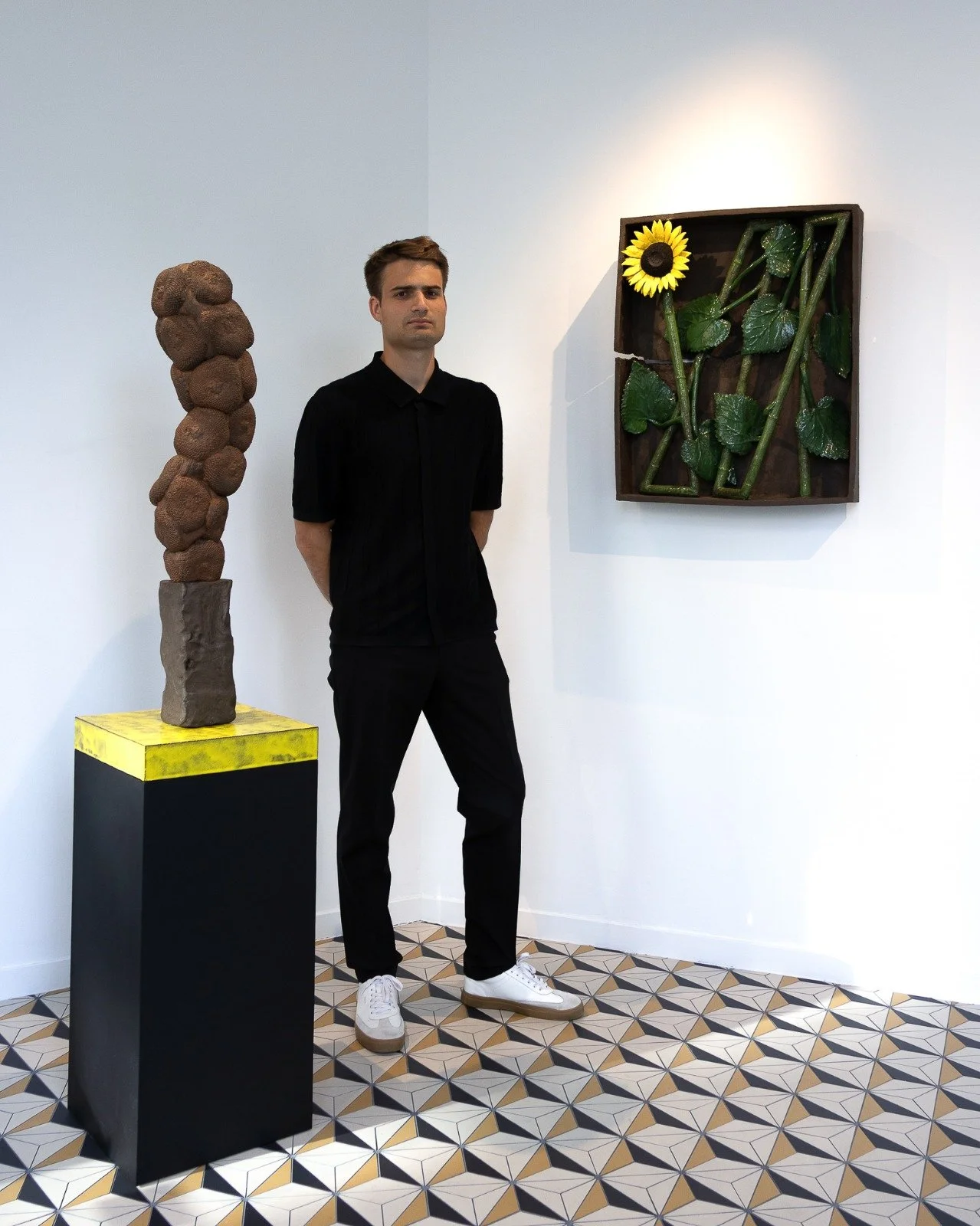
Portrait by the artist.
Nout Bodyn (b. 2000, Mechelen, lives and works in Kluisbergen, Belgium) 's sculptures explore the dialogue between the internal and external worlds, reflecting his perception of the surrounding environment as a projection of his inner self. Central to his practice is the relationship between the infinity of inner space and the finiteness of physical form. Balancing between abstraction and figuration, Bodyn’s sculptures are characterized by liminal spaces, openings, entrances, and exits. These in-between spaces act as the lungs of his creations, allowing forms to interact with one another and their surroundings. Humor and absurdity emerge in playful and unexpected ways, contributing to a universal, non-verbal language. His work transforms the familiar into the unfamiliar, echoing Freud’s concept of the Unheimliche, or the uncanny. By blurring the boundaries between reality and fiction, his sculptures evoke a subtle psychological tension, inviting feelings of mystery, desire, and unease. Through his use of scale, material, color, and spatial relationships, Bodyn creates an alternative world in which the ordinary becomes strangely unfamiliar.
Nout Bodyn obtained his Master in Visual Arts, Sculpture in 2023 and his Educational Master in Visual Arts in 2024, both from LUCA School of Arts, Ghent, BE. He recently completed an artist residency at Ammoni, Benissa, ES. Selected exhibitions include Between Sun & Seed (solo), Les 4 Saisons, Ghent, BE, Manœuvre, Galerie Gevaert, Zwevezele, BE, Exit 50, Budafabriek, Kortrijk, BE, Zomersalon 23, Kunsthal Ghent, Ghent, BE, The Sequel, LUCA School of Arts, Ghent, BE, Paniek in de Diskus, DISKUS, Aalst, BE, and 30 Onder 30, KunstenHuis, Harelbeke, BE.
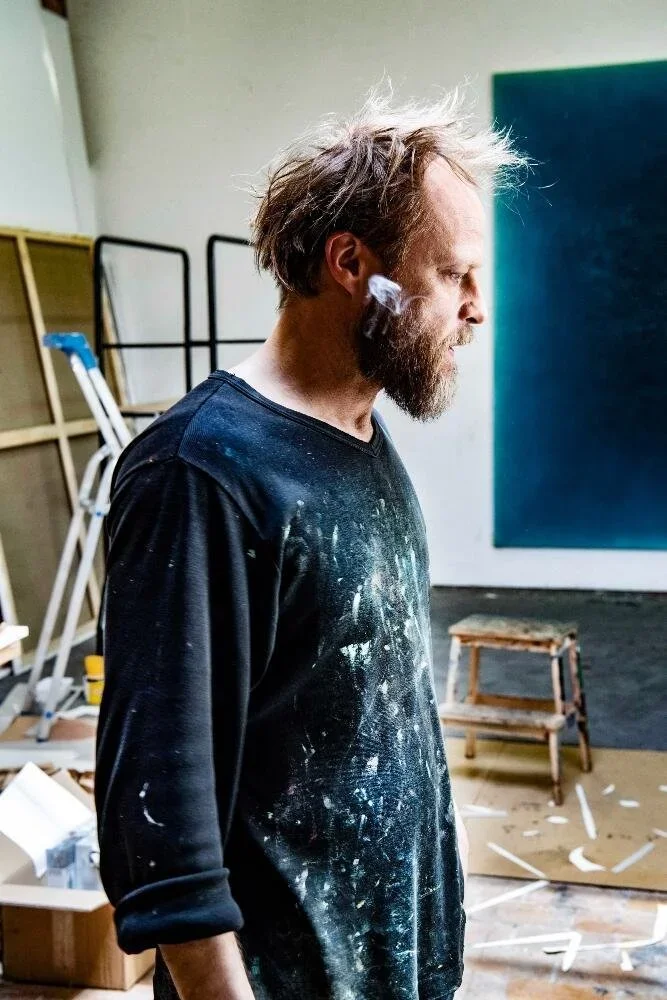
Charlie De Voet's (b. 1977, lives and works in Ronse, Belgium) painting practice is primarily an investigation into space and materiality, both within and beyond the boundaries of painting. Central to his work is the behavior of oil paint under extreme layering, and how this contributes to optical depth, color, and texture. At the same time, he explores the limits of the medium by using paint as an autonomous, sculptural and skin-like material. By detaching the painting from its traditional support, he creates objects that not only present an image but also occupy space. His work balances surface and volume, illusion and physical presence. For De Voet, painting becomes not merely a window looking out onto the world, but a tangible, spatial experience in which tradition and experimentation can merge into a single gesture.
Recently, ‘LET SEEK HIDE & PAINT’ opened as his second solo exhibition with BARBÉ. The gallery has presented his works in numerous exhibitions both in and outside the gallery. He has also participated in exhibitions at venues including Spazio Display (Parma, IT), Art Rotterdam (NL), CAN Art Ibiza (ES), Ballroom Project (Antwerp, BE), Plus-One Projects (Antwerp, BE), Hilvaria Studios Foundation (NL), Dewael Gallery (Antwerp, BE), the MERode Collection (Ronse, BE), Fred&Ferry (Antwerp, BE) Badaff, (Ghent, BE) and Zebrastraat (Ghent, BE), among others. In 2025 he participated in the inaugural exhibition of the ABBY Museum in Kortrijk (BE). In 2026 he had his 2nd solo exhibition 'LET SEEK HIDE & PAINT' with BARBÉ.
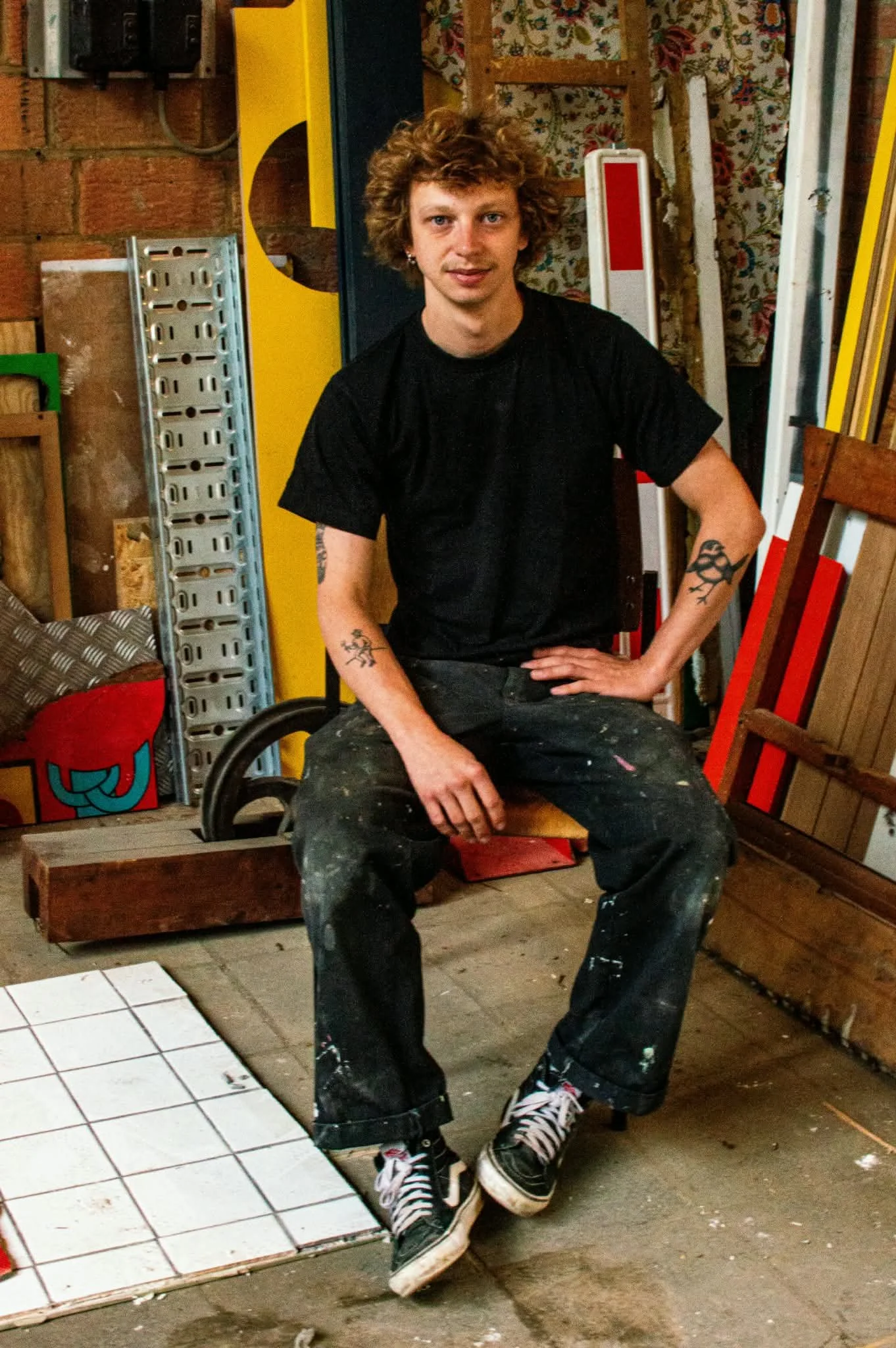
Portrait by Beppe Geerts.
Thibault Carlier (b. 1998, Ronse, Belgium) explores the transformative potential of discarded objects and materials found within the urban environment. Treating the city as an extension of his studio, he continuously searches for overlooked fragments that carry traces of their previous existence. Chance and unpredictability play an essential role in his creative process, allowing unexpected forms and meanings to emerge. Through his sculptural practice, Carlier gives new life to materials shaped by decay, renewal, and the passage of time. His work invites viewers to look beyond the surface and reconsider the hidden value of everyday objects, creating a dialogue between past and present, the urban landscape and artistic creation.
Thibault Carlier obtained his Master’s degree in Fine Arts in 2024 and his Bachelor’s degree in Fine Arts in 2023, both from LUCA School of Arts, Ghent, BE. He also holds a Bachelor’s degree in Interior Design from LUCA School of Arts, Ghent, BE. His work has been presented in several exhibitions, including Sanatorium expo#1, Het Sanatorium, Ronse, BE, De Rampe, De Rampe, Kwaremont, BE, Niet Weggooien!, Gevaertsdreef 01, Oudenaarde, BE, Where Do We Go From Here?, CC De Ververij, Ronse, BE, Pop-in Collect N°2, Merode, Ronse, BE, Grondig, Campo, Ghent, BE, Source Exhibition, Broeke, Ronse, BE, Tortilla Flat, M12, Ronse, BE, Parlevinkers, Espace Intermédiaire, Brussels, BE, and A Collective Collective, Borgerhub, Antwerp, BE.
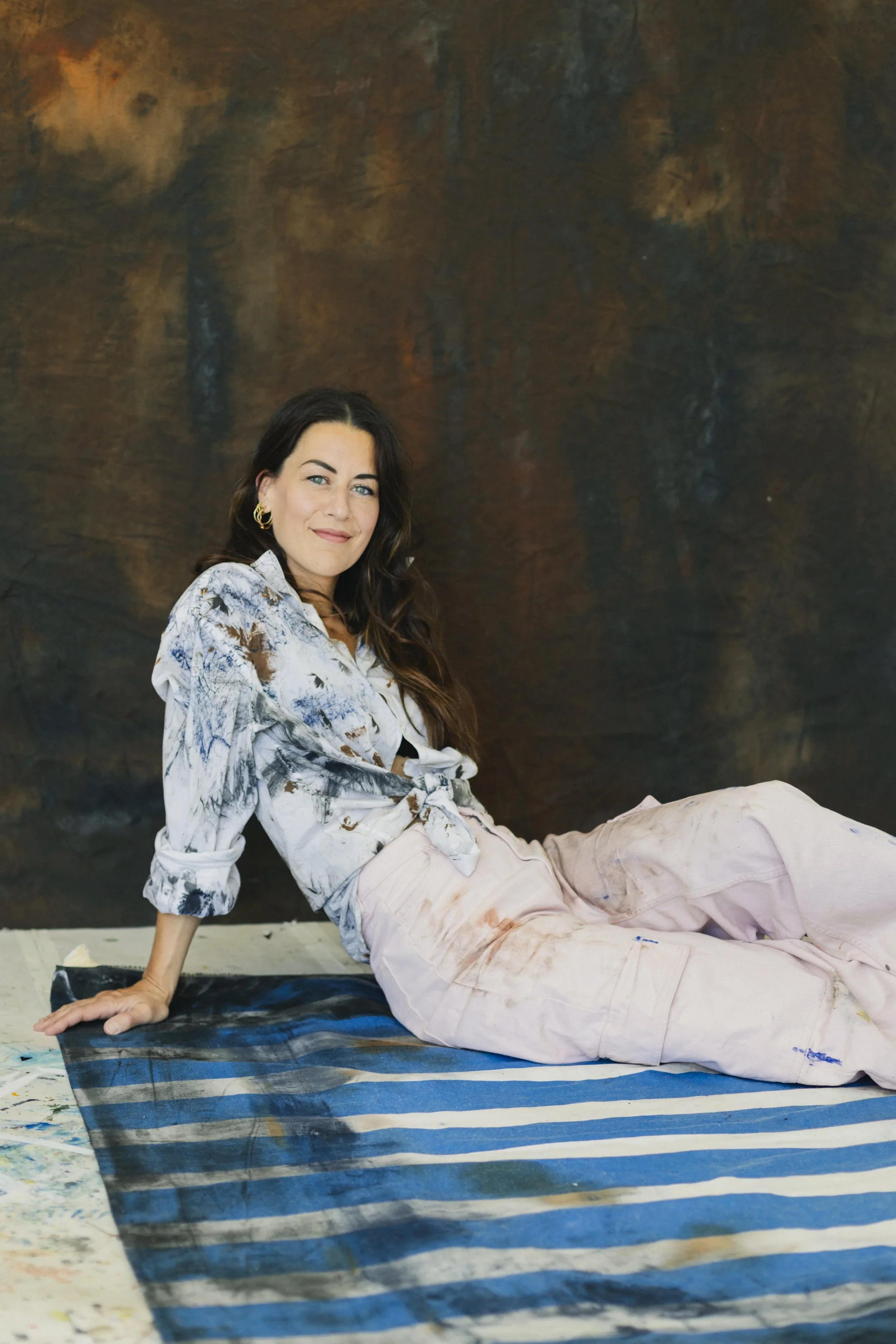
Portrait by Mayli Sterkendries.
Adelheid De Witte (b. 1982, Roeselare, Belgium) lives and works in Ghent. She is known for her abstractions of overwhelming sceneries, which are brought into balance by playful, sometimes mysterious and surprising elements that are incorporated into the work in a variety of ways. Time and again, the Belgian artist succeeds in reshuffling the core elements that define her practice, maintaining the tension between gravity and playfulness while achieving a wide range of variations in their execution. Starting from her paintings, Adelheid De Witte further extends this visual language across different media, ranging from works on paper to installations. These works invariably evoke a sense of nostalgia, memories, and her childhood. In this process, she actively seeks out materials, colours, and physical supports; such as accounting papers from her grandparents’ building materials business, a place that has inspired her from an early age.
Her work has been shown at Museum Dhondt-Dhaenens (Deurle, BE) as part of the Biennial of Painting; Plus One & Sofie Van de Velde (Antwerp, BE); Villa Les Zéphyrs (Westende, BE); Waldburger Wouters (Brussels, BE); Cadogan (London, UK); Irene Laub (Brussels, BE); and deboer gallery (Los Angeles, USA) and at NADA (New York, USA). In 2024, the city of Roeselare invited De Witte to present a retrospective exhibition at Ter Posterie, titled Flagada, curated by Louis-Philippe Van Eeckhoutte. On the occasion of this exhibition, a publication of the same title was released during the solo project exhibition Rock to the Beat in Ghent. In 2026 Adelheid De Witte's solo exhibition Coup de Soleil marked her second solo exhibition at BARBÉ.
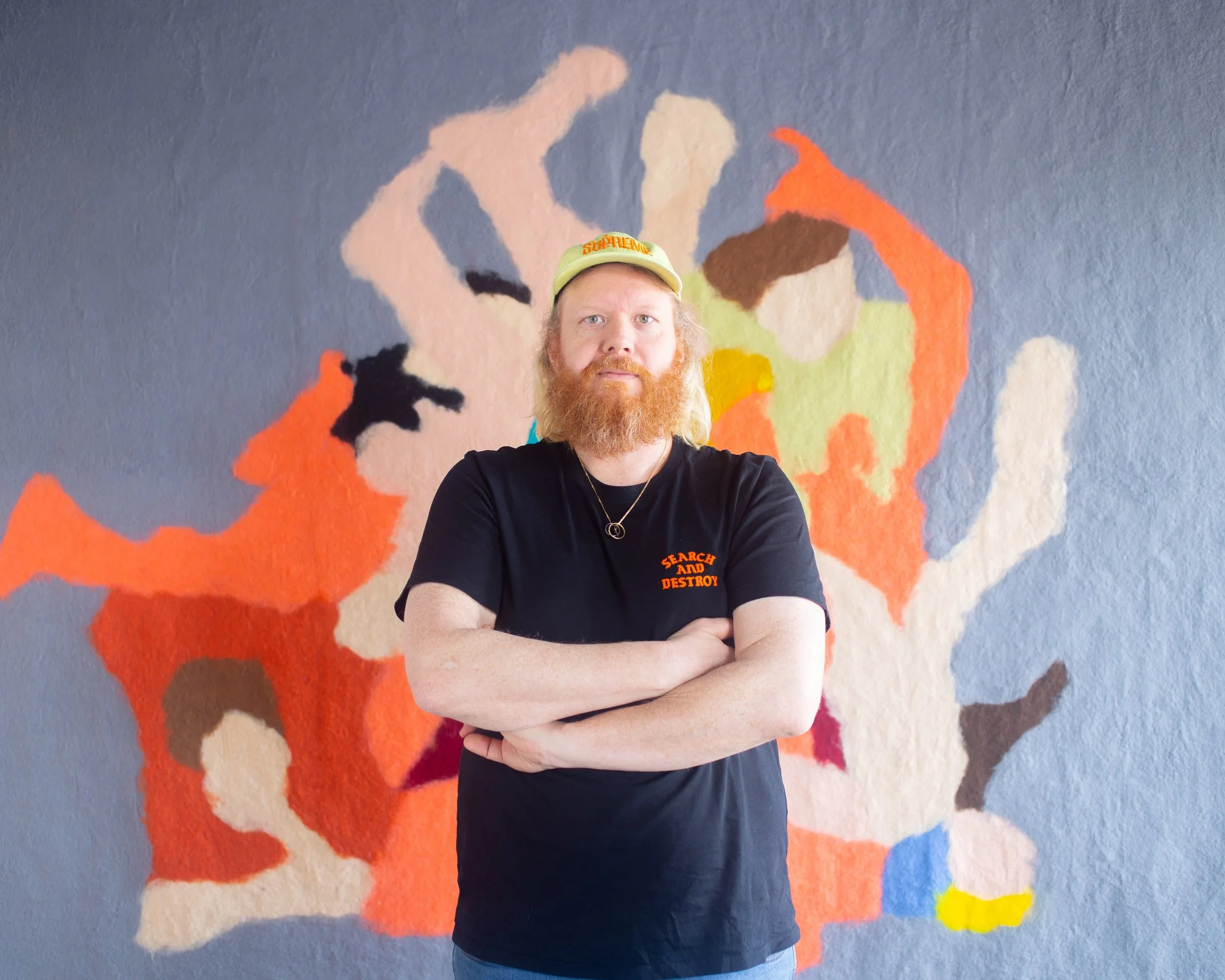
Marlon Wobst (b. 1980, Wiesbaden, Germany) lives and works in Berlin. He graduated as a painter and master student at Universität der Künste Berlin in 2011 with Professor Robert Lucander. In his body of work, which includes oil paintings, felt tapestries, ceramics, and works on paper; he mainly addresses the human existence. He researches typical everyday moments in life, such as getting dressed, exercising, eating, resting or mating; his large scale paintings, the colorful felt works and rather small, intimate ceramics are all glimpses in his, but also human, experiences, rituals and habits.
His works are shown internationally in galleries, museums and institutions such as Kunstverein Siegen (Siegen), Kunsthal Charlottenborg (Copenhagen), Kunsthalle Hangelar (Sankt Augustin), Galerie Maria Lund (Paris), Galerie Zeller van Almsick (Vienna), and Galleri Urbane (Dallas). From 2021 to 2024, Marlon Wobst has had a lectureship for painting at the Universität der Künste Berlin.
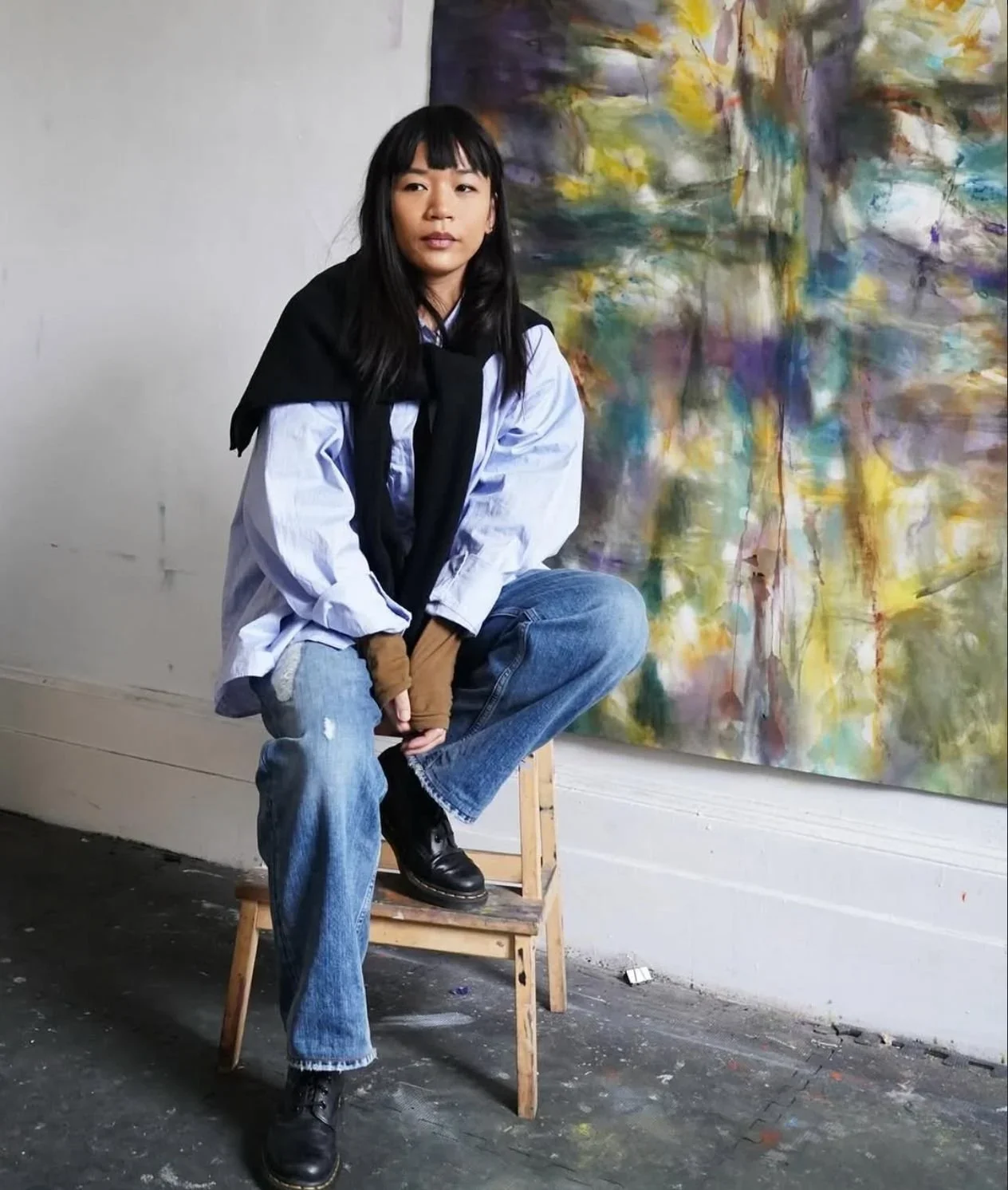
Portrait by the artist.
Carole Ebtinger (b. 1995, Vietnam) lives and works in Brussels, Belgium. Her practice is one of a painter, building each work layer by layer without knowing in advance when it will be finished. She uses pure ink, pastel and adds a combination of pure pigment, glue and water directly into the paper. Dry pastel is added to refine the vague, nature-inspired forms. The movements and intensity of these shapes reflect the different periods she navigates in life, where emotional awareness becomes an important influence among various personal and contextual forces.
Some titles refer to conversations with loved ones and other social relationships, while others are drawn from literature that speaks to her during the creation process. The emotional freedom she has experienced in recent years is clearly visible in the increasingly expressive gestures that emerge in her recent work. They reveal this newly found, ecstatic sense of freedom and happiness through captivating colours, movement and layered materiality.
Carole Ebtinger graduated with a Masters in Drawing from La Cambre (Brussels, 2018) and was awarded the Eeckman Art Prize by Art on Paper, Brussels (2021). This year she finished her residency at The Fores Project in London (UK) and has had a solo in London (UK) (South Parade in 2023) and Los Angeles (USA) (Sarah Brook gallery in 2023 and 2025) and Nino Mier gallery (Brussels, BE) followed by a participation at MIART (Milano, IT) in 2026.. In the past years she also participated in several group shows at BARBÉ and had her first solo 'Ma Première Extase Était Bleue' in 2026 as a represented artist of the gallery.
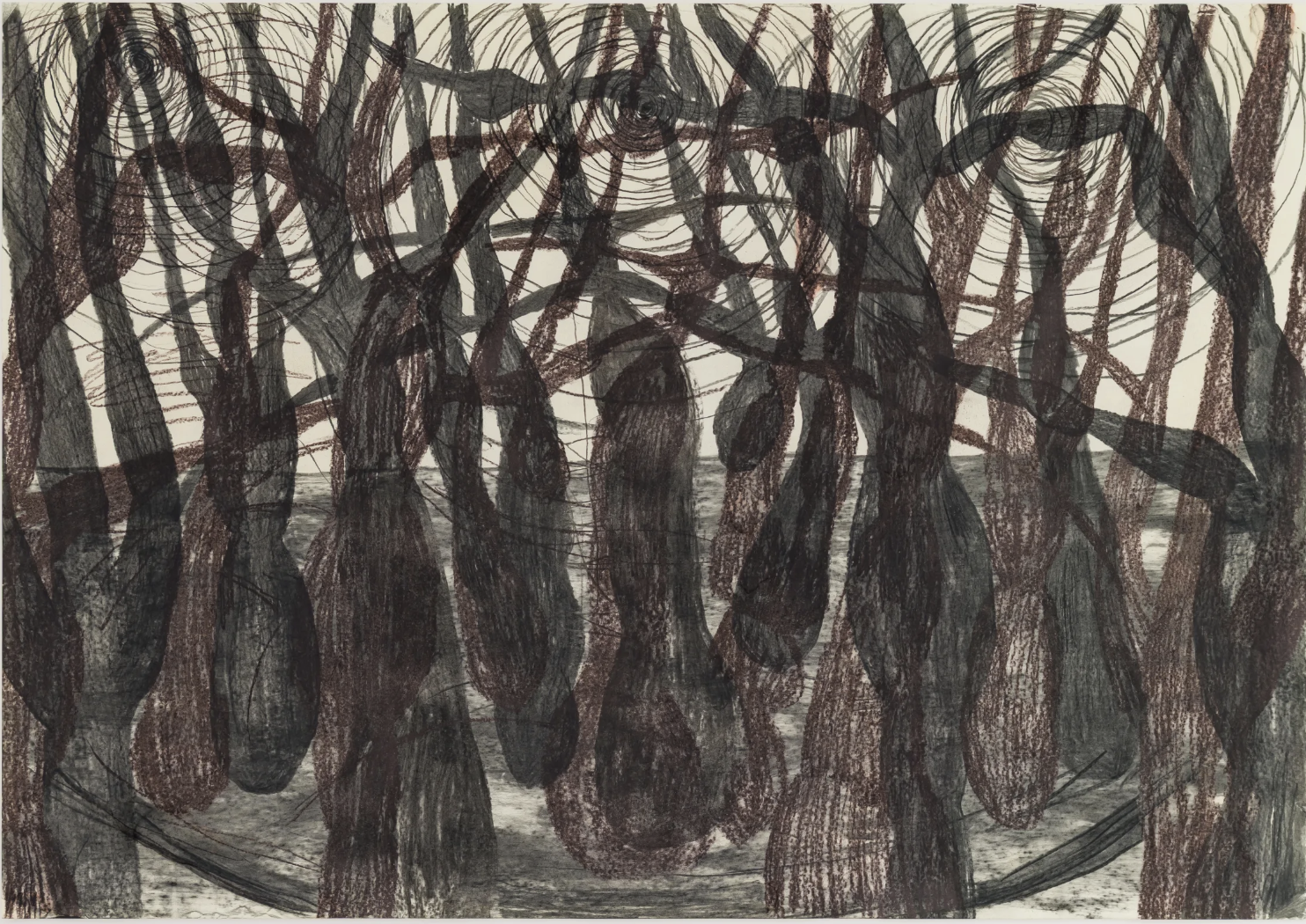
Hammzat Tahabsim, Landscape with Three Suns, 2026, mixed media on Japanese paper, 89 x 119 cm
Hammzat Tahabsim (b. 1997, Amman, Jordan) creates paintings and drawings that explore the passage between tangible reality and psychological perception. Populated by figures, architecture, flora, and domestic artifacts, his compositions follow the elusive internal logic of a dream, in which things do not quite transform into one another but begin to share one another’s anatomy: chairs acquire the suggestion of limbs, trees assume the bearing of bodies, and bodies take root in earth. Working directly onto raw wool, Tahabsim draws pigment into its fibers, producing tactile surfaces that hover between appearance and apparition, the conscious and the pre-linguistic, where sensation outruns understanding and another reality remains latent within the everyday.
Tahabsim received the Presidential Merit Award from the School of the Art Institute of Chicago and the School of Visual Arts Merit Scholarship from Boston University for his graduate studies. He was a resident at the MMAG Foundation. His work has been presented at Frieze Seoul and in exhibitions with Sean Kelly Gallery in New York and Los Angeles, and Make Room in Los Angeles. His work is held in public and private collections internationally
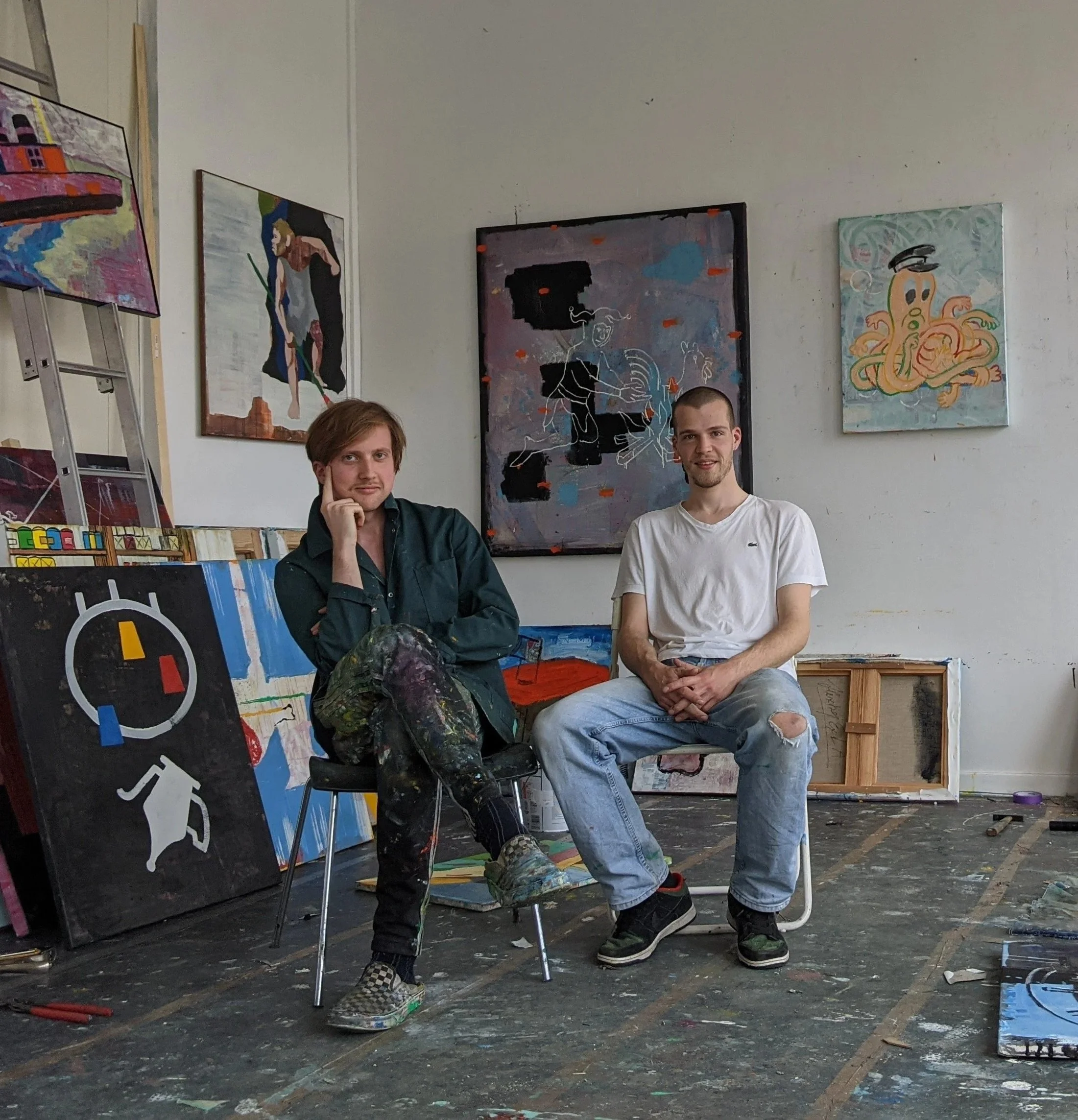
Flexboj & L.A. (b. 1995, Belgium) operate as an artist duo whose practice is characterised by a symbiotic way of working in the studio. Rather than placing the finished artwork at the centre, their practice focuses on investigating, questioning and expanding the conditions in which a work can emerge. Materials, forms and situations are brought into contact with one another in ever-changing ways, sometimes deliberately, sometimes as the result of chance encounters.The duo operates as a continuous process of proposal and counterproposal, in which each intervention provides a new impulse that keeps the whole in motion. Instead of developing a fixed methodology, the studio becomes a space where actions, objects and ideas accumulate, shift and are revisited. Play, experimentation, humour and improvisation determine the rhythm of their collaboration. The resulting installations, actions and images are not the endpoint of a trajectory, but recurring motifs and traces of a shared working environment that continues to evolve.
Flexboj & L.A.graduated together with a mutual project in 2018 which led to heir first show in INBOX, MuHKA in 2019. In 2021 they had their first solo at the gallery ‘Alimentation Générale’ of which The Flemish government acquired two paintings in loan to the collection of MuHKA in Antwerp. They had a solo ‘Geel Mooi’ at CC Het Perron in Yper as laureates of the Louise Dehem prize for painting in 2023. In 2024 they had their 2nd solo 'Ashtrays, Pots & Macramé' at BARBÉ and participated at the group show 'Together: Collaborative Practices' at S.M.A.K. in Ghent, BE.
Their work has also been presented in numerous exhibitions at venues such as Deweer Gallery Estate, Otegem, BE, Schönfeld, Brussels (BE), Galerie B, Durbuy, BE, Art Rotterdam, Rotterdam, NL, Woning De Beir by Huib Hoste, Knokke, BE, Nationaal Tabaksmuseum, Wervik, BE, BARBÉ-Urbain, Ghent, BE, Ronny Van De Velde Gallery, Knokke, BE, PLUS-ONE Gallery & Gallery Sofie Van de Velde, Antwerp, BE, Huis Henk Visch, Eindhoven, NL, M HKA, Antwerp, BE, PLUS-ONE Gallery & Gallery Sofie Van de Velde, Antwerp, BE, M HKA, Antwerp, BE, M HKA, Antwerp, BE, Troebel Neyntje, Antwerp, BE, LUCA School of Arts, Ghent, BE.
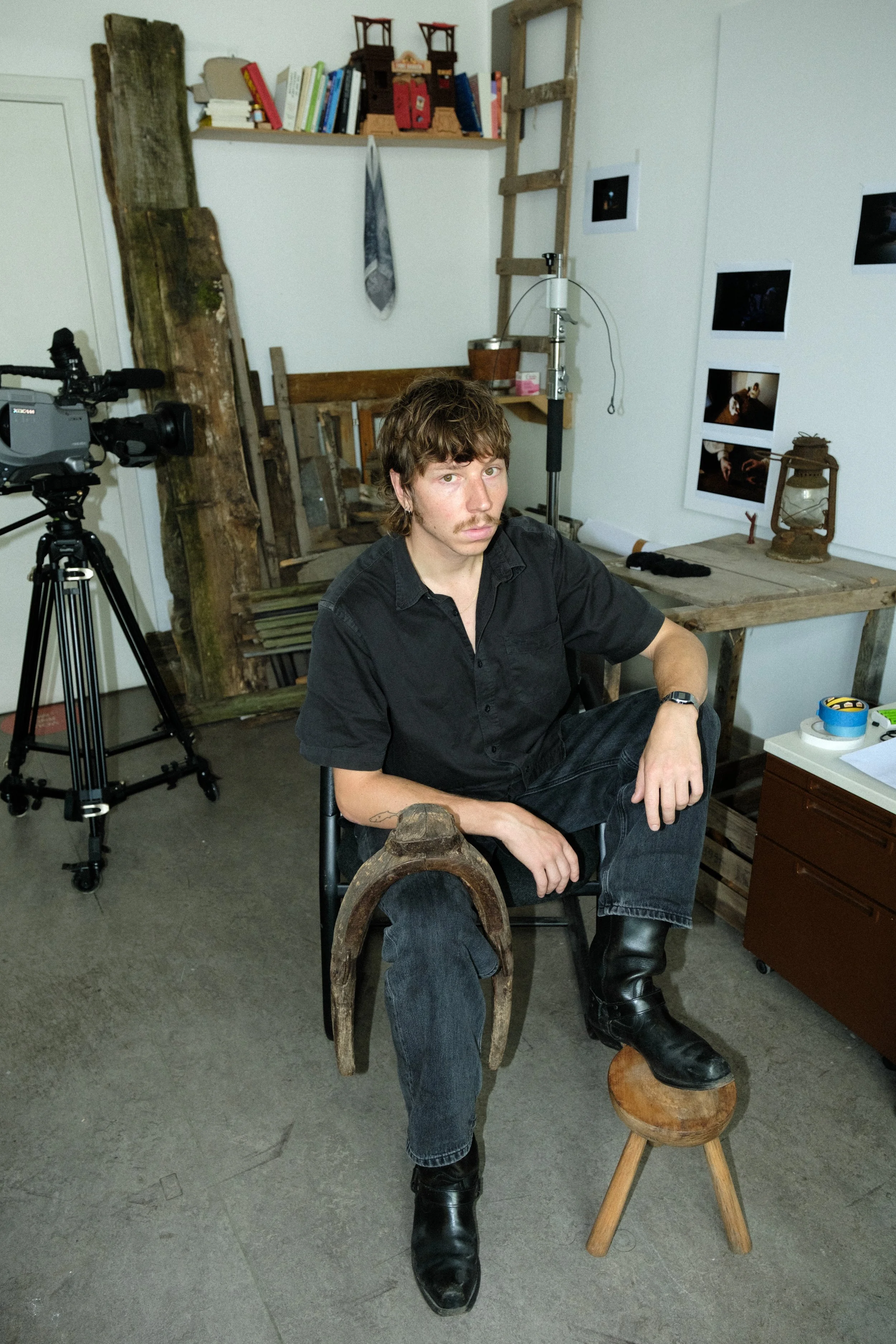
Sid Dankers (b. 1998, Borgerhout, Belgium) explores the performative state through video, installation, performance and scenography: the de facto condition of the body under public exposure. By means of staged alienation, this performative state is illuminated and exposed, blurring the line between fiction and non-fiction. Self-constructed sets, environments and backgrounds form the framework in which scenes can emerge. Inhabited worlds can range from hellfires built of plastic flames to childhood toy castles and deserted grey office buildings. Drawing on iconography and archetypes, and by consciously deploying and highlighting them, their reading is opened up for reinterpretation. In an often interdisciplinary and collective process, ‘entering the stage’ is made explicit by the fact that performers are not sovereign demigods but reveal the fragile and deeply human through hesitation, awkwardness and immaturity.
Sid Dankers lives and works in Brussels and obtained his Master in fine arts at LUCA School of Arts, Brussels. Over the past years his work was presented in Atelier Arthur Rogiers, Brussels, BE, Kunstplaats Vonk, Hasselt, BE, De Zaak, Antwerp, BE, Overwinning/Victoire 39, Brussels, BE, Kassé, Brussels, BE, De Nachtzuster, Tilburg, NL, MILL, Brussels, BE, IDFX, Breda, NL, SB34 Clovis, Brussels, BE, Croxhapox, Ghent, BE, Springboard Art Fair, Utrecht, NL, Huidenclub, Rotterdam, NL, Atelier Manchesterstraat, Brussels, BE, OHK, Ostend, BE, 8-Track, Brussels, BE, Gallery SKC, Rijeka, HR, Het Wilde Weten, Rotterdam, NL, De Kromhouthal, Amsterdam, NL, The Grey Space in the Middle, The Hague, NL, Tour & Taxis, Brussels, BE, Kunsthal Gent, Ghent, BE, Het Hem, Zaandam, NL.
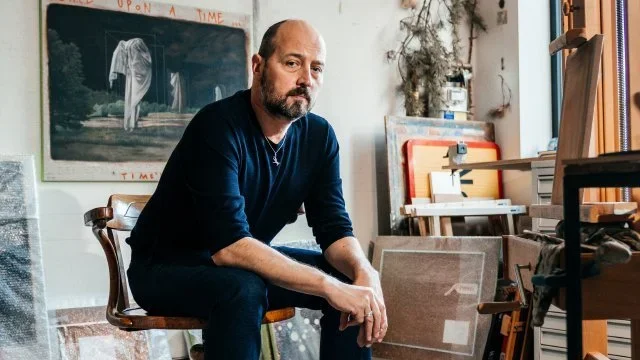
Gideon Kiefer (b. 1970, Neerpelt, Belgium) works and lives in Sint-Martens-Latem, Belgium. Gideon Kiefer delves into memories from his childhood and youth. He poses the question to what extent these recollections are truly representative of reality, while allowing the romanticization and imagination, so characteristic of such retrospection to unfold freely. In doing so, multiple readings of these memories emerge, as though they are being carefully unearthed from beneath the surface.
At Art Brussels this year, BARBÉ presents a focused solo project by Gideon Kiefer: This Party Is Over. We present new works based on the center piece of the solo project presentation, ‘This Party Is Over’. The sculpture, consisting of 600 kg of ice presented on a banquet table, gradually melts throughout the fair and will not last until its end. The melting ice sculpture engages with the recurring theme of climate change, inviting us to observe the festive table as the work slowly disappears. Once fully melted the party is truly finished. Beyond its reference to the climate crisis, the melting iceberg can also be read as a metaphor for fading memory, a concept that lies at the core of Kiefer’s practice.
Over the past years, Gideon Kiefer has exhibited in numerous international solo and group shows in galleries, art fairs, and institutional venues. His work is part of institutional collections such as Museum Dr. Guislain (B), Bank Delen (B), the Metzler Collection (LU), the Belgian Ministry of Foreign Affairs (B), Museum Voorlinden (NL), and Collection Guerlain (FR). In 2025 he has been nominated for Le Prix de dessin de la Fondation d’Art Contemporain Daniel et Florence Guerlain 2025 followed by an acquisition given in loan to the collection Museum Centre Pompidou in Paris (FR). Recently the Flemish Community acquired one of his works for the contemporary art collection of the Flemish Community.
Bruno V. Roels (b. 1976, Ghent, Belgium) works between photography, writing and the analogue photographic process. Photographing continuously, he builds an extensive personal archive from which he draws for his work in the darkroom. For Roels, printing is not merely a means of reproducing a photograph, but an integral part of the creative process. Rather than pursuing a single, definitive print, he embraces the variations that emerge through analogue printing, giving each version equal significance. Through repetition, sequencing and subtle shifts, individual images can become part of larger compositions, while recognisable subjects may gradually move towards abstraction. His practice explores the space between observation and interpretation, and the ways in which photographic images can accumulate new meanings through repetition, context and material transformation. In collaboration with Fifty One Gallery.
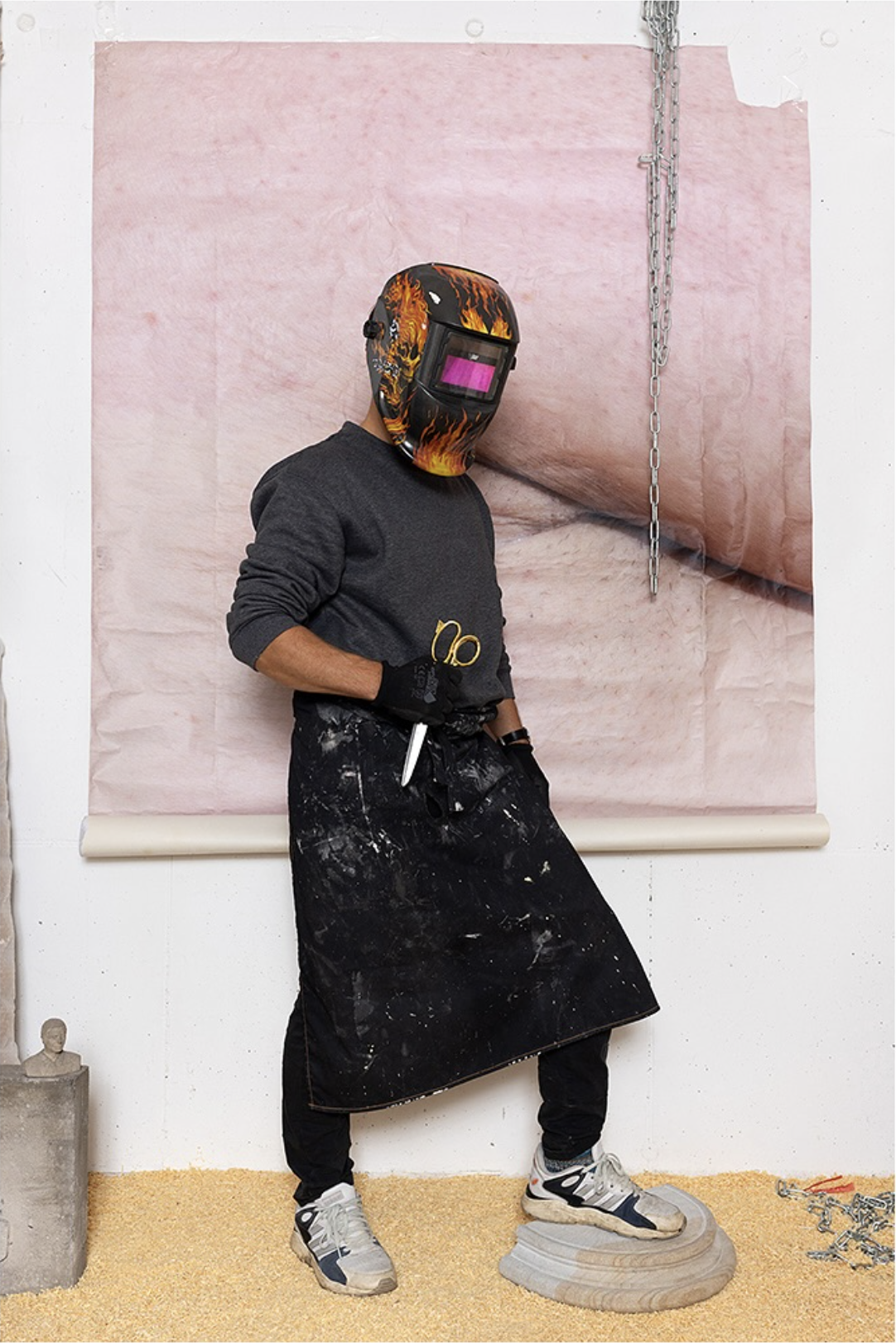
Jens Kothe (b. 1985, Bochum, Germany) presents tactile wall objects echoing the human body, the physical self. Take for instance the oval round cavities, like navels cut from the belly. As if they were enlarged body parts, Kothe’s objects are executed in muted, fleshy coulours and shaped in slightly convex surfaces and soft curves begging to be touched. At the same time they often make you think of familiar elements of everyday life, such as benches. By making use of materials that evoke a certain intimacy, the artist welcomes the viewer into a private atmosphere. Although his works refer to the human body, it is never the human body as a whole. Instead it’s fragmented, degraded even, somehow trapped between its organic origins and the industrial world in which it is supposed to function, thus reflecting the struggle of man against the machine.
Jens Kothe has already participated in several group exhibitions at BARBÉ and has also exhibited at various galleries and institutional venues, including: Kunsthaus NRW, Aachen (DE), Sothu, Zurich (CH), Swivel Gallery, New York (US), Eigen + Art Lab, Berlin (DE), Kunstmuseum Bochum, Bochum (DE), Berthold Pott, Cologne (DE), Beacon / Paulina Caspari, Munich (DE), Cassina Projects, Milan (IT), Kunstverein Heppenheim, Heppenheim (DE), Museum Goch, Goch (DE), Swivel Saugerties, Saugerties (US), Downs & Ross, New York (US), Museum Villa Rot, Burgrieden (DE), Platform 6A Deweer, Otegem (BE), Dortmunder U / Museum Ostwall, Dortmund (DE), Efremidis Gallery, Berlin (DE), Kunsthaus Essen, Essen (DE), DAMA, Turin (IT), RFK, Düsseldorf (DE), Pfirsich, Cologne (DE), Philara Collection, Düsseldorf (DE), Rod Barton, London (UK), Museum Kunstpalast, Düsseldorf (DE), Hyperraum e.V., Bochum (DE), Goethe-Institut, Paris (FR), McKinsey & Company, Düsseldorf (DE), Kunsthallen Bochum, Bochum (DE), Worringer Str. 57, Düsseldorf (DE), Staatliche Kunstakademie Düsseldorf, Düsseldorf (DE), Cubus Kunsthalle, Duisburg (DE), Ruhrtriennale, Bochum (DE), Museo Internacional de Arte Contemporáneo, Arrecife, Lanzarote (ES).
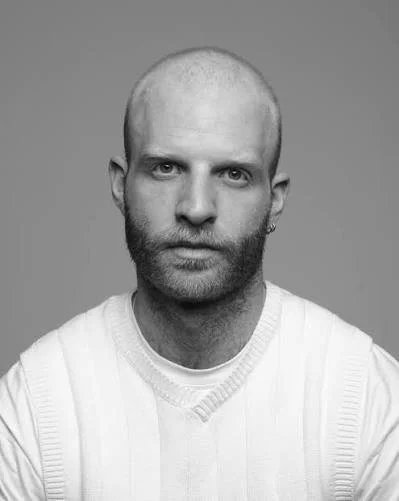
Lukas Städler (b. 1992, Buchholz in der Nordheide, Germany) lives and works in Berlin, Germany. His artistic practice materializes a personal, often intimate exploration of the world that surrounds him and the people in it. The medium of photography allows him to capture fleeting moments or overlooked details, bringing into focus what would otherwise remain hidden. Between staging and snapshots, Städler’s photographic works and series convey a personal approach to individual realities of life. He engages with people in his community, listens to them, and shows through his photos how they love and live. This focus was already established in Lukas Städler’s educational path, which led from fashion design to fine art, where he was able to pursue his interest in contemporary aesthetics as an expression of queer identity in the medium of photography and develop a visual language for it. In collaboration with Dittrich & Schlechtriem
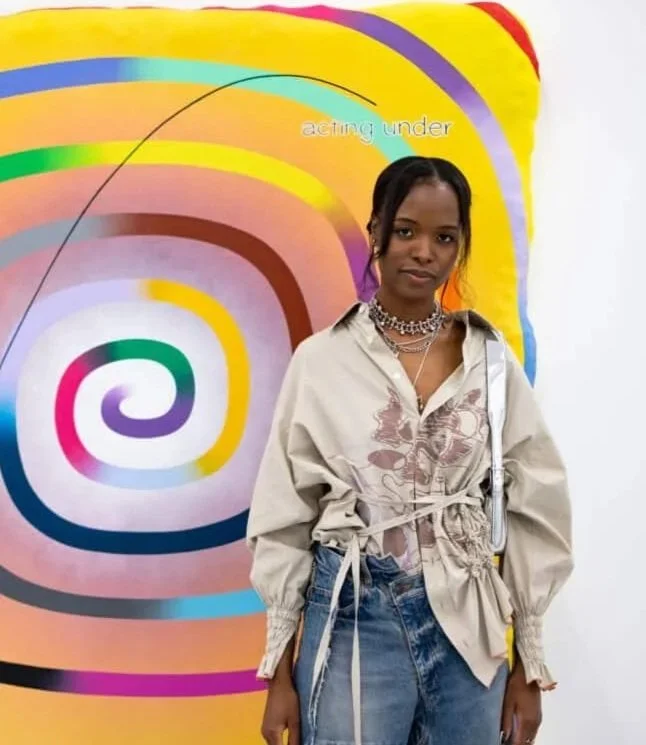
Nokukhanya Langa (b. 1991, Silver Spring, Maryland, United States of America) lives and works in Rotterdam, Netherlands. Her work leaves room for different possibilities, opportunities and (time) perspectives. In her art practice she reconciles the pluralities of her personal story with political and cultural history. Nokukhanya Langa grew up across different parts of the world, from the United States to South Africa, to India, back to the United States, then to the Netherlands for her studies, and to Belgium for a postgraduate degree, before eventually settling again in Rotterdam in the Netherlands.The memories and personal relationships she formed in each of these places have shaped her into the artist she is today. It is as if she temporarily embedded herself everywhere she lived, only to depart again like a ghost in every town, leaving behind certain marks, a kind of scars, both within herself and within the people and places she encountered. These memories of feelings, moments, and relationships are, as it were, encapsulated in stone shaped objects, resembling tablets from a distant past. This trajectory of life forms one of the core elements of her oeuvre. At the same time, the artist’s mental fabric plays a significant role. The complexity of mental chaos, doubt, and tension takes form through bouncing spheres, spirals, and heavy chain installations. These emerge from the image that a downwarts spiral is a loaded spring, a spiral that can only exist through the application of force.This tension and neuronal interplay form the culmination of a multifaceted body of work, in which questioning, doubt, memory, and poetry converge both formally and conceptually.
Nokukhanya Langa holds a MA in Painting from Frank Mohr Institute in Groningen, NL and a Post Graduate at HISK, Ghent, BE. BARBÉ has presented her works in many exhibitions in and outside the gallery with a solo exhibition 'nana' in 2025. In 2024 she had a duo show with Bruce Nauman 'Noku / Nauman' at Saatchi Yates (London, UK) where she previously she had her debut solo in in 2022 'There's A Ghost In Every Town'. In 2025 she participated in 'It Goes Without Saying' at Kunsthal Extra City (Antwerp, BE). Nokukhanya Langa's work has also been exhibited at major institutions including, Centre Pompidou, Paris, France (2020-2021); Kunstinstituut Melly, Rotterdam, NL (2022) and chi K11 Art Museum in Shanghai, CN (2023) and SMAK, Ghent, BE (2025).
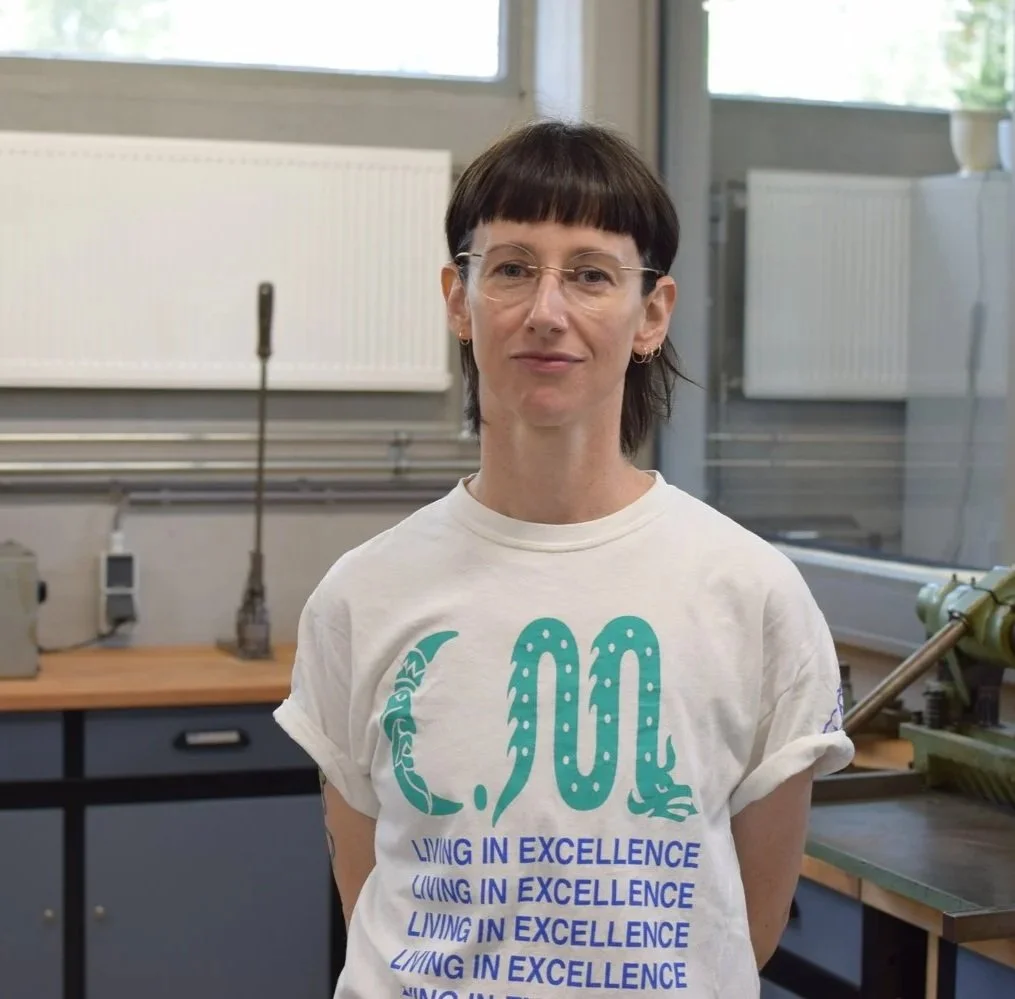
Clem Edwards (b. Naarm/Melbourne) is a Rotterdam-based artist working across language and sculpture. Their practice enacts material, experiential and affective residues of daily life. Busy with enchantment, their work brings into conversation the possibility of the glittering dream castle and the deep knowing that the Disney story cannot exist without the labour, gender and land conditions that produced it. Edwards is the artist and co-editor of The Material Kinship Reader and the head of Jewellery–Linking Bodies Bodies at Gerrit Rietveld Academie, Amsterdam. Lately, Edwards has been (hand)making brass and bronze hinges with memes on them. They have been thinking about thresholds, European hardware traditions and the ways in which hardware structures our lives.
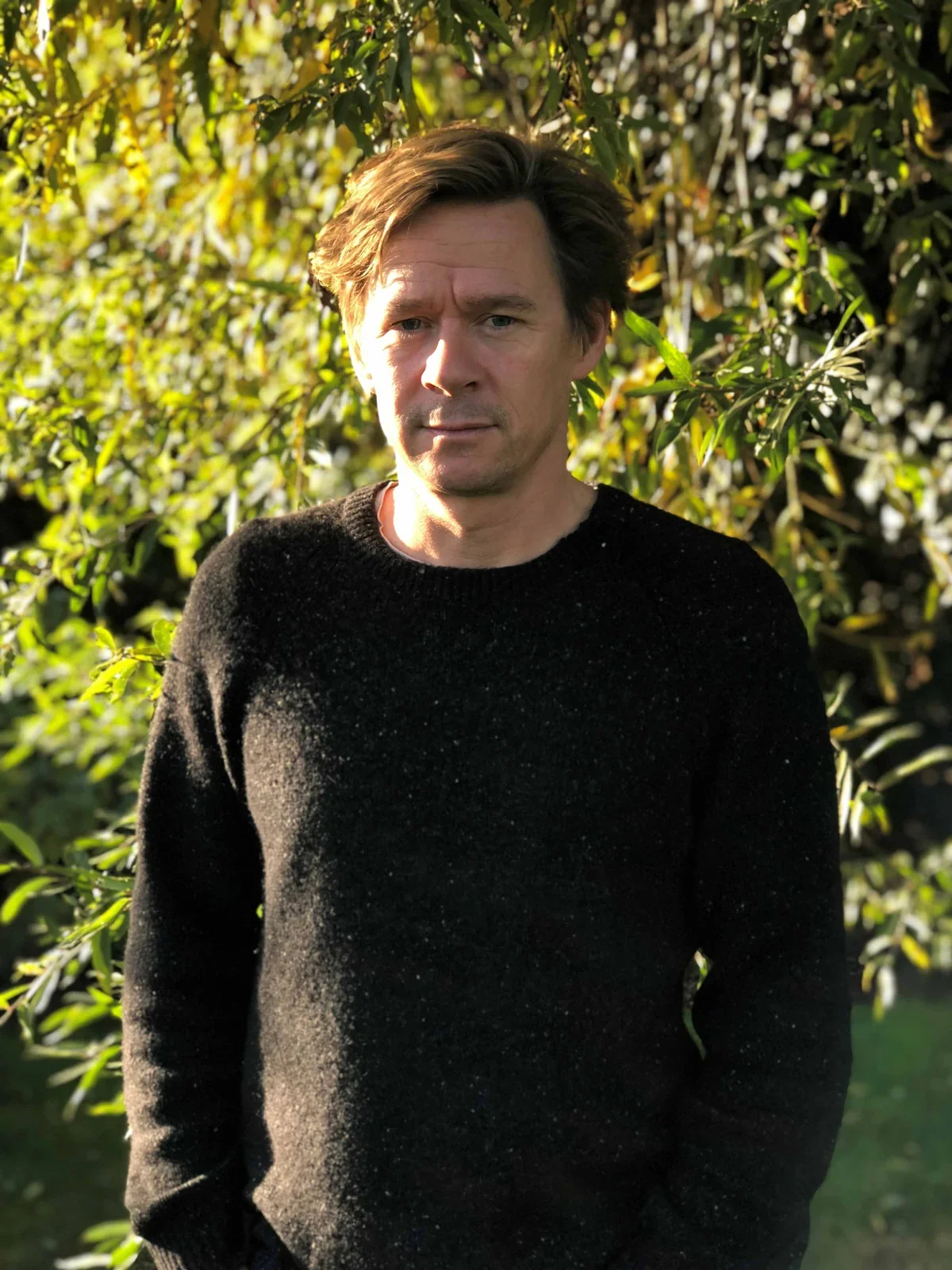
Kris Martin (b. 1972, Kortrijk, Belgium) works and lives in Mullem, Belgium. He is internationally recognized for a rigorous conceptual practice in which he addresses existential questions with subtlety and wit. Martin’s sculptures, drawings, photographs and installations reflect his ongoing preoccupation with matters of human existence and its contradictions. In his work Martin often makes use of the readymade; through subtle acts of displacement and with minimal intervention, he re-contextualizes familiar objects, infusing them with new meaning.
Kris Martin has been the subject of solo exhibitions at international museums including the Kunstmuseum Bonn, Germany; the Aargauer Kunsthaus, Aarau, Switzerland; Kestnergesellschaft Hanover, Germany; the Kunstsammlung Nordrhein-Westfalen, Düsseldorf, Germany; the Kunsthistorisches Museum, Vienna, Austria; the Lehmbruck Museum, Duisburg, Germany; the Wattis Institute for Contemporary Arts, San Francisco, California; the Aspen Art Museum, Aspen, Colorado; the Museum Dhondt-Daenens, Deurle, Belgium; and MoMA P.S.1, New York amongst others. His work has been featured in numerous group exhibitions including the Museum Morsbroich, Leverkusen, Germany; the Louvre, Paris, France; the Tate Modern, London, United Kingdom; the Centre Pompidou, Paris France; the 4th Berlin Biennale, Berlin, Germany; The Warehouse, Dallas, Texas; the Museum Folkwang, Essen, Germany; the Zabludowicz Collection, London, United Kingdom; the KW Institute for Contemporary Art, Berlin, Germany; and The Jewish Museum, New York. His work is included in prominent public and private collections such as the Burger Collection, Hong Kong; The David Roberts Art Foundation, London, United Kingdom; the Fürstenberg Zeitgenössisch, Donaueschingen, Germany; K21, Dusseldorf, Germany; the Museum of Contemporary Art Chicago, Chicago, Illinois; the Olbricht Collection, Berlin, Germany; Sammlung Boros, Berlin and Sammlung Philara, Düsseldorf, Germany; the Stedelijk Museum voor Actuele Kunst (S.M.A.K.), Ghent, Belgium; the Walker Art Center, Minneapolis, Minnesota; The Warehouse, Dallas, Texas; and the Zabludowicz Collection, London, United Kingdom.
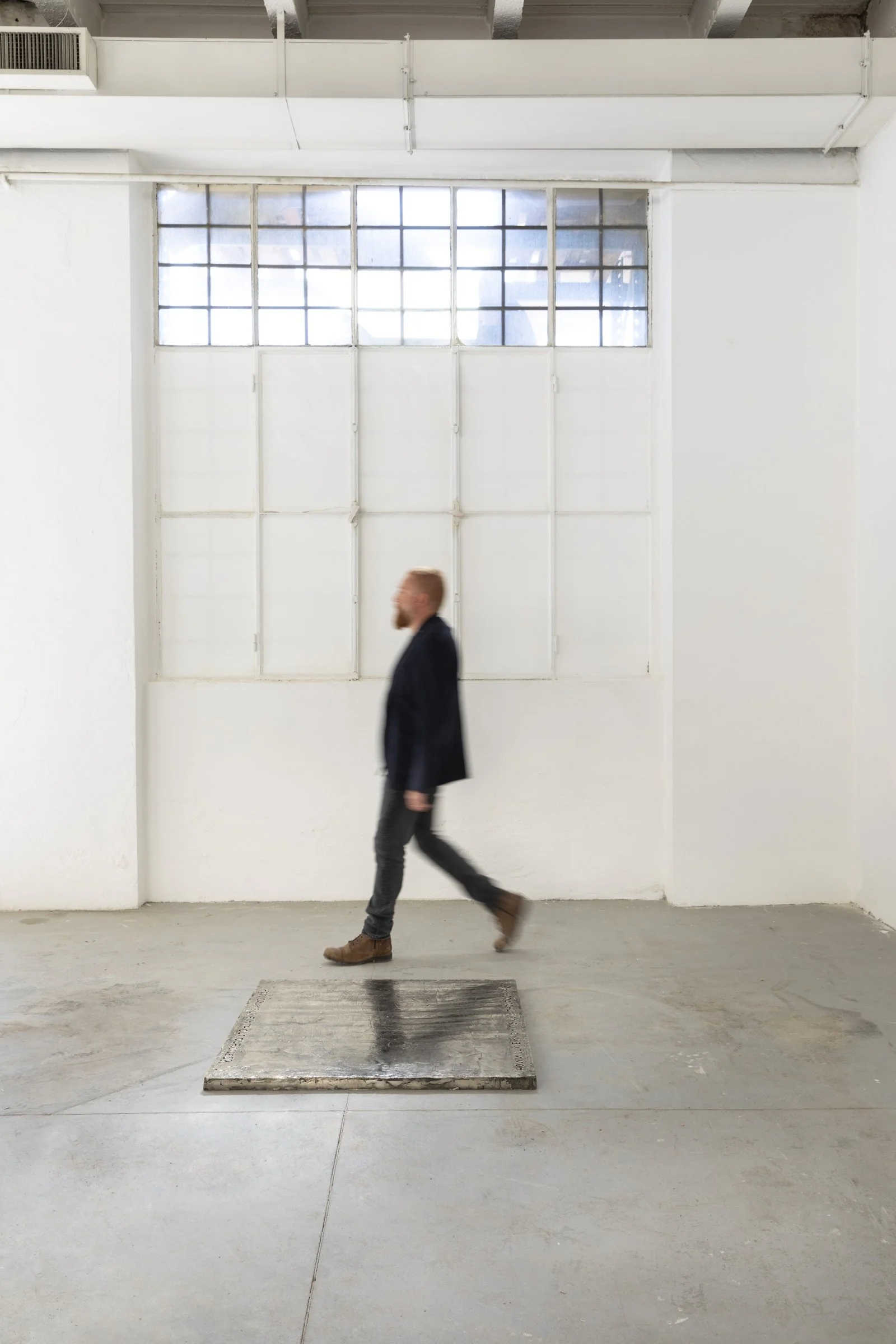
Francesco Arena (b. 1978, Torre Santa Susanna, Brindisi, Italy) lives and works in Cassano delle Murge, Bari, Italy. His practice explores the relationship between history, memory and sculpture. His work develops from the geometric language of Minimal Art and the more archetypal forms of Arte Povera, combining their abstract and impersonal character with personal experiences and historical narratives. Arena’s works often begin with a specific fact, number or measurement connected to a particular event or story. A weight, distance, volume, surface or sentence becomes a fixed point in the process, determining the form, dimensions and sometimes even the materials of the work. In this way, historical events are translated into physical and sculptural forms.
His practice moves between collective and personal history, with the two continually overlapping. Everyday objects — such as diaries, cigars or pieces of furniture — appear alongside traditional sculptural materials including marble, slate and bronze. Rather than illustrating a particular event, Arena abstracts its underlying data, transforming it into a physical form that remains open to interpretation.
His sources range from personal experiences to collective memory and historical events. While his earlier work focused largely on Italian history, his research has increasingly expanded towards global events and situations, using sculpture as a way to give form to the traces that history leaves behind.
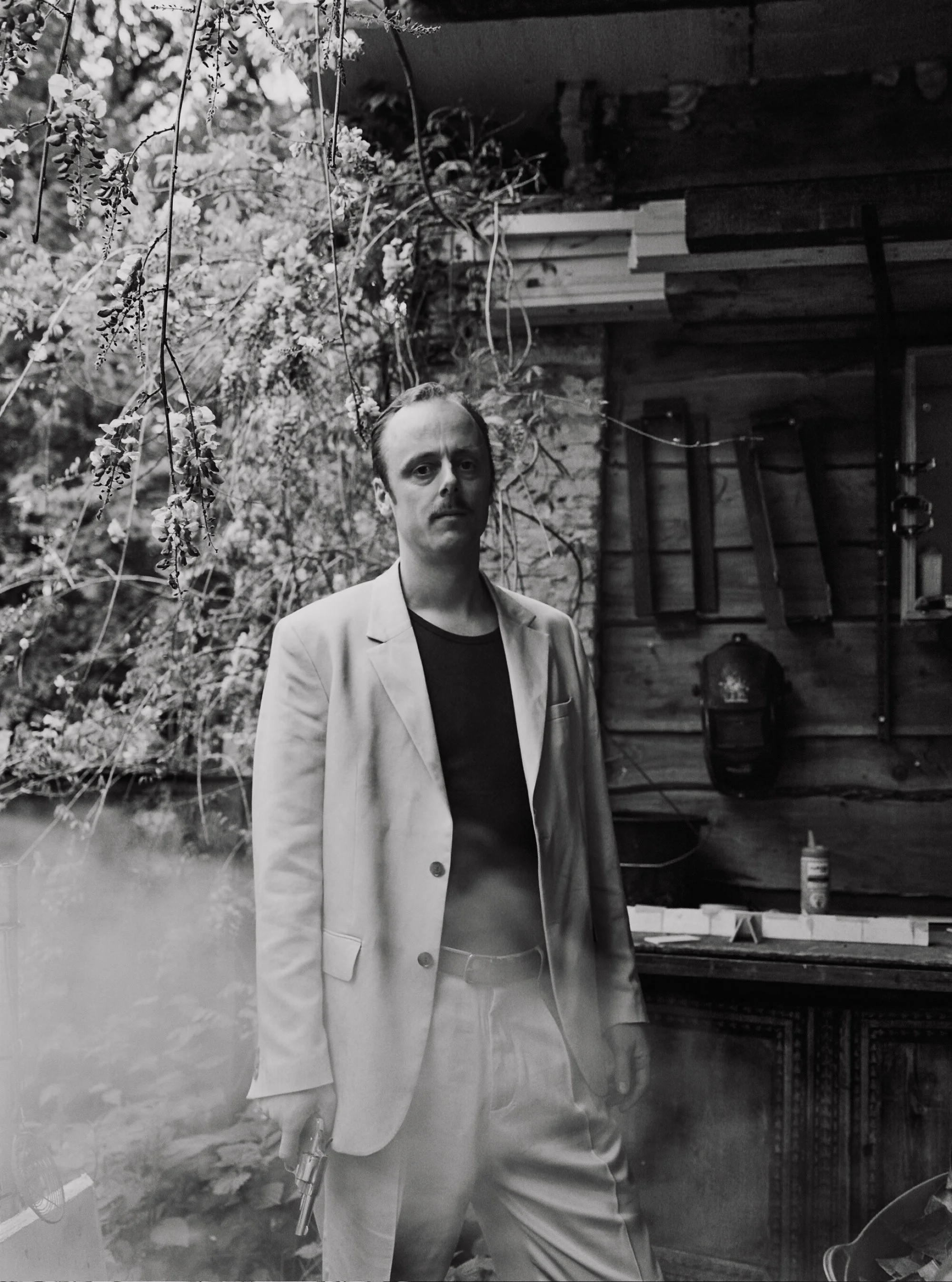
Joost Pauwaert’s (b. 1985, Bretzenheim, Germany) work explores the relationship between power, beauty, and poetry, often infused with a playful, childlike curiosity. He incorporates familiar and symbolic imagery that evokes both recognition and tension. Pauwaert is drawn to the aesthetic of the imposing and the monumental, which he balances with a sense of the caricatural and a symbolic wonder that softens its intensity and opens up imaginative possibilities.
Joost Pauwaert lives and works in Wilrijk, BE. In recent years, his work has been presented in numerous exhibitions, including solo and group shows at BARBÉ and other venues such as Ooidonk Art Festival, C-mine (Genk), Art Brussels (with Dauwens & Beernaert), Art Cologne (with Galerie Eric Mouchet, FR), Archipel at Deweer Gallery Estate (Otegem), Art Rotterdam (with BARBÉ), Ponti (Antwerp), Pizza Gallery (Antwerp), Gevaertsdreef (Oudenaarde), PASS Kunstroute (Lede), and Emergent (Veurne). Following his second solo exhibition, The End Is Near (2024), accompanied by the performance Apocalyptic Triumph Parade, one of the sculptures was acquired by the Museum of Deinze and the Leie Region. He also participated in the debut exhibition of ABBY Kortrijk, where he performed Apocalyptic Carousel in September 2025. In 2026, Pauwaert was invited by curator Simon Delobel for a solo exhibition, A Good Hammering, at KIOSK (Ghent, BE), presenting an immersive installation that reflects his evolving practice of recent years. In the summer of 2026, he presented a solo exhibition at Park Ter Beuken, invited by the city of Lokeren.
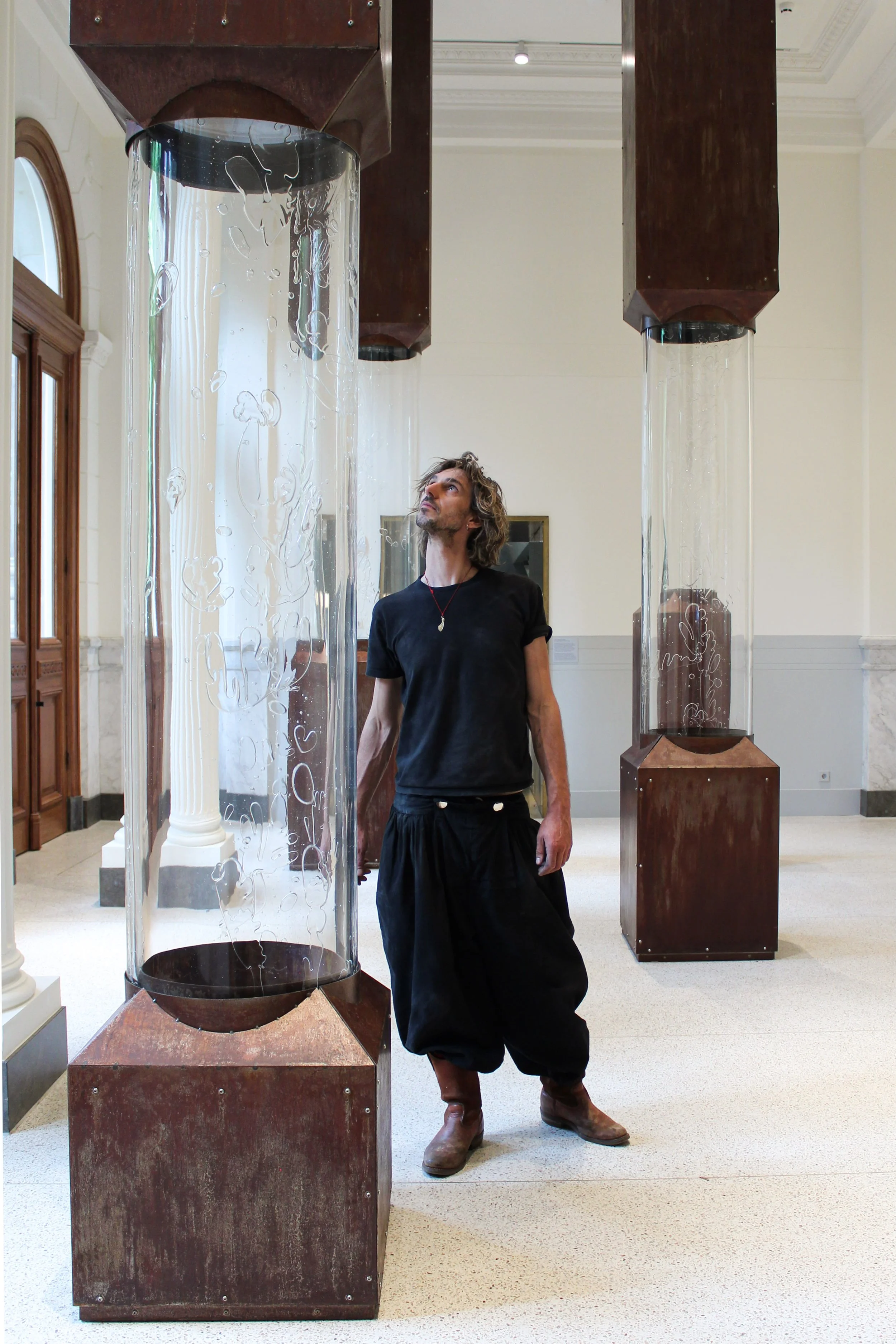
Portrait by Eva van Bemmelen.
The installations of Zoro Feigl (b. 1983, Amsterdam, the Netherlands) seem to be alive. His materials dance and twist. Placed together in a space, the separate works become one: large and ponderous in places, nervous or gracious elsewhere. Feigl’s forms are constantly changing, sometimes slowly, sometimes quickly. The exhibition space becomes an enlarged microscope: single-cell creatures, primitive organisms are twisting, groaning and convulsing. Without beginning or end the objects seem to be locked into themselves. As a viewer you become entangled in their movements: they embrace and amaze, but sometimes also frighten you.
Zoro Feigl lives and works in between Amsterdam, Netherlands and Antwerp, Belgium. He graduated from the Rietveld Academie, Amsterdam and the Hoger Instituut voor Schone Kunst, Gent. His work has been shown internationally at various exhibitions including the Mori Art Museum Tokyo, SPACE Pittsburgh USA, KisArt Busan Korea, National Art Museum of China, Galeria de Arte do SESI Sao Paulo, Artplay Moscow, A+B Contemporary Italy, 0gms Sofia Bulgaria, Verbeke Foundation Belgium, Kulturhuset Stockholm, Self Surface Stuttgart, Black Door Istanbul and several institutes in the Netherlands such as Stedelijk Museum Schiedam, MU, DordtYart, Het Nieuwe Instituut, W139, Arti et Amicitea and Fons Welters. His works is in international museum collections such as HeART museum Herning Denmark, Stedelijk Museum Schiedam, Rijksmuseum Twenthe Enschede, Museum Voorlinden Wassenaar and the Verbeke Foundation Belgium and has made several commissions for public space such as the work ECHO for the Ministry building in The Hague and Rock&Roll for the National Archive in Emmen, NL. He won the Volkskrant Beeldende Kunst publieksprijs 2013, and the Witteveen+Bos Kunst+Techniek Prijs 2018 and has been nominated for Dutch Artist of the year continuously since 2021.
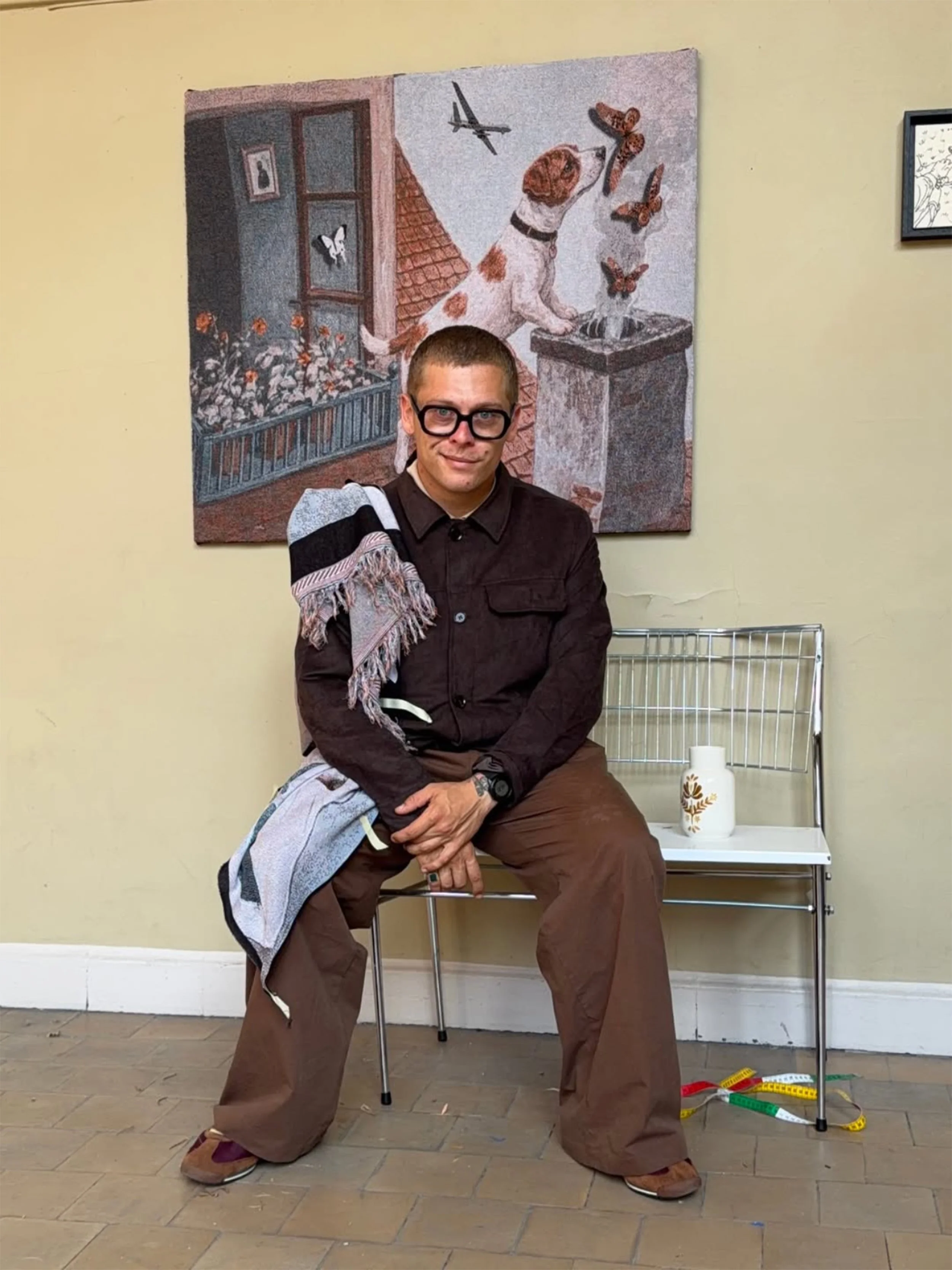
Thomas Renwart (b. 1995, Poeke, Belgium) graduated in 2019 at LUCA School of Arts gaining his masters in Textiles. He developed a textiles practice where crafts-ship and poetic depictions of a horticultural universe constantly meet. Starting with written matter, a world is built around it, carefully translated into tactile matter. Thomas' techniques are jacquard weaving, embroidery, quilting and digital printing. His career started with a weaving speciality in the Damask technique, where he delves into the many ways of how this technique can grow. Monochromic weaving to him, enhances the viewing experience. In recent years, he has returned to the essence of needle and thread, focusing on embroidery as a reference to the female lineage of his family across two generations, along with all the traditions and meanings associated with it.
He creates all of his works based on encounters and experiences from his own life and surroundings. His identity as a queer person and his experience with Tourette syndrome run through the work as a recurring thread, not as dominant themes, but as underlying elements that subtly inform his practice. Currently, he has also returned to weaving in his studio, resulting in an oeuvre that now encompasses a wide range of techniques and expressions, each occupying its own distinct place within his artistic practice.
Thomas Renwart has yet participated in several gallery and insitutional exhibitions in Belgium, Netherlands, France, Germany and USA. In 2020 he had a solo at Kunsthal Gent ‘Gilding The Lily’ which was followed with a large installation as part of the ‘Endless Exhibition’. In 2021 the artist was laureate of the Dorothy Waxman Prize 2021 by Parsons (NY ,USA) and also won two Henry Van De Velde award for his work as a textile artist. In the same year his artist book ‘Comme si de rien n'était: Catalogue & Cahier Intime’ was published by MER. B&L. In the beginning 2022 he had a solo in the Europe House (London, UK) by invitation of the Belgian Embassy and later that year the Flemish government acquired a work for the collection of the Flemish Community which is given on loan to the Mu.Zee collection in Ostend. In 2023 he has his first solo show ‘Highway Vagabond’ at Barbé gallery followed by a solo in October 2023 at Alter-Schlachthof in Eupen, BE and a solo at Kunsthalle Lissabon, PT in December 2023. In 2024 he had a solo at Thomas Rehbein (Cologne, DE) in 2024 followed by a group show at Stedelijk Museum Aarschot. In 2025 he participated in the inaugural exhibition at the ABBY Museum in Kortrijk.
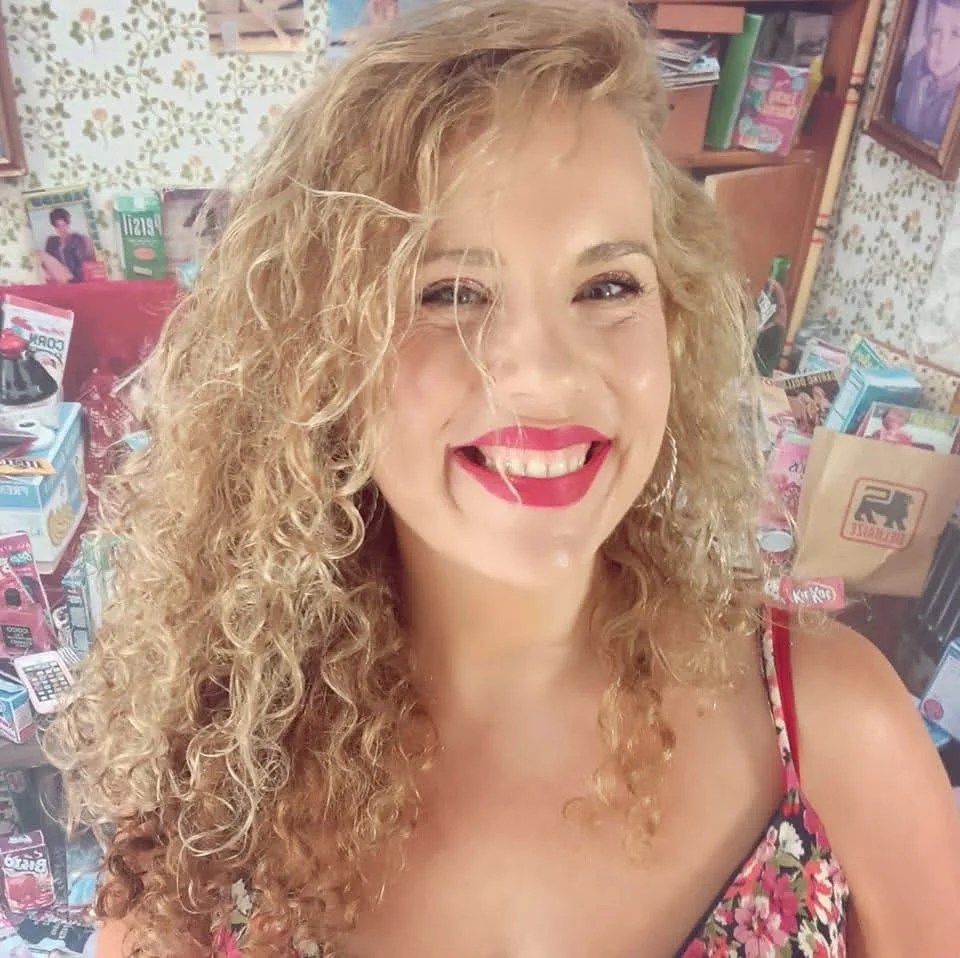
Portrait by the artist.
Katrien Hofman (b. 1981, Mechelen, Belgium) studied 3D-MultiMedia at KASK, Ghent, graduating in 2003. Her practice includes sculpture and installation, combining found objects, dolls, figures and everyday materials. She brings these elements together in playful and unusual compositions, often juxtaposing the familiar with the unexpected. Her works are characterised by a sense of humour and a certain awkwardness, creating scenes that can be both curious and unsettling.
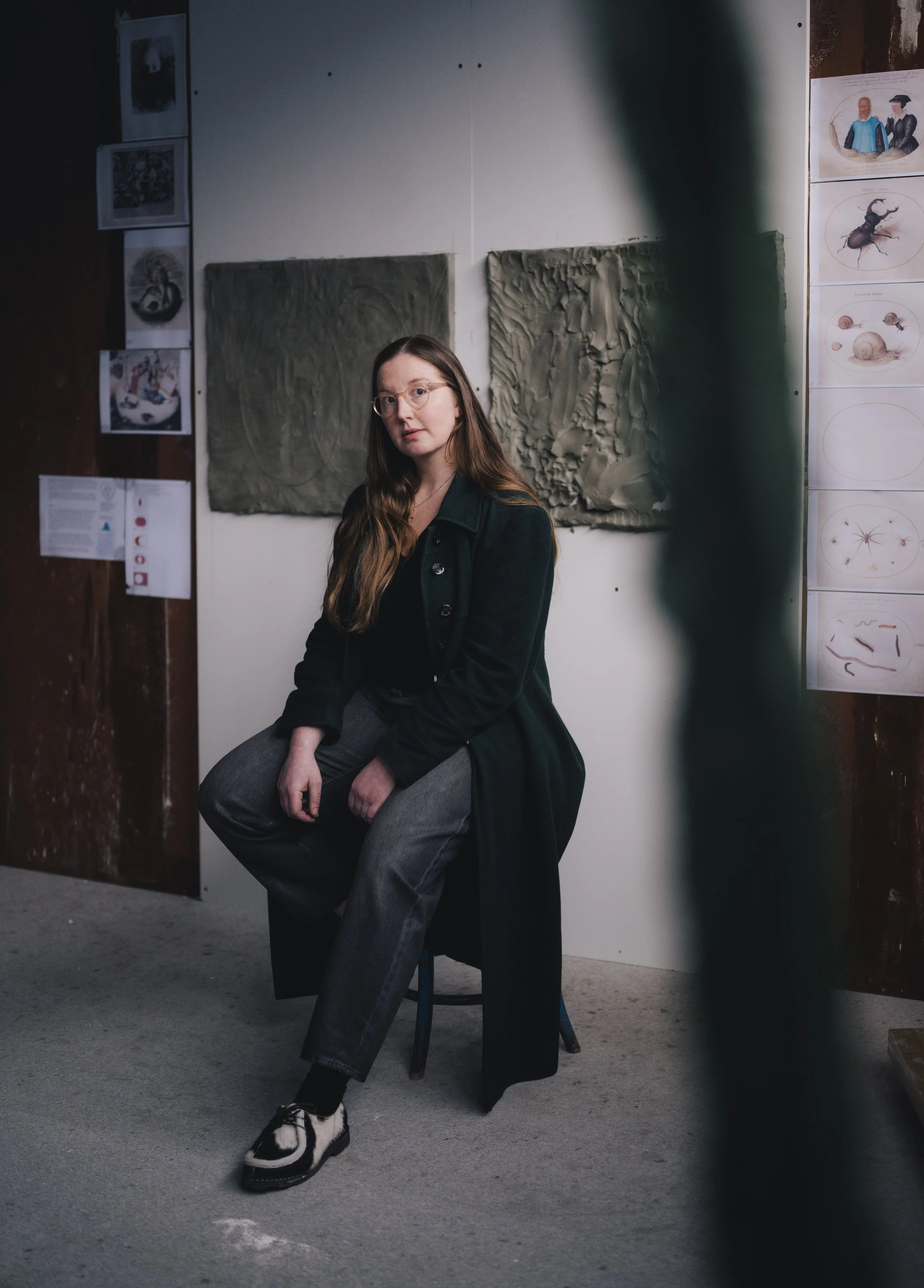
Alice Vanderschoot’s (b. 1989, Bruges, Belgium) love of material and color goes beyond the tactile. Soft, playful, naive, pastel textures become one with architectural, hard, cold metals. The artist is intrigued by the mechanism of things. By what is in, behind and beneath the beautiful sculpture. Scaffolding, fencing and inner workings mostly serve to conceal, support or function, but Vanderschoot brings them radically to the forefront. The illusion of movement, of feather light and leaden, of feminine and masculine, of organic forms and clean lines brings an intense tension and aesthetic dynamism that has a deeper intention besides beauty. Vanderschoot grants a glimpse behind the scenery of life. She not only shows the beautifully lit and polished stage. She also seeks out the wings. The chosen materials and techniques refer both to their underlying emotional world and to the procedure of sense deception, like a deus ex machina of the blind spot. Packaging boxes, fruit: for Vanderschoot, inspiration can be found everywhere. By playing with scale, de-contextualizing identifiable objects and using attractive colors, her imagery is indebted to the dream world of Surrealism and the cartoonish directness of Pop art. Hyper-aware, she analyzes the avalanche of images that pass by daily through advertising, social media and art history. Thematically, there is the same alertness as during Popart for consumerism and mass media but Vanderschoot goes further and challenges collective memory. With humor and an insidious playfulness and naiveté, the archetype, myth and symbolic value of an image is explored. Once the train of references has departed, one image evokes a whole universe. Vanderschoot sees how certain shapes keep returning, evolving organically from object over symbol to archetypes or mythical figures.
Vanderschoot graduated MFA Sculpture at KASK, Gent, BE. A selection of past exhibitions include; several group show at BARBÉ, Art Antwerp, Plus-One gallery, Felix Art & Eco Museum, Sculpture Garden at Rubenskasteel , Archipel, St-Denijs City, Ponti, Ballroom gallery, Diskus, Everyday gallery. In 2023 she had a solo at De Poortersloge ‘All That Glitters' in Bruges after winning the laureate of CC Brugge. In 2024, she had her first solo gallery show at BARBÉ, and recently, the city of Dendermonde commissioned a monumental wall sculpture, which is now publicly exhibited.
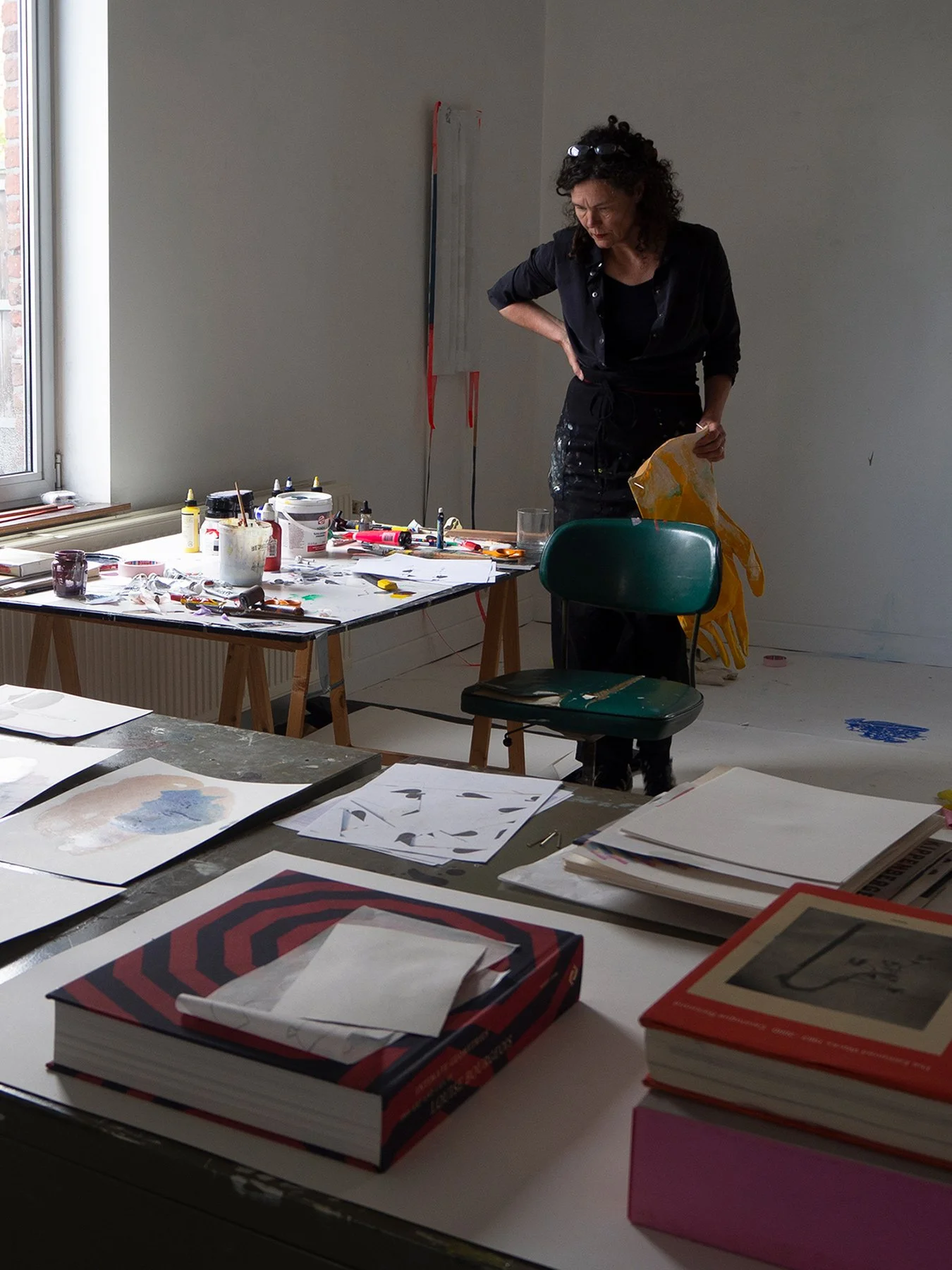
Painting has always been the starting point of Hilde Overbergh’s (b. 1964, Leuven, Belgium) artistic practice. The kind of painting that challenges and shifts the rules and notions of genres and media. Her artistic method zooms in on the exploration of the transformative possibilities of materials, colours, and shapes. Her work comprises aspects of painting, sculpture, assemblage, and installation. Although Overbergh approaches her work conceptually, what stands out is a great sense of intuition and tactility. Through leaving space for what’s unintentional or unforeseen during the creative process, her art never becomes sterile. The artist uses material to question herself. She reclaims insignificant, everyday objects, unravels and reshapes them into evocative carriers of meaning. She extracts beauty and poetry from humble materials such as foam, plastic waste, pieces of textile, glass shards … Her diverse oeuvre is also capable of holding on to elements of when and where the work was made. Environment and context often have a tangible influence on her artistic output through her search for a connection with social and urban dynamics. By repeating and reworking fragments and works from previous presentations, the artist allows for not only the shape, but also the meaning of her work to stray and change. The meaning of her works accumulates over time, and changes according to their position in space or relation to context. Hilde Overbergh creates dynamic connections and associations between works of art and different presentations, which makes viewers sensitive to perception and experience. Her work exists fully in the present moment, and reflects the commotion and fragility of the world around us. In collaboration with Whitehouse gallery.