Stephan Balkenhol | Clément Jacques-Vossen | William Ludwig Lutgens
Arcana Animi
29 August — 4 October 2026 | Baudelostraat 23, 9000 Gent, BE
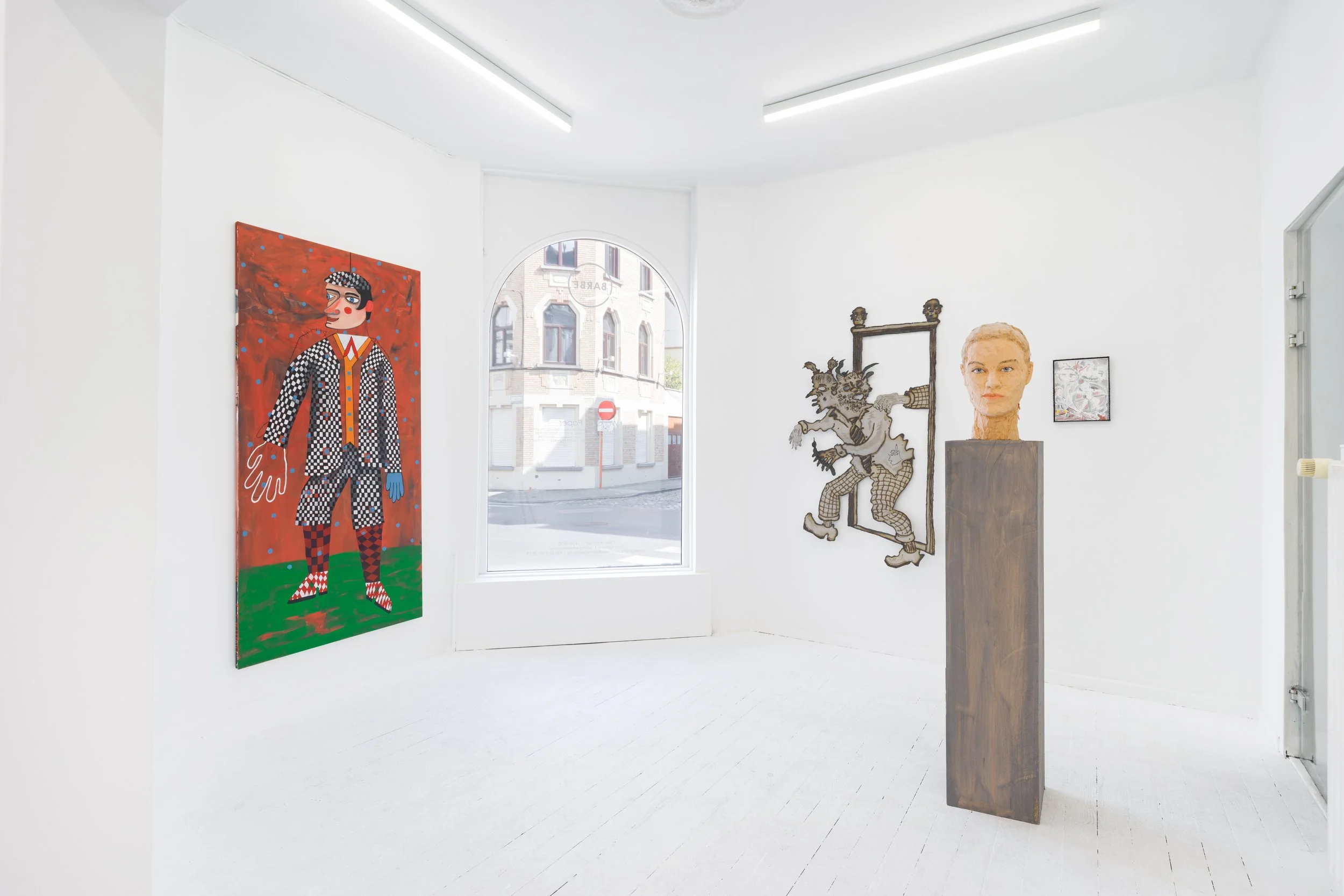
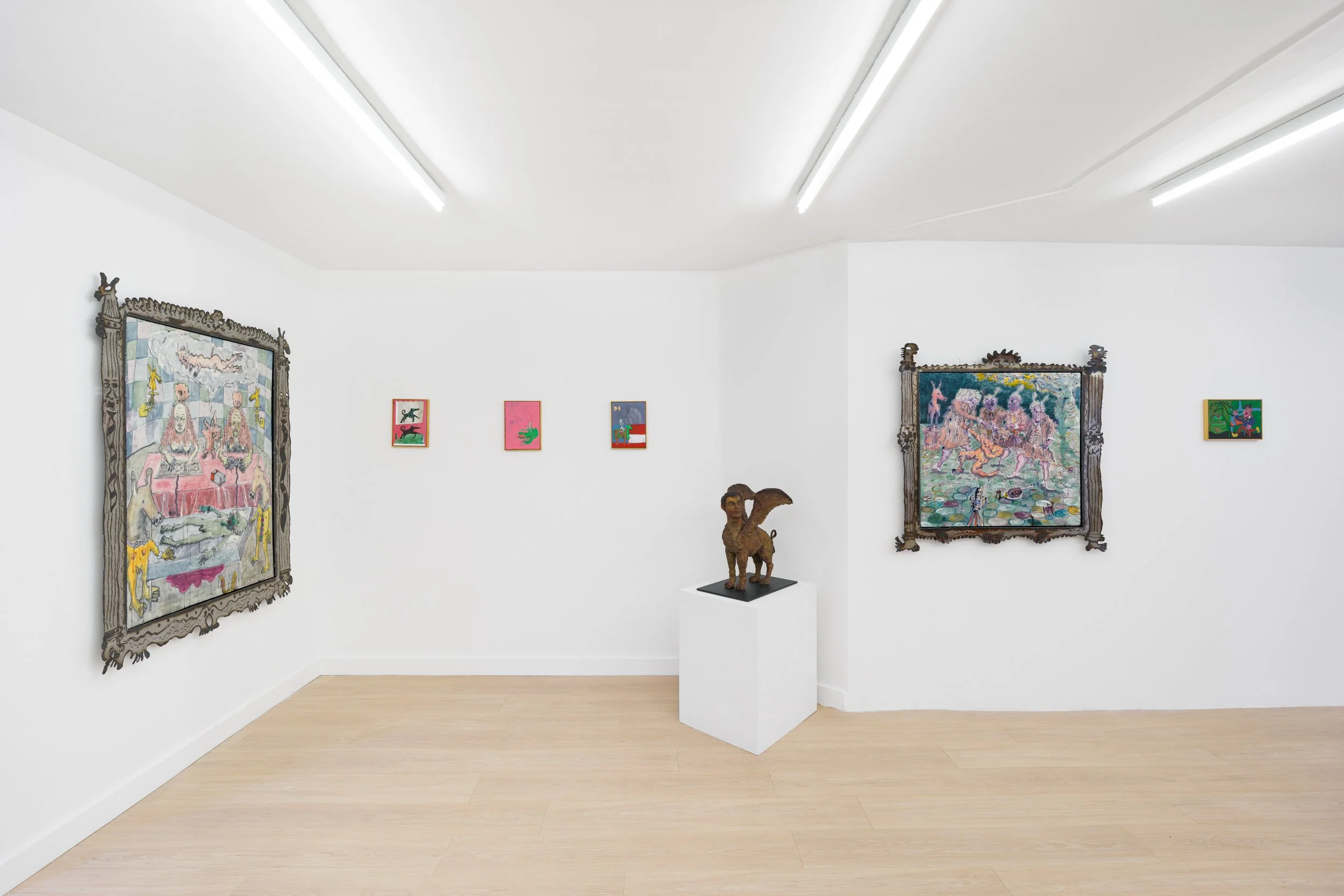
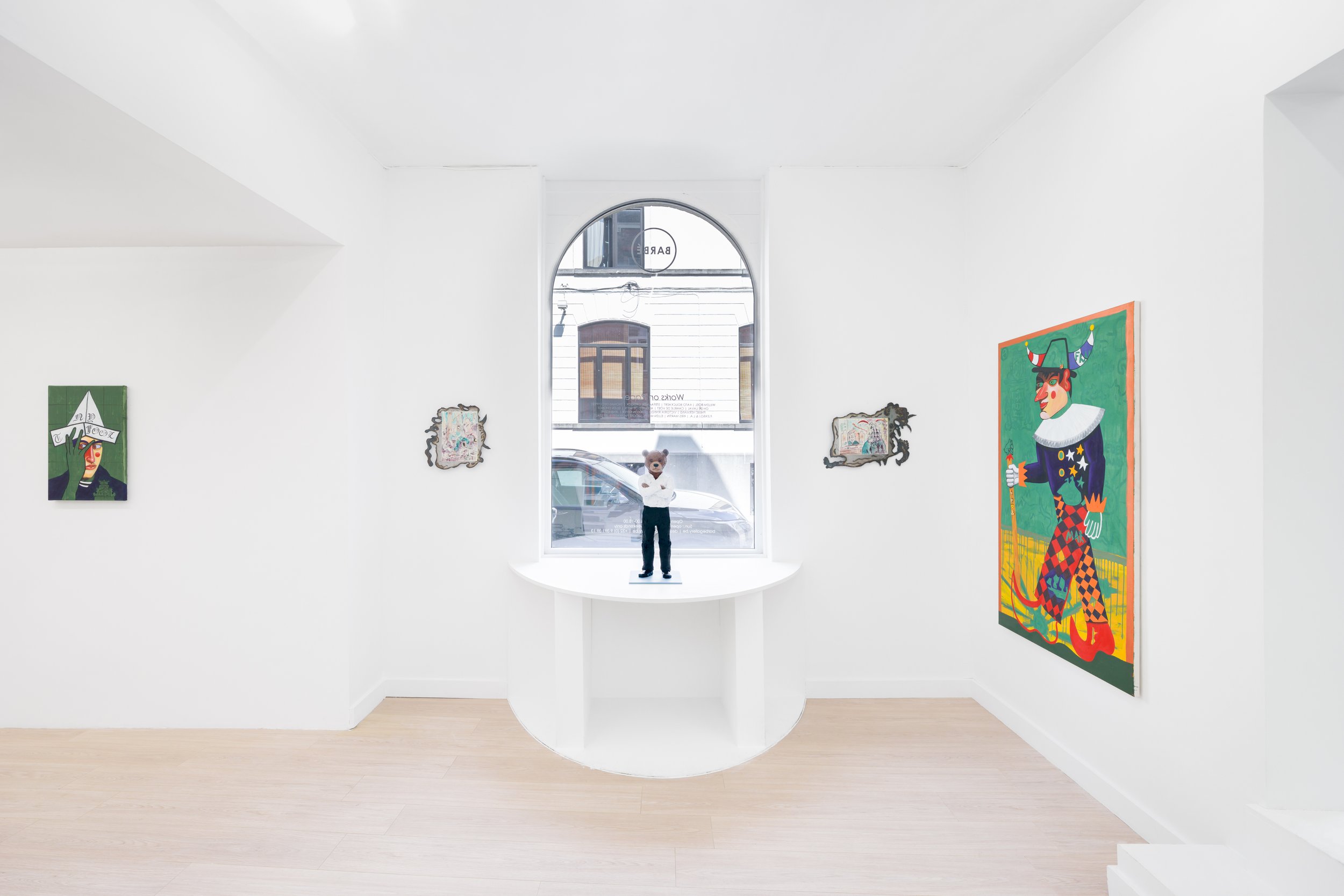
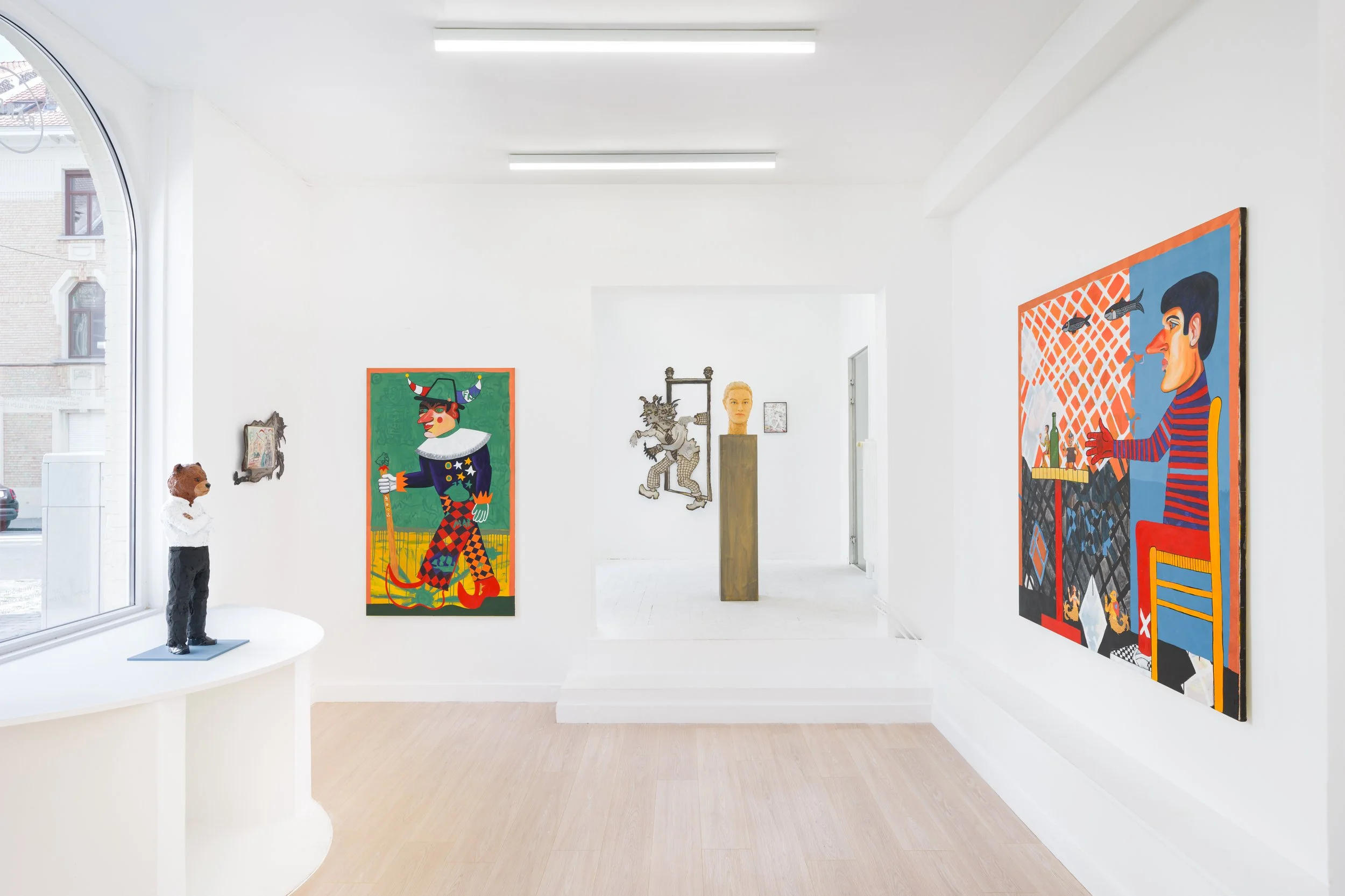
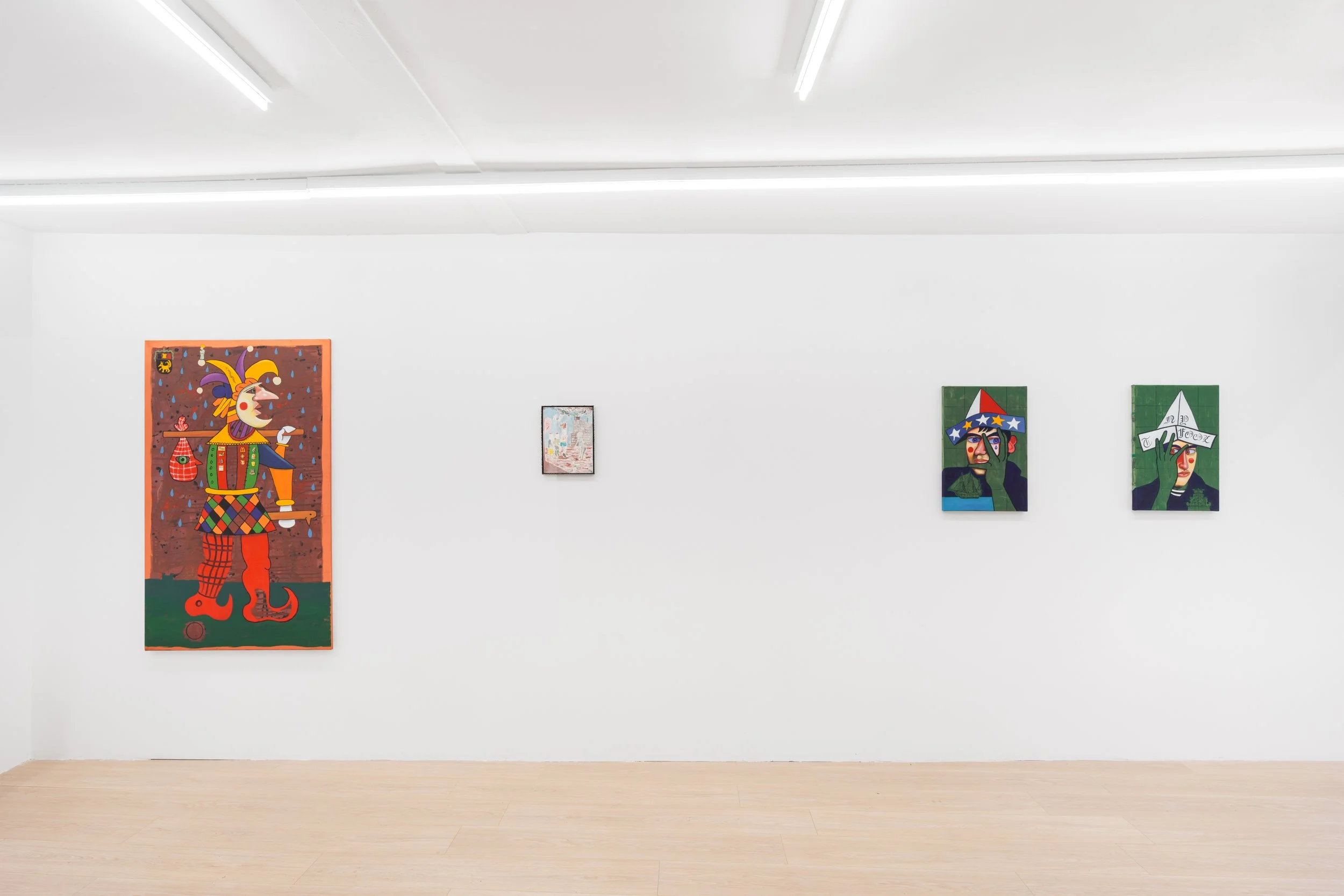
Who are we when every role falls away? And do these roles ever truly exist independently from who we are? Arcana Animi explores the hidden archetypes that shape identity. Not as fixed characteristics, but as shifting manifestations that continually emerge and recede. Some are consciously embraced, while others are assigned to us by those around us. Much like a hand of cards, different facets are revealed at different moments. No single card tells the whole story, yet together they begin to form a portrait of the individual.
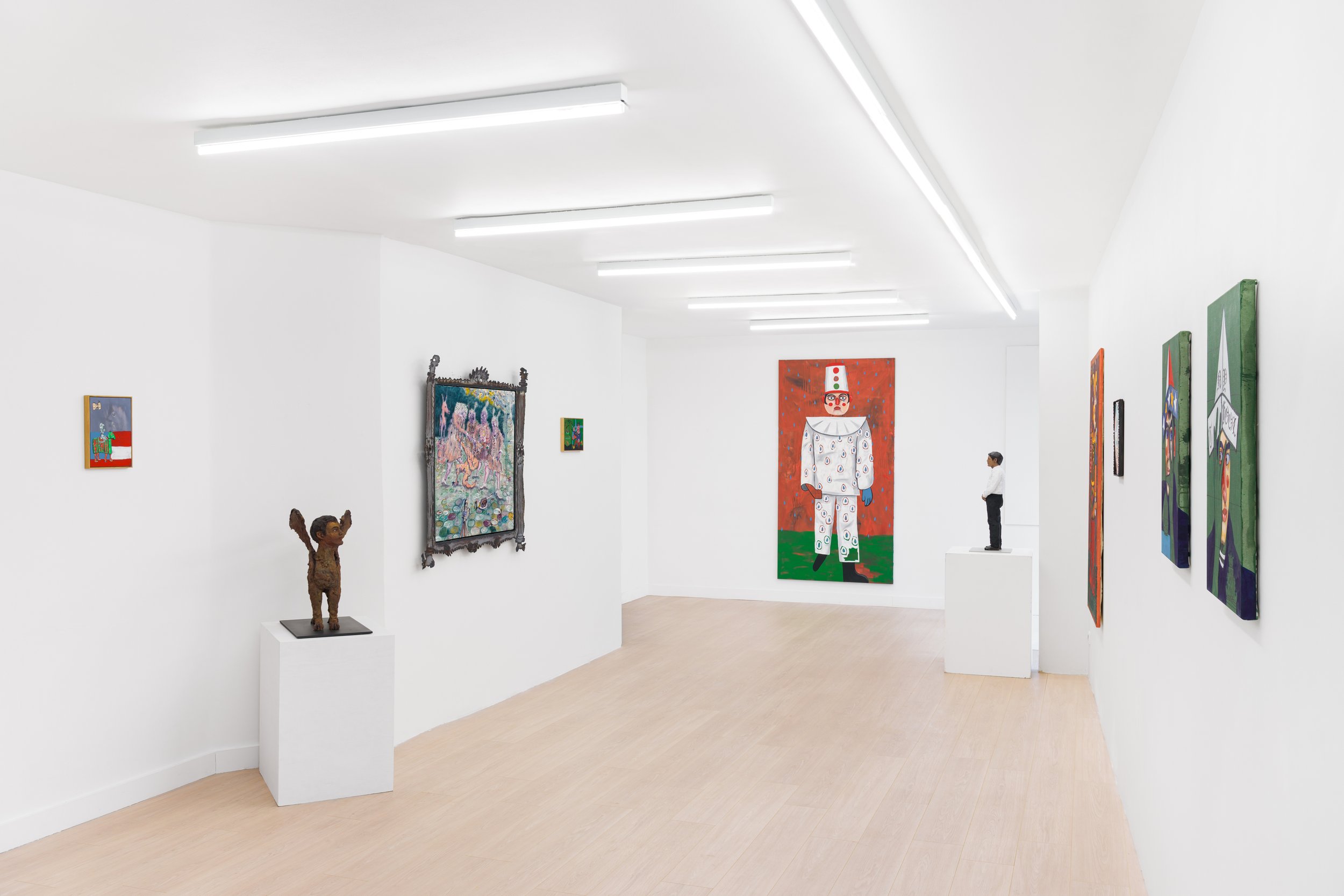
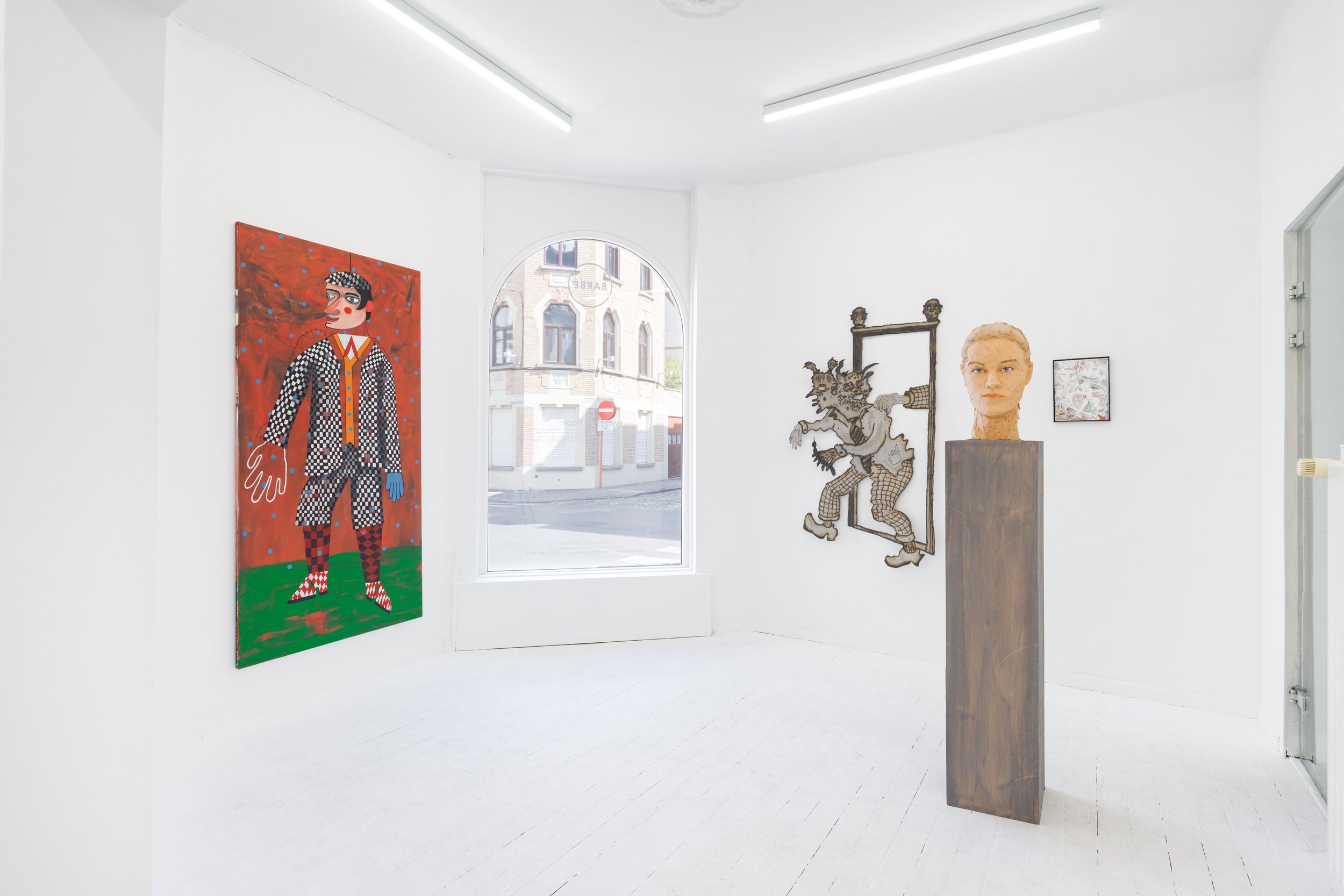
In the sculptures of Stephan Balkenhol, the human figure appears as a timeless archetype. Stripped of a specific narrative, his figures exist somewhere between the personal and the universal. Rather than portraying particular individuals, they invite recognition of a shared human condition. William Ludwig Lutgens approaches identity from a different perspective. His characters inhabit a space between fiction and reality, revealing how identity is continually constructed through the roles we choose to perform and those imposed upon us. The everyday and the theatrical merge almost imperceptibly, exposing identity as something in constant negotiation. For Clément Jacques-Vossen, identity becomes a construct in which history, symbolism and collective memory converge. His figures evoke familiar presences that never fully disclose themselves, balancing between remembrance and imagination, between individual existence and a broader cultural narrative.
Together, the works of these three artists do not propose a singular definition of identity. Instead, they present a constellation of archetypes through which visitors may recognise fragments of themselves. Arcana Animi invites us to consider identity not as a fixed whole, but as a continuous interplay of personae, where each encounter reveals another hidden facet of the self.
the artists
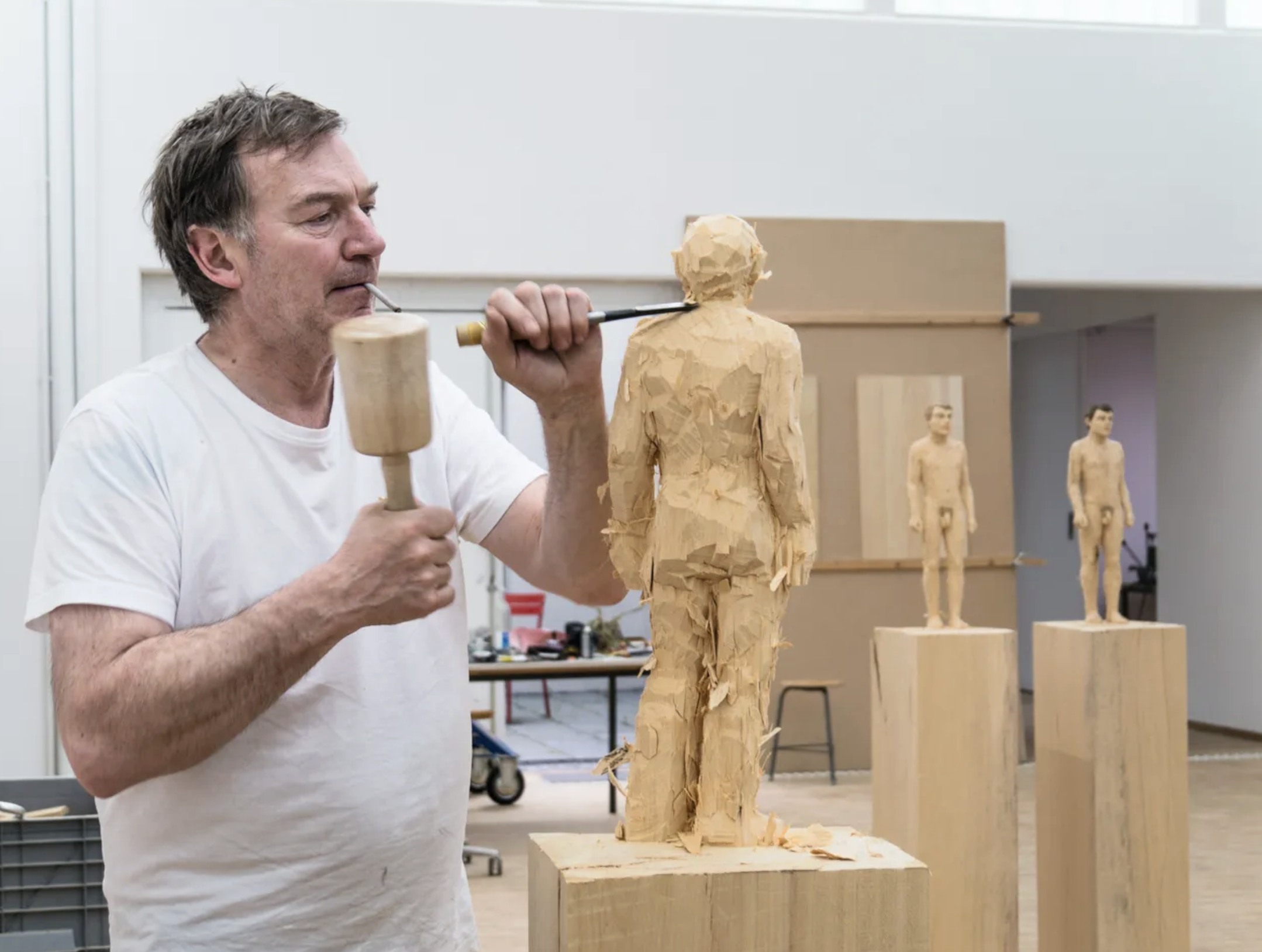
Stephan Balkenhol in his studio in Kassel (DE) by Henrik Hormung.
Stephan Balkenhol (b. 1957, Fritzlar, Germany) is one of the most renowned figurative sculptors of his generation. Since the 1980s, he has developed a distinctive body of sculptures and reliefs centred on the human figure. At a time dominated by abstraction, Minimalism and Conceptual Art, Balkenhol deliberately returned to figuration, creating seemingly ordinary men and women whose restrained expressions and anonymous appearance make them both individual and archetypal.
Balkenhol is particularly known for sculptures carved directly from solid blocks of wood, deliberately retaining the marks, cracks and traces of their making. His practice also extends to bronze, often cast from his original wooden sculptures and preserving the characteristic traces of the carving process. Alongside his human figures, Balkenhol creates animals and hybrid beings, drawing on references ranging from art history and mythology to popular culture. By withholding explicit narratives or emotions, his figures remain open to interpretation, allowing the viewer to project identities, roles and stories onto them.
Balkenhol studied at the Hochschule für Bildende Künste Hamburg (1976–1982) under Ulrich Rückriem, Nam June Paik and Sigmar Polke and later became professor at the Staatliche Akademie der Bildenden Künste. Karlsruhe. Institutional solo exhibitions include Kunsthal Rotterdam, Rotterdam (2025), Museum Wiesbaden, Wiesbaden (2023–24), Lehmbruck Museum, Duisburg (2020), Museum Jorn, Silkeborg (2020), Centro de Arte Contemporáneo de Málaga, Málaga (2018), Moscow Museum of Modern Art, Moscow (2016), Landesgalerie Linz, Linz (2014–15), Kunstmuseum Ravensburg, Ravensburg (2014), Musée de Grenoble, Grenoble (2010–11), Deichtorhallen Hamburg, Hamburg (2008–09), Staatliche Kunsthalle Baden-Baden, Baden-Baden (2006), National Museum of Art, Osaka / Tokyo Opera City Art Gallery, Tokyo (2005), Sprengel Museum, Hannover (2003), Fries Museum, Leeuwarden (2001), Von der Heydt-Museum, Wuppertal (1998), Hirshhorn Museum and Sculpture Garden, Washington D.C. (1995).
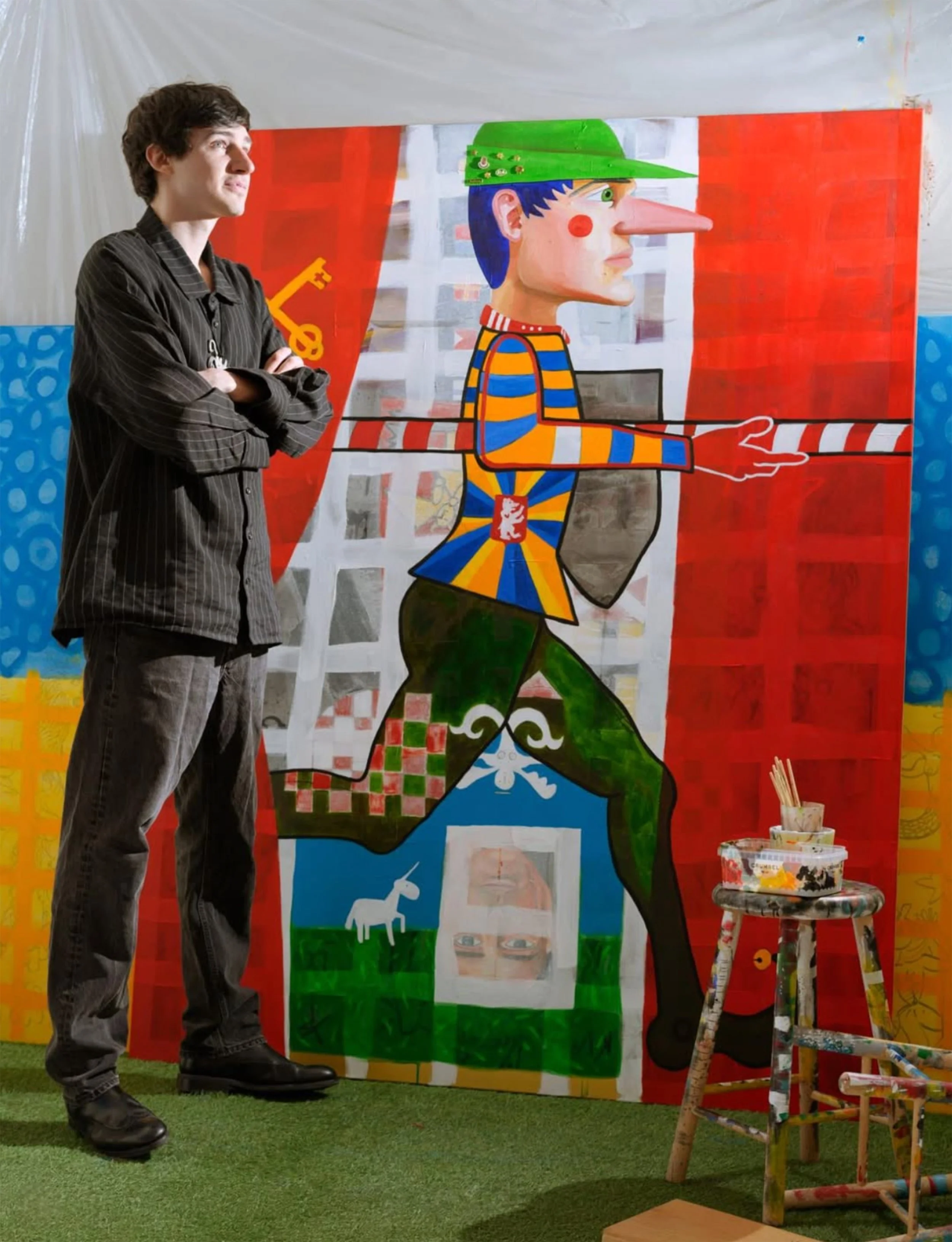
Portrait of Clément Jacques-Vossen by Bart Ramakers (2026).
Clément Jacques-Vossen (b. 1996, Brussels, BE) creates paintings that move between medieval iconography, personal mythology and contemporary culture. Knights, fools, heraldic symbols, angels, animals and self-portraits populate a world in which historical references and imagined narratives constantly overlap. His works draw on sources ranging from Flemish painting and Burgundian heraldry to folklore, literature and popular culture, while remaining rooted in everyday observation and lived experience.
Painting functions for Jacques-Vossen as a way of constructing identities and stories. He frequently represents himself through different characters and alter egos, treating the painted figure as a vessel through which memory, fantasy and symbolism can coexist. Hands, masks, coats of arms, banners and architectural fragments reappear across the works, creating a visual language that feels at once familiar and elusive.
Working intuitively alongside careful historical research, Jacques-Vossen builds layered compositions in which each element contributes to an open-ended narrative. His paintings are not illustrations of the past, but attempts to reactivate its symbols in the present. They invite viewers into a universe where certainty gives way to ambiguity, and where painting becomes a space for wandering, searching and transformation.
William Ludwig Lutgens (b. 1991, Turnhout) works across painting, drawing, sculpture, performance, and film. In his multidisciplinary practice, he examines the human ego and the influence of media and societal systems within a performance-driven, late-neo-liberal society. Playful, alter-ego-like characters often appear in his work, seemingly trapped within rigid social structures. The grotesque plays a central role in his work: a space where humor and horror, or attraction and repulsion, converge. Through absurdity, satire, and alienation, Lutgens offers social commentary on themes such as economic competition, artistic practice, labor, and authority. In doing so, he invites the viewer to reflect on the images, expectations, and structures that shape contemporary life.
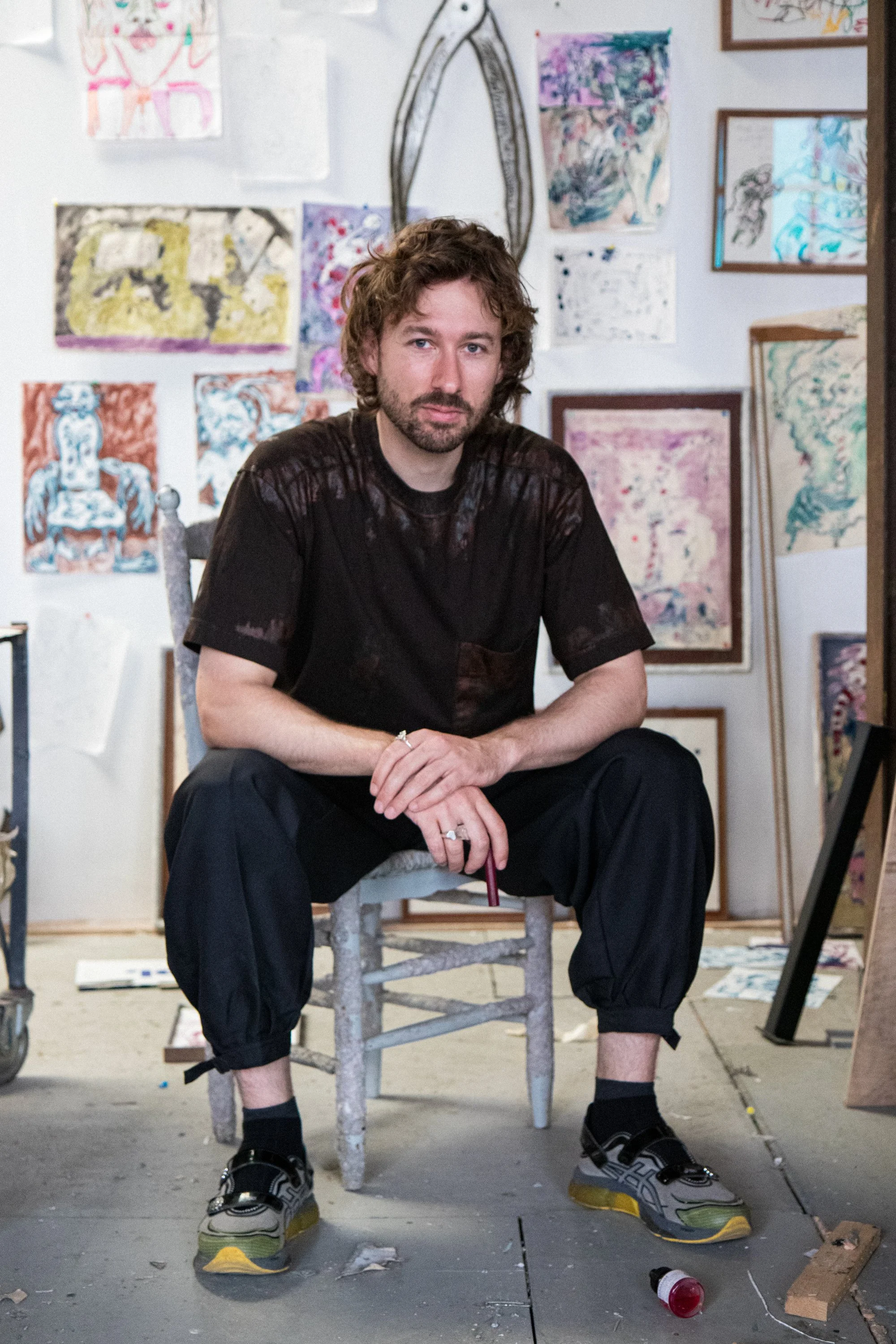
Portrait of Willam Ludwig Lutgens by Elen Braga.
William Ludwig Lutgens completed the post-academic residency program at HISK in Ghent in 2017. He has received multiple prestigious awards and grants, including the SOFAM Grant (2026), the Gaver Prize for Visual Arts (2020), the Eeckman Art Prize at Bozar (2017), the Brussels ArtContest Prize (2017), and the Drawing Room Madrid prize (2017), as well as numerous grants from the Flemish government. His practice has been supported by international residencies, including the Nanji Residency at the Seoul Museum of Art, the Citée Internationale des Arts in Paris, Duplex Air in Lisbon, Kunstplaats VONK, FLACC Genk, Sala d’Art Jove/Hangar in Barcelona, and Het Resort (Groningen).
Lutgens’ solo exhibitions include De Garage / Museum Hof van Busleyden (Mechelen), Expositieruimte 38CC (Delft), Galeri Kant (Copenhagen), PLUS-ONE Gallery (Antwerp), 427 Gallery (Riga), Irma Feia (Lisbon), CIAP Kunstverein, De Warande, and recently Matca Artspace (Cluj-Napoca, Romania). He has also participated in group exhibitions at Museum Schunck, S.M.A.K. Ghent, SEMA Seoul, Kunstvereniging Diepenheim, Z33 House of Contemporary Art, De Warande, and Surplus Space Wuhan, as well as recent performances at Neue Aachener Kunstverein, MuHKA, De Studio, and S.M.A.K.
Recent projects for 2026 include a duo show with Elen Braga at DMW Gallery (Antwerp), a duo show with Alexandra Phillips at Fleur&Wouter Gallery, and participation in the Biennale of Painting (a joint exhibition between MUDEL Museum, the Raveelmuseum, and Museum Dhondt-Dhaenens). Based in Antwerp, Lutgens is the founder of the artist-run space Red Herring Salon (currently in transition). He is a member of FAAR and served as a board member of the artists’ association NICC until 2026. His work is exhibited internationally and is held in prominent collections such as De Bruin-Heijn, S.M.A.K. Ghent, the Flemish Government, as well as numerous other public and private collections.